FROM DILIP MUKERJEA

"Genius is in-born, may it never be still-born."

"Oysters, irritated by grains of sand, give birth to pearls. Brains, irritated by curiosity, give birth to ideas."

"Brainpower is the bridge to the future; it is what transports you from wishful thinking to willful doing."

"Unless you keep learning & growing, the status quo has no status."
Showing posts with label Mastering the English Language. Show all posts

Wednesday, August 24, 2022

In continuation from earlier posts, these are excerpts from Dilip Mukerjea's new book, English Angles ~ Awaken to the Joys of English, covering the English Challenge Part 2:


These are the solutions to the English Challenge Part I of the Fun Exercises to Challenge Your Neurons, in Dilip Mukerjea's new book, English Angles ~ Awaken the Joys of English, as outlined in yesterday's blogpost:


Tuesday, August 23, 2022

More excerpts from the new book, English Angles ~ Awaken the Joys of English, by Dilip Mukerjea:


A nice parting shot from Dilip Mukerjea, as he writes in the end pages of his new book, English Angles ~Awaken the Joys of English:


These are excerpts from Dilip Mukerjea's new book, English Angles ~ Awaken to the Joys of English:


Friday, August 5, 2022

Here's the Prelude to Dilip Mukerjea's new book, English Eloquence: Detonating the Language Barrier, by tackling the crucial basics of grammar, eloquence, and erudition, using Applied Imagination, Catalysed Creativity, and Intellectual Polish:

ENGLISH is the Language of the 21st Century! 

Good English is an Imperative! What are YOU doing about it?

“True eloquence is irresistible. It charms by its images of beauty, it enforces an argument by its vehement simplicity. Orators whose speeches are 'full of sound and fury, signifying nothing,' only prevail where truth is not understood, for knowledge and simplicity are the foundation of all true eloquence. Eloquence abounds in beautiful and natural images, sublime but simple conceptions, in passionate but plain words. Burning words appeal to the emotions as well as to the intellect; they stir the soul and touch the heart.” 

~ Albert Ellery Bergh

PRELUDE

The world of tomorrow is being shaped in the institutions of today. Are our students gaining the knowledge and skills they need to make the shift from classrooms to boardrooms? Cognitive overload has become a common evolutionary malady. The cost of confusion has escalated. Are our educators, administrators, and leaders in governance, clear, compelling, and eloquent in their articulations? Are we being educated for Global Competence? We need a disciplinary and inter-disciplinary understanding of the world. 

English is the language of the 21st century. It affects and impacts all aspects of life. Enduring competitive advantage is hard to achieve in a time of great uncertainty and volatility: thus, the ability to communicate with power and eloquence has become more crucial than ever. It calls for flexible intelligence that drives our ability to persuade, inform, entertain, and advance from breakdown to breakthrough! 

In the end, it is not what we achieve in the short term that matters, it is what we leave behind for the long term—what we call the perpetuity principle. Language is thus a peak-priority imperative to create and impel our visions towards winning outcomes. 

This book has been designed to be visually provocative, where text and imagery blend into a force of single-pointedness, directed at enabling you to make exponential progress in any domain of endeavour. It complements my earlier book, English Angles. 

Richard Mayer, an expert on learning and memory spent decades studying the effects of multimedia learning. His five main conclusions, obtained from empirical data about how humans learn best, are: 

(1) We learn better with words and images than with words alone. 

(2) We learn better when the words and images are presented simultaneously as opposed to consecutively. 

(3) We learn better when the words and images are close together. 

(4) We learn better when any irrelevant material is removed from the presentation. 

(5) We learn more with animated images and narration than with animated images and text on a screen. 

New graduates, and an army of executives, are going full-speed to nowhere if they 

• lack critical, creative and systems thinking skills; 

• exhibit poor attention to detail, and fail to synthesise vast reams of data; 

• make massive errors in writing [absence of expertise in grammar]; 

• are inarticulate at public speaking. 

I urge you to work through this book with the aim of emerging profoundly eloquent! 

Bon voyage!

Friday, January 23, 2015

A QUICK LESSON ON MASTERING THE ENGLISH LANGUAGE: "Fewer" vs. "Less"


My good buddy, Dilip Mukerjea, an accomplished author, braindancing expert, and also English Language maestro, shares his expert thoughts:

"Gentlemen,

Referring to my point last evening about the distinction and the predominant INcorrect use of "less" in common parlance, please find my explanation of the point I was making:

Misuse of the terms fewer and less will set off alarms in the heads of many language enthusiasts.

According to usage rules, fewer is only to be used when discussing countable things, while less is used for singular mass nouns.

For example, you can have fewer ingredients, dollars, people, or puppies, but less salt, money, honesty, or love.

If you can count it, go for fewer. If you can’t, opt for less.

However, it’s not that simple.

Since the reign of Alfred the Great, a time when Old English was spoken, less has been used in the same way that fewer is currently used.

This long history of usage accounts for supermarkets posting the words “10 Items or Less” over the express lanes, when “10 Items or Fewer” is the grammatically correct option.

If we know the intended meaning of the supermarket signs, does using fewer or less really matter? 

To many who have internalised the fewer or less distinction, the answer is yes.

Using less where fewer is expected will sound jarring to their ears, so consider this as you count items or amounts in the future.

Pax Vobiscum!

:D:):p

Wednesday, November 24, 2010

CHAMPIONING STUDENTS: MASTERING THE ENGLISH LANGUAGE

[continuation from the Last Post ~ in connection with the recent launch of a series of new programs intended for parents as well as their school-going kids/teens, under the auspices of 'The House of Creative Brains'.]


It is an universally accepted fact that the English Language is the global language of aviation & communication, commerce & trade, economics & finance, science & technology, international business as well as diplomacy.

It's also the most useful language in the world. Interestingly, most books are published in English, & most of them are also translated into English.

Undoubtedly, a mastery of the English Language enhances self-confidence & commands respect.

Because of Dilip's own linguistic prowess & superior command of the language, as manifested in his panoramic array of more than a dozen books, he is the best person to coach you on how to improve your language facility.

As Dilip often exhorts, writing good English, let alone speaking good English, takes a lot of meticulous effort & diligent energy, not only for a student but also for a working professional.

He uses 'Sentence Mapping' to help participants build clarity of thought through strategic thinking, which leads to engaged learning & information power.

Additionally, Dilip will coach participants in 'Generative Vocabulary Building' techniques.

To share a secret: understanding word roots, prefixes & suffixes give you the power to read & comprehend faster, better & indepth.

With the foregoing methodology & techniques, participants can now adopt a more active role in learning, irrespective whether it is academic environment or corporate arena.

[to be continued in the Next Post.]

[For more information about the series of new programs under 'The House of Creative Brains', please get in touch with Ms. Faye Yeoh via her email faye_yeoh@yahoo.com]

Saturday, October 30, 2010

LANGUAGE LEARNING REALLY WAKES UP THE BRAIN!

I have more or less settled down in my relocation exercise to Ho Chi Minh City, especially with the establishment of my normal as well as new daily routines.

Besides my normal routines of morning exercising in a body-building gym from Mondays to Fridays with my wife [Readers can go to my new 'Bonjour Vietnam, Here I Come!' weblog to read about it], I have just started to resume writing my blogposts.

Among the many new daily routines, I am now spending some time coaching one my wife's young nieces, nicknamed 'Thao', 11 years old, in building up her verbal facility in the English Language, as she is likely to move to America in about a year's time. She is currently staying with us, & she is also attending private English Language tuition classes six times a week in a nearby center.

I am also providing supplementary English Language coaching to one of my wife's young nephews, together with our own adopted young son, both in their early teens, who have recently moved from the country-side into the city to attend a good government school. They are both staying with us, & are currently having private tuition at home with tutors to catch up with the new academic environment in the city.

[The snapshot here shows the two boys hanging out with their Maths tuition teacher (in the centre).]

This year is apparently a very critical year for both of them in school.

More interestingly, I am also now coaching another young niece of my wife in building up her command of the Chinese Language. She is Valarie, 13 years old, although she is nicknamed "Pea" at home. She will be going to Singapore to attend secondary school there just after the new year.

[With her age, by comparison with her other siblings & relatives, she already has a reasonably good command of the English Language. In fact, I had told her mother to buy her some English story books as well as a good English dictionary from Collins to guide her reading. While she was visiting me in Singapore for almost a month in August this year, I had guided her in reading the popular '365 Bedtime Stories'.]

In that way, I have more or less two months to brush up her rudimentary understanding, so to speak, of the Chinese Language.

Chinese Language is something I had learned during the sixties, while I was still in primary school. I was then studying in an English school during the mornings, & in a Chinese school during the afternoons. The schools, managed separately, were located next to each other.

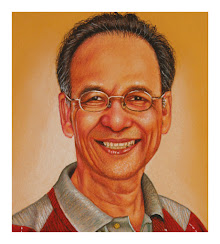
As a result of my early bilingual exposure, speaking the Chinese Language is no big deal for me, as I often converse in this language with my three older sisters, & one older brother, who are all Chinese-educated. I also converse in Mandarin with my wife, May.

However, I realised that teaching the Chinese Language is a totally different ball game for me.

Fortunately, I have the vast Internet resources at my complete disposal, from which I am able to collate & synthesise a quick-learning start-up curriculum - it's actually a crash course - to teach Valarie how to read, speak & write the language.

The whole exploration & coaching experience has turned out to be an exciting - intellectually stimulating, too - endeavour for me.

It sort of wakes up my brain, in a matter of speaking! So, the many empirical research findings about new language learning were really on the ball.

Using the many podcasts & related .pdf documents from www.chinesepod.com, & with additional materials from www.clearchinese.com, I have built what I needed quickly & meaningfully for Valarie to get a good introduction.

Frankly speaking, the whole endeavour is a relearning experience for me, too. In the process, I have realised that I also get to fine-tune my own understanding - & mastery - of the language.

During my student days of the sixties, I was exposed only to the traditional Chinese format.

Today, students are learning the simplified format, which, in a nut shell, has reduced many of the Chinese character's basic stokes in terms of writing.

That's to say, I am not so familair with the simplified format, hence the need for my own relearning.

Worst still, I am also not familair with the prevailing Hanyi Pinyin. The latter is a system of writing out the sounds of the Chinese Language using the Roman alphabet. It is not a "pronunciation key". It is a way of representing the sounds of the Chinese Language in a phonetic way.

So, you can imagine the agitation of my billions of neurons in the brain!

Nonetheless, I have managed to sail through smoothly, as Valarie feels very proud that I have not lost touch with the Chinese Language. She thinks I am a great coach.

Since I did not have any formal Chinese Language teaching experience, I just follow my creativity flow & gut instincts, when it comes to coaching someone on language learning.

With the help of flash cards, which we are building everday to suit everyday situations, I have taught her how to expand her Chinese Language vocabulary.

With each flash card, containing a word or a phrase, I get her to think incessantly of all the possible variations e.g. synonyms, antonyms, formal & informal terms, colloquial terms, etc., as she sees the word or phrase.

On the other hand, in guiding her in enhancing the understanding of - & recalling - the "radicals" (the basic strokes; by the way, there are some 200 in everyday usage, although I will show her only 60, based on the ClearChinese materials), I often get her to imagine or visualise the influence of Mother Nature as she sees each of them, e.g. the "sun" character in Chinese actually looks like the sun, & how each "radical" fits into a compound word, e.g. "morning", which is essentially a Chinese ideograph.

Drawing lessons from my engineering background, I am able to craft a proper balance of reading, speaking & writing opportunities for Valarie to practise. Let's see how it turns out in two months' time.

I think the most important fact is that Valarie is extremely interested in learning the new language. That itself is an overriding plus factor in her favour.

As for me, it's really a cool fun exercise, besides keeping my brain fired up!

Sunday, July 5, 2009

ZANY ENGLISH QUIZ: THE ANSWERS

[continued from the Last Post]

The sections that have been made brown bold are ‘strange’: explanations for each of them appear on the next page.

My holiday began with a non-stop flight to Khushmandhyan. The best part of this journey was the in-flight movie that kept me literally glued to my seat. Halfway through the flight, our plane suddenly swerved; the stewardess said that this was done to avoid colliding with another plane. Whew! That was a near miss! I wish my Mum were here with me. I really miss not seeing her. But the lady sitting next to me said: “Don’t worry, kid, you’re not alone. I’ll follow you to the ends of the earth. Keep a stiff upper lip and you’ll be fine.”

A nameless official made an announcement that all was well and that the in-flight attendants would soon start serving hot cups of coffee. I didn’t want any coffee; what I wanted was to have my cake and eat it, too! I’m speaking tongue in cheek, of course.

All this time I had been barefoot. I put on my shoes and socks, and walked towards the pantry. There was a sign that said: “Watch your head.” Well, I put my best foot forward and checked out the goodies that were on a tray. I lucked out! There was everything worth eating in that lot. I decided to go back and forth between my seat and the pantry; perhaps a genie would magically give me a belly big enough to devour that ‘ohsodelicious’ spread.

Details:

a non-stop flight: If you get on one of those, you’ll never get down!

literally glued to my seat: Unless you have glue on your bum, the chances of being literally stuck to your seat are less than nil. We actually mean ‘figuratively glued to my seat’, but it’s best to say: The movie kept me glued to my seat. No cliches.

a near miss: A near miss amounts to a collision! A close call is actually a near hit.

I really miss not seeing her: That means you’re happy not to be seeing her! What you mean is I really miss seeing her.

to the ends of the earth: Christopher Columbus proved to us that the earth has no ends!

keep a stiff upper lip: In moments of fear of disappointment, it is the lower lip that we are trying to keep from quivering. The upper lip can look after itself.

A nameless official: As far as I know, everyone has a name, even officials! What should be stated is an unnamed official.

hot cups of coffee: Do you care if the cup is hot? It should be cups of hot coffee.

to have my cake and eat it, too: It should be I want to eat my cake and have it, too, because you would still want to possess your cake after having eaten it .

speaking tongue in cheek: So, can anyone understand you?

I put on my shoes and socks: Whew! This is a tough one. Wouldn’t it be easier to do the reverse: I put on my socks and shoes?

watch your head: Much the same as trying to bit your teeth! If you succeed, let me know.

put my best foot forward: I don’t know about you, but I only know of humans having two feet, not three. We say good, better, and best. Thus, what should be said is put my better foot forward. This is no different to when people say: “May the best team win.” when there are only two teams playing. It should be: May the better team win.

I lucked out: What you really mean is I lucked in. ‘Lucked out’ literally means that you’re out of luck!

go back and forth: Don’t you have to go forth before you go back?

[Excerpted from 'Unleashing Genius with the World's Most Powerful Learning Systems', by Dilip Mukerjea.]

Say Keng's personal comments:

Dilip Mukerjea certainly draws on his fine & fabulous command of the English Language, which is the hallmark of his clear & succinct writing style, as expressed throughout all the books he has written over the years.

ZANY ENGLISH QUIZ

Read the following passage and see if you can spot the ‘strange’ and/or illogical thoughts.

My holiday began with a non-stop flight to Khushmandhyan. The best part of this journey was the in-flight movie that kept me literally glued to my seat. Halfway through the flight,our plane suddenly swerved; the stewardess said that this was done to avoid colliding with another plane. Whew! That was a near miss! I wish my Mum were here with me. I really miss not seeing her. But the lady sitting next to me said: “Don’t worry, kid, you’re not alone. I’ll follow you to the ends of the earth. Keep a stiff upper lip and you’ll be fine.”

A nameless official made an announcement that all was well and that the in-flight attendants would soon start serving hot cups of coffee. I didn’t want any coffee; what I wanted was to have my cake and eat it, too! I’m speaking tongue in cheek, of course.

All this time I had been barefoot. I put on my shoes and socks, and walked towards the pantry. There was a sign that said: “Watch your head.” Well, I put my best foot forward and checked out the goodies that were on a tray. I lucked out! There was everything worth eating in that lot. I decided to go back and forth between my seat and the pantry; perhaps a genie would magically give me a belly big enough to devour that ohsodelicious spread.

The answers will be released in the Next Post.

[Excerpted from 'Unleashing Genius with the World's Most Powerful Learning Systems', by Dilip Mukerjea.]