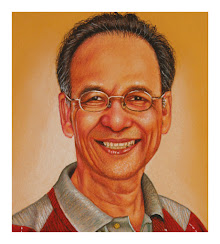
FROM DILIP MUKERJEA

"Genius is in-born, may it never be still-born."

"Oysters, irritated by grains of sand, give birth to pearls. Brains, irritated by curiosity, give birth to ideas."

"Brainpower is the bridge to the future; it is what transports you from wishful thinking to willful doing."

"Unless you keep learning & growing, the status quo has no status."
Showing posts with label Ideas Build on Ideas. Show all posts

Thursday, August 19, 2010

A SIMPLE LESSON ON CREATIVITY FROM MR LEE KUAN YEW: PIGGYBACKING

I have assembled the facts for the following real story - with a valuable lesson to learn from the creativity standpoint - following a lead from a business friend, Philip Merry, via Dilip Mukerjea.

The Changi International Airport in Singapore is recognised as one of the best airports in the world, with 80 airlines serving 200 cities in 60 countries.

Today, the international airport has established itself as a major aviation hub in the Asia-Pacific region. I understand it handles an annual passenger capacity of more than 70 million a year.

Interestingly, the international airport owes its genesis to a decision that was made back in the 1970's, when our then Prime Minister Mr Lee Kuan Yew (from 1953-1990) chose to shift Singapore's international airport from Paya Lebar to Changi. [At that time, Changi was a military airport, a legacy from the British.]

Paya Lebar during that period was already facing capacity constraints, & the easy way out would have been to build a second runway at the old airport. Building another runway would mean lower land acquisition costs & fewer uncertainties.

On the other hand, relocating the airport to Changi would cost S$1 billion.

There were also engineering challenges to building a new airport at Changi.

Moreover, when our then Prime Minister gave the go-ahead signal for Changi in 1975, Singapore was still reeling from the aftermath of the 1973 oil crisis & also the fall of South Vietnam to the communists insurgents from the north.

What actually convinced our then Prime Minister to pick Changi?

Mr Lee Kuan Yew, now Minister Mentor, revealed his side of the story during the recent SNEF's 30th Anniversary Employers' Summit @ Resort World.

He was talking about the importance of living, learning & venturing overseas for our younger generation.

He related that he himself gained new ideas from spending time in Britain as a young man in his twenties & later in the United States.

For instance, he had noticed, at the Logan International Airport in Boston, that planes took off & landed over water, & hence created no footprint of sound of the aircraft over the city.

So, against the recommendations of the British aviation consultants, he opted for a major policy decision to reclaim land in Changi for a new airport, where planes would take off over water, instead of building a second runway at Paya Lebar.

According to Minister Mentor, that policy decision in 1975 to write off the S$800 million Paya Lebar Airport and build the S$1.5 billion Changi International Airport was 'one of the best investments' Singapore has ever made.

In a nut shell, & looking from a creativity standpoint, isn't that piggybacking on an already proven idea, or more specifically, ideas built on ideas?

Naturally, there are other contributing factors too, like overseas exposure to new stimuli or new environment, the power of observation, bringing forth past knowledge & experiences to converge on resolving a problem, & not forgetting the moral courage & political will to push ahead the decision despite the uncertain prevailing conditions.


[All the digital images in this post are the intellectual property of Dilip Mukerjea.]

Wednesday, February 17, 2010

THE LAW OF CEREBRAL PHYSICS

Last night, despite being pretty tired, I had started to read the first few pages of the long-overdue book, 'Borrowing Brilliance', by entrepreneur David Murray, on my bed.

The book was among a large stack of books on my bedside table. It had in fact been there for quite a while, together with the other books.

I didn't finish the reading as I had dozed off. My wife had apparently come to switch off my reading light & to remove the book while I slept.

According to him, he had lost US$50 million to learn a valuable lesson, which he wanted to share with readers.

"Ideas are constructed out of other ideas, there are no truly original ideas, you can't make something out of nothing, you have to make it out of something else.

It's the law of cerebral physics.

Ideas are born of other ideas, built on and out of the ideas that came before. That's why I say that brilliance is borrowed."


Gee Whiz! I am going to enjoy the book.

Please stay tuned!

Friday, October 9, 2009

IDEAS BUILD ON IDEAS

What follows is a superb enhancement of two earlier graphic renditions pertaining to the concept of 'Ideas Build on Ideas' by Dilip Mukerjea in an earlier post.


[All images in this post are the intellectual property of Dilip Mukerjea.]

Monday, October 5, 2009

CONCEPTUAL SYMBOL: The Co-Pi-Fro Process


In these two beautiful composite conceptual symbols, Dilip has systematically arranged the three earlier conceptual symbols, namely Copycat or Copycatting, Piggyback or Piggybacking, & Leapfrog or Leapfrogging, to line up in a sequence to form the Co-Pi-Fro process, which is the essence of making a quantum leap in one's creative process, by "riding on the shoulders of giants".

That's to say, Ideas Build On Ideas!

Isn't that interesting?

Although Leapfrog or Leapfrogging may seemed to be the end-point, I would want to consider it separately or independently from the first two, especially when one decides to take a sudden detour or an unbeaten path during the creative journey, in order to make a breakthrough.

[Excerpted from the 'work-in-progress', tentatively entitled 'Brainaissance', by Dilip Mukerjea. All the conceptual symbols in this post are the intellectual property of Dilip Mukerjea.]

Saturday, April 25, 2009

IDEAS BUILD ON IDEAS!

I am always fascinated by the phenomenon of "ideas build on ideas".

If you have been following my weblog, you probably can recall the reported "conversation" between the beaver & the mousedeer at the vicinity of a dam. Here's the link to the blog post, by the way.

I reckon readers should be familiar with the work of change strategist & futurist Joel Arthur Barker, who wrote his debut book, 'Discovering the Future: The Business of Paradigms' during the mid 80's.

He rode elegantly on the seminal ideas of scientist Thomas Kuhn, whose 60's classic & benchmark book,'The Structure Of Scientific Revolutions', had profound as well as irritating effects on a lot of people, including other scientists, as far as the concept of "paradigm shift" in the scientific world is concerned.

With clarity & succinctness, Joel Arthur Barker then brought that brilliant concept into the corporate world, within the context of business futurism. He has even built a highly successful proprietary series of wonderful training videos to go with it.

For me, the most productive learning experience from the work of Joel Arthur Barker is understanding - and applying - the power of paradigm pliancy.

In contrast, entrepreneur/researcher Frans Johansson drew his inspiration from the work of the Medici family during the Renaissance era to write his wonderful book, 'The Medici Effect: Breakthrough Insights at the Intersection of Ideas, Concepts, & Cultures' in 2004.

[For more information, readers can go to this link.]

In a nut shell, the book's fancy title actually refers to an explosion of creativity and imagination that occurred in Florence, Italy, during the Renaissance era. It stretched from the late 14th century where it started right up to the early 17th Century, where it had spread to the rest of Europe.

During that period, the powerful & influential Medici banking family funded artists, artisans, painters, sculptors, and even thinkers and scientists from many different cultures and disciplines to come together in Florence to debate, discuss, and discover new ideas.

[I was holidaying in Florence with my wife in November 2006 & had read that, out of 1,000 European artists, painters & sculptors during that period, about 350 of them had lived and/or worked in Florence, Italy.]

Through their generous patronage, we are able to speak of and admire the wonderful masterpieces & elegant work of Michelangelo, Leonardo Da Vinci, Botticelli, Donatello, Raphael, Ghiberti and countless others.

The book is about how all or each of us can create our own "Medici Effect" by applying the concept of "inter-sectional ideas, cultures, disciplines & strategies in new & previously unexplored ways".

Dilip Mukerjea likes to call it, "Junction Dynamics"!

From my perspective, it's akin to making deliberate juxtapositions!

Nonetheless, for me, the most productive learning experience from the work of Frans Johansson is understanding the power of creating "inter-sectional moments of AhAs".

Very interestingly, in recent times, Joel Arthur Barker has come up with a new business concept which he calls 'Innovation at the Verge".

[For more information, readers can go to this link.]

He explains the "verge" as "where something & something different meet.

According to him, "Innovation at the Verge" is when two or more elements that are very different from one another are joined together to create a single idea that solves problems the separate elements could not.

He has given the example of a forklift that is also a weighing scale.

Do readers now see my point: "ideas build on ideas"!

Think about it:

- Ned Herrmann's "Whole-Brain Problem Walkabout" via understanding of his brain dominance profile instrument;

- Roger von oech's "Creative Whacks" - explorer, artist, judge, warrior;

- Michael Hewitt-Gleeson's "Seven Thinking Caps" - via multicoloured caps;

- Edward de bono's "Six Thinking Hats" - via multicoloured hats;

- IDEO's Strategies for Defeating the Devil's Advocate and Driving Creativity Throughout Your Organization via their process methodology as embodied in the "Ten Faces of Innovation";

So, who is the progenitor? In my view, any attempt will only be a purely academic exercise.

[As a matter of fact, there seems to be a "verbal jujitsu" revolving on the net between Edward de bono & his one-time protege & collaborator, Michael Hewitt-Gleeson, with regard to who actually had started the idea of multicoloured hats or caps. Readers can read debono's version at this link; Gleeson's version at this link.]

Sunday, April 5, 2009

IS 'PIGGYBACKING' A TRULY CREATIVE INITIATIVE?


Actually, my first impression of 'piggybacking' is the picture of a NASA space shuttle 'piggybacking' on top of a Boeing 747 cargo plane, which I have seen many many years ago.

Well, for the purpose of this post, 'piggybacking' is also a term commonly used in the field of creativity & innovation to describe a creative initiative, whereby one rides on the ideas of other people, or from other disciplines, to come up with a new &/or better idea, especially during a brainstorming exercise.

Tactically, 'piggybacking' is combining, modifying & expanding other people's ideas. 'Hitch-hiking' is apparently another similar term often used to describe the process. Overall, it is based on the concept that ideas build on ideas.

In other words, riding or "standing on the shoulders of giants", to paraphrase Sir Isaac Newton.

Come to think of it, this implies what the 'Book of Ecclesiastes' had said centuries ago that "there is no new thing under the sun" rings true.

Many creativity experts have in fact argued that:

- all ideas are evolutions of previous concepts, or conceptual combinations;

- creativity is cumulative & incremental;

- creativity can be defined as recombination: it is the creation of something new from the combination of elements that have previously existed;

- innovations today are always combinations of previous ideas, products that are already out there, being used every day;

In the book, 'How Invention Begins: Echoes of Old Voices in the Rise of New Machines', professor emeritus John Lienhard explains how major creations like the steam engine, the airplane & the printing press came about.

In virtually every case, the credited inventor built on many ideas preceding his own. To some degree, the author says, an invention is the product of group intelligence.

He posits that the quest for a single canonical inventor of a new technology is illusory, because all inventions are the sum of many contributions.

As a matter of fact, business scholar Richard Ogle, writing in his fascinating book, 'Smart World: Breakthrough Creativity & the New Science of Ideas', reaffirms this interesting nugget:

Originally, Xerox's research team had a crackerpot PC design, but it was a tiny rival Apple, thanks to the two wonderful Steves, who were better plugged into the critical hobbyist world, which in turn triggered the PC goldmine.

According to the author, some inventors succeed not by inventing from scratch, but by using lots of established ideas & then pushing that knowledge into a new direction that leads to a major discovery.

I certainly like his principal premise in the provocative book: the source of creativity lies "out there," in the network of connections between people and ideas.

The key resides in what he calls "idea-spaces," a set of nodes in a network of people (and their ideas) that cohere and take on a distinctive set of characteristics leading to the generation of breakthrough ideas, e.g. the amazing scientific discovery of Watson & Crick, as well as the Gutenberg press, among many others.

A couple of weeks ago, I have read an interesting blog-post (possibly by innovation strategist Keith Sawyer) about Dr Chi-mao Hsieh, a professor at the Missouri University of Science & Technology who has figured out a way to measure the relatedness of all the component ideas in a new idea by researching the inventory of patents.

His findings:

- the most successful patents have an intermediate degree of relatedness;

- patents that cite more other patents are most successful;

Interestingly, industry watcher & technology strategist Patricia Seybold has revealed in her inspiring book, 'Outside Innovation: How Your Customers Will Co-Design Your Company's Future', about the phenomenon of "outside innovation", whereby the most innovative companies are now using lead customers, partners, suppliers, universities, contract labs & other sources outside the company to jointly develop new products or technologies.

She has also maintained that internal R & D departments of these companies are being redeployed to scout for new products & technologies in the marketspace, including overseas.

Undoubtedly, at least from the standpoint of 'piggybacking', Mother Nature - a logical playground of ideas - has been modern technology & engineering's greatest teacher. Please read my earlier post in the 'Optimum Performance Technologies' weblog.

So, in a nut shell, & considering most of today's modern conveniences, which have their origins or connections to 12,000 years of ancient history, based on the exploratory work of scholar & documentary producer James Burke, 'piggybacking' is a truly creative initiative.

[Please peruse his wonderful book, 'Connections from Ptolemy's Astrolabe to the Discovery of Electricity: How Inventions are Linked & How They Cause Change throughout History', or better still, get hold of & watch his entire collections of DVDs.]

By the way, to help you build your concepts while brainstorming, I like to offer this wonderful tip from creative director Robert Pratt:

"Don’t be afraid to piggyback off ideas that, for the moment, don’t seem to have anything to do with your problem. Sometimes hitchhiking off an unrelated concept may lead a winding productive path right back to your original destination, or an even better destination than you originally intended. Remember, your idea should be pliable at this point. Nothing is engraved in stone."

[to be continued in the Next Post. I will share my personal observations of 'piggybacking' in the movie industry, from which action movies are a pet subject of mine.]

Monday, February 9, 2009

IDEAS BUILD ON IDEAS

Last night, in the flash of a fancy thought, I asked - via email - Dilip Mukerjea to draw me a cartoon sketch about a beaver & a mousedeer talking to each other.

I justed wanted it to illustrate the essence of 'Ideas Build on Ideas'.

After a short while, back came a quick choice - via email - of two renditions based on what I had requested:

one in pencil, as illustrated in the first one; the other in pen & ink, as illustrated in the second one.

The cartoon sketches, done almost "on-the-fly", for this post of mine certainly demonstrated the spontaneity & versatility of a creative mind. Many thanks, Dilip!

Come to think of it, the dam building lesson as depicted in the cartoon sketches is in fact a fine example of biomimicry. Mother Nature is definitely a great teacher!


Sunday, February 8, 2009

IDEAS BUILD ON IDEAS


“A stand can be made against invasion by an army; no stand can be made against invasion by an idea.”

~ Victor Hugo (1802-85), French writer;

One cannot assume that ideas—like Minerva, the Roman goddess of wisdom, who sprang from Jupiter’s forehead fully grown—emerge fully developed from one’s mind. When we think creatively the brain uses more energy than the rest of the body. This energy, when transformed into a great idea, is unbeatable!

“Ideas are capital. The rest is just money.”

— advertisement for Deutsche Bank, quoted by Leslie Becknell of Coca-Cola;

The previous prime movers of growth, such as land, manual labour, capital, natural resources, and kissing butt, have become less crucial to economic success.

Instead, success is now dependent on the quality of one’s thinking, the clarity of information processing, the energy within a workforce, and the capacity to generate and apply ideas on a continual basis.

Life evolves through a plethora of mistakes. Most mutations are a mess. 99% of all species that have existed no longer exist. The brain goes through a whole chorus of conversations, and
corrections, in order to generate ideas.

To charm ideas out of hibernation, we should note that creativity depends on two great universal forces: one is order, the other, chaos. Creativity emerges when we are somewhat out of sync with our environment, enmeshed in order, churning in chaos.

‘Charmed’ ideas often need a period of incubation, before they hatch. This condition requires that we

· nurture open systems rather than closed ones;

· use rules of thumb, rather than rules;

· invite and accept reasonable confusion, disorder, and mistakes;

· create a non-equilibrium process that operates between random chaos and rigid order;

This applies to the very heart of life. According to a report produced by two Harvard researchers—much to their surprise—heart attack patients at highest risk are those with unusual patterns of cardiac activity.

Healthy hearts are more irregular, more chaotic. The trick, it seems, in life, is to function within the region existing between static equilibrium and dynamic chaos. It is this domain that characterises the creative zone. This is where one might celebrate the happy occasion of idea-popping. But how does it all happen? No one knows for certain, but we do know that the process is non-linear.

One grain of sand can cause the collapse of a sandhill. This is unpredictable, non-linear behaviour. Our brains are also non-linear and a small input, like a grain of information, can produce disproportionate changes in the way we think and in the ideas we produce.

(If we somehow were to destroy the tiny ocean plankton,the oxygen percentage on our planet would plummet, and even organisms not living in oceans, including humans, would become extinct).

This comes from Chaos Theory, where the junction between order and chaos is the point at which self-organisation arises: from the embrace of stability and instability. There are then no boundaries within such an embrace.

To get the best out of popped ideas, we might need to indulge in a bit of idea-cooking, where heat and light imbue our ideas with richness and flavour.

The Quantum Theory, created by Erwin Schrödinger, Werner Heisenberg, and several others, casts some light on the mystery of matter, encapsulating secrets within a pair of postulates.

First: Energy is not continuous, as the ancients thought, but occurs in discrete bundles called “quanta.” (The photon, or light particle, for example, is a quantum or packet of light.)

Second: Subatomic particles have both particle and wavelike qualities, obeying a well-defined equation, the celebrated Schrödinger wave equation, which determines the probability of certain events occurring.

In much the same manner as light quanta, ideas are packets of energy, with individual particles coalescing into mighty waves. These ideation waves can transform the course of evolution, and determine the ultimate destiny of our species.

When we look at such waves within an ideation network, there are two features that are distinctive: nodes and connections. The size of the nodes is becoming irrelevant, but the quantity and quality of the connections are vital.

Any one idea might be weak in itself, but when we create a beehive of ideas, the limited intelligence of a single idea synergistically accumulates power.

The emergence of a great idea happens when a swarm of ideas merge into a fresh identity; this is how insignificance morphs into intelligence. What was isolated and inert, has become connected and animated.

"The internet model has many new lessons for the new economy but perhaps the most important is its embrace of dumb swarm power. The aim of swarm power is superior performance in a turbulent environment."

~ Kevin Kelly;

Ideas, once born, must be banked, so that they may be perpetuated. The paradox of creativity has been addressed by Lao Tzu in his expression, wei-wu-wei, action through inaction. One must not confuse action with activity.

Action is creativity come alive, born out of composure; activity is the obliteration of creativity, born out of restlessness. Banked ideas are saturated with potential, in a state of inaction, awaiting action via the agency of an intelligent operator. If hijacked into activity, ideas decay or die by being force-fed into irrelevance.

Trying to perfect an idea will leave it imperfect. Let the idea flow in harmony with nature, and an unfolding takes place: the effort of getting the idea to ‘become’ something is useless unless one recognises that the idea is already carrying its ‘being’within itself.

Every banked idea throbs with the essence of its own being, awaiting genesis, into prominence. Sadly, most do not make it beyond the first nanosecond ... often, due to bureaucratic bungling!
To think, feel, and act, as a creative organism, society needs inspired people inspiring people.

By paying lip service to bureaucratic mantras, people have become sheeple. Organisations may teach their workers to become skilled technically, but then, they still remain mere technicians. The aim should be to exude artistry within and beyond technicality.

Pure dependence on logic alone robs one of the poetry within our souls. In the realm of ideas, poetry comes alive via the human spirit in a state of flow, where a creative ‘emptiness’ leaves us free of bureaucratic baggage. Yet each emptiness also has a fullness to it.

For the creative individual, this fullness happens because emptiness allows ideas to blossom.

When the mass of minds within an organisation is in such a state, it would be opportune to conduct an ‘ideathon’ where creative spirits compete against one another to come up with cascades of ideas ... always noting that competition and business must operate so as to increase the sum of human happiness.

Creativity is rebellion against the status quo.

Non-creativity is carbon-copying, volunteer ing to slave under mobpsychology. The creative spirit is a dropout from mob mania and a champion of individualism. Going it alone, with the scent of fresh consciousness, the fragrance of the creative psyche reflects divinity.

An organization is a collection of individuals. When each individual exudes the creative spirit, the union of creative souls morphs into a culture of creativity. This is when the organization blooms into prominence and evolves into a society of innovation champions.

Ideas gestate within experiences, interactions, and relationships. They cause technologies to conjugate, market boundaries to warp, and industries to radically transform. Once narrow and well-defined domains have now morphed and amplified into more complex entities under the context of incessant innovation ~ innovation value multiplied!

The criss-crossing of ideas, hyper-linking of relationships, and agility of alliances are features of a world reconfigured by convoluted webs of innovation.

From it all, we enjoy a Return on Innovation (ROI) composed of paradoxes such as perpetual novelty, consistent surprise, and relentless discontinuity. This is a new world where we need to think, learn, and interconnect in multiple dimensions.

[Excerpted from the 4th subscription issue of 'Ideas on Ideas' in The Brain Dancer Series of bookazines by Dilip Mukerjea. All images in this post are the intellectual property of Dilip Mukerjea.]