
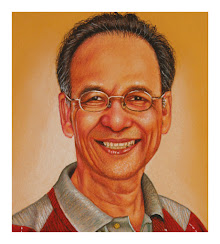
The quote comes from my good buddy Dilip Mukerjea's forthcoming new book.
A constantly evolving array of tools, templates, tactics, techniques & tips to turbo-charge your creativity & innovation, personally, professionally & organisationally, with specially dedicated contributions from Dilip Mukerjea, Learning Chef & Braindancer


More explicitly, it means that you are confident in your personal ability to learn new things, to think about them, to make use of them, to make informed decisions with them, to sculpt decisions into actions, & finally to put them to work in your own life.
In addition, self-efficacy also refers to understanding the consequences of your personal actions, & recognising what you must do to achieve your personal goals & objectives in life, even in the face of adversity.
In a nut shell, for a student who is imbued with strong self-efficacy, he or she will always trust himself or herself of having the personal ability to view his or her academic challenges &/or study problems as "tasks to be mastered".
He or she is likely to develop deeper interests in the tasks, & is also more prepared to try again, when he or she doesn't succeed in performing a task the first time.
His or her thinking is driven by : "I Can Do It! I Will Do it!"
As a result, he or she goes into purposeful action, because ultimately he or she knows that "I will Take Charge! I will Do it Myself!" offers him or her the best choice in life.
After all, life is essentially making choices. More importantly, life is a DIY (do-it-yourself) project
Self-efficacy is the Number 1 predictor & determinant of success in life, academically as well as professionally. This is based on the brilliant work of Canadian psychologist Dr Albert Bandura, who coined the term.
Dr Bandura strongly believes that, to which we fully concur, one's personal success in life is always tied to one's belief or conviction in the personal capabilities to initiate & successfully perform specified tasks.
The entire program from Dilip for both parents & their kids/teens is specifically designed to promote & inculcate academic self-efficacy skills.
I like to leave this inspiring quote from the great Indian statesman, Mahatma Gandhi, to sum up my post:
"If I have the belief that I can do it, I shall surely acquire the capacity to do it even if I may not have it at the beginning."
[to be continued in the Next Post.]
[For more information about the series of new programs under 'The House of Creative Brains', please get in touch with Ms. Faye Yeoh via her email faye_yeoh@yahoo.com]




 Posts
Posts

