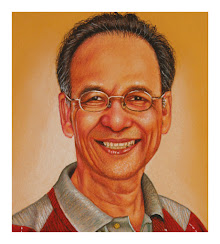
FROM DILIP MUKERJEA

"Genius is in-born, may it never be still-born."

"Oysters, irritated by grains of sand, give birth to pearls. Brains, irritated by curiosity, give birth to ideas."

"Brainpower is the bridge to the future; it is what transports you from wishful thinking to willful doing."

"Unless you keep learning & growing, the status quo has no status."
Showing posts with label Braintales. Show all posts

Thursday, September 29, 2022

Here's another excerpt from Dilip Mukerjea's new book, BrainTales: From Imagination to Imprint:

How to Craft a Book

You have at least one story within you . 

Since there can never be anyone else like you, your story is unique. Write it. 

Do NOT say: “I hope to write a book one day.” or “I wish I could write a book.” or “If only I could be an author.” Wishing and hoping will never make you realise your dreams. Be bold. Say: “I A M writ ING ! ” (Yes, ‘am’ and the –ing ending are deliberately in red capitals! You should stay in the ‘present continuous’ tense! Anything else will tempt you to procrastinate!). It begins with a flame…then rages into a bonfire within your chest. Follow just one rule: don’t bore your readers. 

Your theme could be anything that desires to gush out of your soul! A story, an exposition on a pet topic, your autobiography, fact, fiction, or fantasy, it matters not. Know that real life is often less believable than real fiction! Write your book, then check it several times. Make several copies of your manuscript. Get people you know, and don’t know, of all ages and persuasions, to read your work. Get them to critique away; every observation is an opportunity for you to improve your writing. 

Whilst your manuscript is being critiqued by all and sundry, put your copy away for several weeks. Incubate. Marinate. Cogitate. Then read it right through, asking: 

* Have I started memorably? Will my first paragraph, or the first page, grab the reader’s attention? Thus, have I done enough to impel the reader to keep reading? 

* Have I managed to sustain the initial fascination with my book? Is my eloquence engaging; my treatment of theme provocative; my thought design stimulating? 

* Every few pages, have I upped the tempo, or changed pace so as to keep the reader happily challenged? 

* Is there enough reach and richness within the material to appeal to a broad cross-section of readership? Would peoples of diverse interests and disciplines find my work informative, communicable, and entertaining? 

* Have I ended memorably? Will my last paragraph, or the last page, grab the reader’s attention? Thus, have I done enough to impel the reader to want to keep reading? Or pondering? Or wishing for more of the same, only more? And more? 

If the answer to each of the above questions is “YES!” you should now have a manuscript ready for submission to publishers. Your manuscript could also accompany a ‘book prospectus’. The publishing domain is a blizzard of activity; today’s high-tech high-velocity operations keep editors and agents on their toes. If you are a first-time author, they would often not be willing to assess your potential purely on the basis of an outline and sample. Give them your completed manuscript. Project confidence, and exhibit competence. 

Then, go back to what your readers will have first-contact with: 

(a) the title 

(b) the theme 

(c) the cover design, front, side, and back (people do judge a book by its cover!). 

• Have you selected a title that will demand attention? Via a combination of existing words, or a configuration where you have created a brand new set of letters or words. Do you have a powerful subtitle to complement the title? 

• Have you ensured that the cover design matches the title and theme of your book? Can it be seen from a distance? Even the spine of the book must claim attention, or else it may be lost in the ‘bibliomass’ within large bookstores. 

These considerations are usually decided in discussions with the publisher, unless you have opted to self-publish. I find it best to start with a provisional title and cover…it keeps me focused and undeterred by deadly deadlines. The final cover design can be done after the manuscript pages have been sorted out. 

This is an excerpt from Dilip Mukerjea's new book, BrainTales: Imagination to Imprint:

THE 5C’S OF CRAFTING A COMPELLING STORY

1. Connect 

This stage of the story structure is about creating an emotional connection with your audience. Emotion trumps rationality when push comes to shove. If you do not tap into your reader’s emotions—that layer below the surface—engagement is impossible. The aim here is to make a STAR START! 

2. Challenge 

The second part of the story structure is about highlighting a common pain point or challenge your audience is facing – with the goal of helping them overcome that challenge by the end of your story. 

So get to REALLY know your audience. What are their goals, dreams, and desires? How can you help your readers move towards them? What about their fears and problems? Your writing should appeal to many but talk directly to only one person. Make them feel special. Highlight a core problem your audience has, and articulate how you (or your characters) were once burdened with the same challenge. 

3. Conflict 

You want to establish the opposing forces that contribute to a less-than-favourable outcome for your audience. Use vivid details at this stage so your audience resonates with the characters in your story. Walk them through the worst parts of the problem they are trying to solve… All of the nasty symptoms and side-effects. 

What has stopped them from overcoming this challenge in the past? 

What are the competing priorities in their life that have held them back? 

How does it FEEL when they do not overcome this challenge? 

Hop back and forth between the challenges, excuses, and hurdles to them achieving their goals. And compound it all with the desire to reach another destination. Provide glimmers of hope along the way…

4. Conquer 

Now it is time to provide some hope. Show your audience how the characters have overcome the struggle presented. Give them the feeling that a positive outcome is possible. 

As the story develops, take your audience on a journey from “close to giving up” all the way through to the results, feelings or accolades that your characters achieve on the other side. You are putting your readers in the shoes of your characters, and making them feel like the solution to all their problems is in their hands. 

By this stage of your story, the reader is so emotionally bought into your character’s journey. They visualise themselves conquering their problems and achieving their goals. 

What results or examples can you provide to ride this message home? 

Do not hold back. Convince your reader that everything is possible and glory is much closer than they first thought. 

5. Conclude 

Deliver a resolution to the challenge, ending on a positive message the audience can take away. This is usually one part of a larger solution. (Especially if you are using storytelling to sell something.) 

But your job is not quite done. 

You need to guide your reader on to their next step. What is the very next thing they need to do to start the all-conquering journey themselves? 

Is there somewhere they should visit? What other resources would be helpful? Where can they get help or inspiration? 

Stories will help you break down barriers and eliminate the sea of noise your readers are exposed to. The more personal you can make the experience, the greater the connection will be, and the better your results. It is your job as a writer to evoke emotion and connection very early in your story, otherwise, no one will read on. 

But that is not enough. 

If you truly understand your audience, your story will create a visceral experience that magnifies a core challenge and creates a feeling of mental conflict. 

Until you resolve this conflict and empower your readers to conquer their demons, the story isn’t complete. 

Every step of the way, you are guiding your readers on a journey, an experience and an adventure until finally, you tell them exactly what they should do next. 

Keep your readers hooked for as long as you can, but when the time is right, hand over the reins and let others tell the story for you. The aim now is to make a STAR FINISH!


Tuesday, August 16, 2022

Here's an excerpt from Dilip Mukerjea's new book, BrainTales: Imagination to Imprint:

Write from Your Soul, not from Ego

Never let the ego deceive you… for too long. Focus on substance, not ego. We all start working from egotism and exhibitionism, but much of what emerges is nauseous. Write from your soul. It will give you a greater, more exuberant motive. You will get to know yourself better, and be who you are...not who you think you should be, for other people. We cannot know ourselves until we have done a self-portrait...as a drawing, and, as a story! And we cannot know anyone else either, until...we have done the same to them. For them. For you. 

The creative power is expressed in all domains of life: home, business, society at large. If we fail to express it, we become emotionally arthritic and spiritually calcified. Creative expression is granted to us for the enlargement of the soul. Release it, and detonate that silent bomb of revelation within you...you will witness your Divinity! 

Writing from the soul is about bursting out of the dot, reaching for, and filling, the sky, the cosmos, the vastness of all that is…beyond infinity, beyond eternity. It is a loss of control, where thinking stays out, and wildness takes over. 

Is that what falling in love is? 

All this stuff that’s inside you, it’s not there to...stay in. It needs to burst out and pour itself into some form. This is what writing will help you do. In this world of supertech abundance, nothing we have ever produced can match the outpourings of our imagination. Technology is not everything...despite all its benefits. I think it is wonderful to be a language major. It might look like a dumb topic, to major in English (for example). People might think it leads nowhere. But it’s great to tread a path to nowhere...sometimes...often...never...always. It leaves us space, and time, to love. Is that not the best kind of love? If you love to write, you will write...to love. 

If you write to love, you will love to write. Your flow of words will grow freer and better, truer and more abundant. Like love. From the soul. Away from the ego. 

LET GO THE EGO!

There will never be another now - I’ll make the most of today. There will never be another me - I’ll make the most of myself. 

Helen Keller 

Saturday, August 6, 2022

Dilp Mukerjea writes in his new book, BrainTales:

The Emergence of English as The World’s Premier Language

The history of the English language commenced with the arrival of three Germanic tribes, the Angles, the Saxons, and the Jutes, into Britannia. They crossed the North Sea from what today is Denmark, and northern Germany, around A.D. 449. At that time the inhabitants of Britain spoke a Celtic language. The invaders spoke a Low Germanic tongue that, in its new setting, became Anglo-Saxon, or Old English, the ancestor of the English we use today. It was not long before these Teutonic plunderers pushed the Celtic speakers west and north into what is now Wales, Scotland and Ireland. The Angles were the dominant tribe; during the reign of King Egbert in the ninth century, the land became known as Englaland (“the land of the Angles”) and the language Englisc—from which the words England and English are derived. 

A major influence on the English language took place with the next conquest of England, two centuries after the rule of Egbert, by the Norman French, who came from Normandy. These people had been Vikings and freebooters from the Scandinavian countries. They spoke French and had taken to French customs. The invasion took place in 1066, under William, Duke of Normandy. In a bloody battle at Hastings, the Normans defeated the Saxons and Danes, and killed Saxon King Harold. They forced the surviving nobles to accept Duke William as King of England. 

Now, one may wonder why French did not become the language of England. Victory by the French-speaking Normans resulted in them far outnumbering their captives. This meant that, in order to communicate with them, they needed to learn English. In time, they lost their ties to France, and took to English as easily as their Norman forbears had dropped their Norse speech for French. Old English morphed into Middle English because many French words entered the vocabulary. 

Meanwhile, with the Roman conquest of England in the first century B.C. by Julius Caesar, many Latin words had crept into and stayed within the English language. This was further bolstered with the influence of the Roman church and missionaries a few centuries later. Thus, by the time the Normans were well settled in England, the influence of Latin, either directly or indirectly, was permanent. 

During the Renaissance, from the fourteenth to the seventeenth century, Europe witnessed the rediscovery of a love affair with all things Latin and Greek. Many classical words entered the English vocabulary, mainly via scholarly writing, and due to new discoveries in art, science, medicine, literature, and world geography. 

Whilst Anglo-Saxon is the foundation of the English language, its linguistic evolution resulted in a mingled history and a three-tiered vocabulary: Anglo-Saxon, French, and Latin / Greek. This means, in essence, we now have three options for conveying approximately the same meaning. The main difference between Early Modern English and Late Modern English is vocabulary. 

The much larger vocabulary of Late Modern English is due to two principal factors: new words arising from the Industrial Revolution and its associated technology; secondly, the British Empire at its height covered one quarter of the earth’s surface, and the English language adopted foreign words from many countries. 

Some expressions that the British call “Americanisms” are in fact original British expressions that were preserved in the colonies while lost for a time in Britain (for example trash for rubbish, loan as a verb instead of lend, and fall for autumn; another example, frame-up, was re-imported into Britain through Hollywood gangster movies). Spanish also had an influence on American English (and subsequently British English), with words like canyon, ranch, stampede and vigilante being examples of Spanish words that entered English through the settlement of the American West. French words (through Louisiana) and West African words (through the slave trade) also influenced American English (and so, to an extent, British English). 

Today, American English is particularly influential. This is due to the American dominance of cinema, television, popular music, trade and technology (including the Internet). But there are many other varieties of English around the world, including for example, Australian English, New Zealand English, Canadian English, South African English, Indian English and Caribbean English. The essential reasons for the ascendancy of English lie in the internationality of its words and the relative simplicity of its grammar and syntax.

During the Renaissance, from the fourteenth to the seventeenth century, Europe witnessed the rediscovery of a love affair with all things Latin and Greek. Many classical words entered the English vocabulary, mainly via scholarly writing, and due to new discoveries in art, science, medicine, literature, and world geography. Whilst Anglo-Saxon is the foundation of the English language, its linguistic evolution resulted in a mingled history and a three-tiered vocabulary: Anglo-Saxon, French, and Latin / Greek. This means, in essence, we now have three options for conveying approximately the same meaning. 

The main difference between Early Modern English and Late Modern English is vocabulary. The much larger vocabulary of Late Modern English is due to two principal factors: new words arising from the Industrial Revolution and its associated technology; secondly, the British Empire at its height covered one quarter of the earth’s surface, and the English language adopted foreign words from many countries. 

Some expressions that the British call “Americanisms” are in fact original British expressions that were preserved in the colonies while lost for a time in Britain (for example trash for rubbish, loan as a verb instead of lend, and fall for autumn; another example, frame-up, was re-imported into Britain through Hollywood gangster movies). Spanish also had an influence on American English (and subsequently British English), with words like canyon, ranch, stampede and vigilante being examples of Spanish words that entered English through the settlement of the American West. French words (through Louisiana) and West African words (through the slave trade) also influenced American English (and so, to an extent, British English). 

Today, American English is particularly influential. This is due to the American dominance of cinema, television, popular music, trade and technology (including the Internet). But there are many other varieties of English around the world, including for example Australian English, New Zealand English, Canadian English, South African English, Indian English and Caribbean English. The essential reasons for the ascendancy of English lie in the internationality of its words and the relative simplicity of its grammar and syntax.


Here's an excerpt from the preamble of BrainTales, Dilip Mukera's new book:

The Writer’s Manifesto 

I Pledge to Write I am a writer. Even when I am not writing, I am a writer. I do not wish to write, or dream about writing…I am committed to writing. A writer cannot pen lines by wishful thinking…only by wilful doing. In this moment. There is no other tense—just the present. 

We postpone life by hoping. Once we allow ourselves to hope, we are tricked, tripped, and trapped. Choose never to live in wish-fulfillments. Start writing. Now. I salute, and celebrate, your right to write! 

Dilip Mukerjea


“There is something in us, as storytellers and as listeners to stories, that demands the redemptive act, that demands that what falls at least be offered the chance to be restored. The reader of today looks for this motion, and rightly so, but what he has forgotten is the cost of it. His sense of evil is diluted or lacking altogether, and so he has forgotten the price of restoration. When he reads a novel, he wants either his sense tormented or his spirits raised. He wants to be transported, instantly, either to mock damnation or a mock innocence.” 

~ Flannery O’Connor, writer and essayist;

“Don’t bend; don’t water it down; don’t try to make it logical; don’t edit your own soul according to the fashion. Rather, follow your most intense obsessions mercilessly.” 

— Franz Kafka;

“And by the way, everything in life is writable about if you have the outgoing guts to do it, and the imagination to improvise. The worst enemy to creativity is self-doubt.” 

— Sylvia Plath, The Unabridged Journals of Sylvia Plath;

Thursday, July 1, 2010

"The quickest path between one person and another is a story." BRAINTALES SHOWS YOU HOW TO DO IT WITH FINESSE!


Braintales is the creative affirmation that ‘Beauty lies in the brain of the beholder, and within the hearts of ‘taleblazers’.

The quickest path between one person and another is a story.

Storytelling has a direct impact on:

* building intelligence
* enhancing communication
* developing rapport
* crafting strategy
* exercising leadership
* igniting entrepreneurship

You can’t bore people into buying your offerings! Customers don’t just buy products; they buy what these products and services are going to do for them.

Braintales teaches you not just how to communicate, but to sell...via a platform of story techniques that arouse interest, build expertise, and close the sale.

Seminar Objective

How to get attention, communicate, and persuade... with eloquence, eminence, and elegance: Move ahead from apathy to attention,confusion to communication, survival to success! Via vibrancy in thinking, reading, writing, speaking, and bonding...the indispensible facets of story!

Methodology

Fast-paced, totally interactive, and with ample opportunity to develop these skills in real time for regular future integration in the worksphere. Emphasis is placed on practical applications, for immediate use.

Who Must Attend

Executives at all levels and from any discipline in the corporate and educational ecosystems.

People who wish to become brilliant communicators, astute strategic thinkers, authors, editors, or publishers, and stunning high performers in their quest for the best across diverse aspects of life in what has become a world of incomparable competitive intelligence.

Above all, people who do not wish to die with their story untold!

Benefits

An entire listing of fundamental benefits is given on the next two pages.

Essentially, Braintales:

• Enables you to become articulate with words and imagery

• Inspires you to become a collaborative communicator and an eloquent conversationalist

• Saves you vast sums of money by establishing a culture that propagates your brand

Duration: 2 or 3 days, 0830-1830 hours/day/seminar

Cost: S$995/person/2 days, min.24 pax S$1295/person/3 days, min. 24 pax

Seminar Leader: Dilip Mukerjea

Venue: Arranged by Client

How do stories enable an organisation (or a society) to move ahead from strength to strength?

Some Examples:

* Storytelling invests our lives with more meaning

* It connects us more empathetically with others

* It stimulates and nurtures our creativity

* It enlivens and enhances our sense of humour

* It infuses us with courage and confidence

* It renders our lives more memorable


Converting Parables to Profit:

Stories

* help us create a flesh, blood, and soul environment

* help us learn from the past

* are effective at raising hidden issues

* can be successful at transferring knowledge

* help to build trust, and to command attention

* humanise the teller, the listener, and the prevailing situation (where relevant)

* inspire ‘internal branding’ about people getting things done

* enable us to think, learn, communicate, and bond

* help to create yearning, learning, earning organizations

* infuse a human element into discussions (note that the crucial missing ingredient in most failed communications is humanity).

* help people feel acknowledged, connected, less alone, and more alive.

* tether us to something safe, thus acting as a life-preserver in a chaotic ocean of choice (which often leaves us as disembodied voices begging for attention).

* help us to feel more than just a dot on a bell curve!

The vital issues of this world are ultimately decided by the story that grabs the most attention and is repeated most often.

The Values Embedded in Storytelling:

For the individual

* Inspires interest in life, stimulates imagination, sharpens intellect, and propagates innovation by enhancing our ability to: think, feel, listen, speak, narrate, communicate with empathy, and above all, to understand ourselves, and thus excavate meaning from life in order to bond with one another.

* Awakens our interest in other cultures, enlightens us with a deeper understanding of our own, and builds bridges across the oceans of consciousness that separate us through prejudice, bigotry, and fanaticism.

* Engenders ideas via subtle shifts in contexts, whereby a pinball effect of associations can lead one from breakdown to breakthrough.

For a community, an organisation, or a nation:

* Transforms and regulates behaviour by communicating morals, values, beliefs, and the infinite wisdom of the ages.

* Archives history, preserves tradition, and propagates harmonious evolution for future generations to learn from past wisdom.

* Propagates strategic thinking, leadership, innovation, and entrepreneurship via its inherent structure.

* Promotes group bonding through shared joys and sorrows.

* Nurtures empathetic leadership whereby leaders learn to communicate in response to diverse scenarios: through their powers of storytelling, they can calm a mob, energise a nation, and turbocharge conviction in order to realise a greater good!

Interested parties looking for onsite or offsite engagements can write to Dilip Mukerjea at email: dilipmukerjea@gmail.com.

Saturday, September 5, 2009

CONCEPTUAL SYMBOL: Braintales


This elegant integral imagery in the form of a conceptual symbol from Dilip Mukerjea, created through his masterful combination of digitisation technology & pencil renditions, readily captures the essence of his new series of corporate seminars, designated as 'Braintales', at the Singapore Institute of Management.

The first one was successfully completed from July 21st to 22nd, 2009.

Please proceed to this link to check out the next seminar schedule, as well as to get more information, including downloading a brochure, about the seminar.

'Braintales' is just Dilip's unique way of describing the ancient art of storytelling, as well as storycrafting.

In fact, he also has another unique word for the latter, 'Taleblazers', which also happens to the the title of his book. The book is currently available in all Kinokuniya books stores.

Alternatively, you can go to his corporate website to read some excerpts from the book. Here's the link.

Even better, you can also go to read my personal review of the book in an earlier post.

In recent years, there seems to be a resurgence of interest among today's business & organisational leaders in the telling of a good tale, at a time when electronic communications are supposed to have made it obsolete.

I reckon what is good & new today about storytelling is the purposeful use of a crafted narrative to achieve a desired outcome in an organisational setting.

To paraphrase Robert McKee, the world best known & most respected screenwriting teacher, & also author of the best-selling book, 'Story: Substance, Structure, Style & Principles of Screenwriting':

"If you want to motivate your employees, tell them a story, but not just any story..."

'Braintales' is thus targetted at corporate executives, or private individuals, who want to get a handle on storytelling as well as storycrafting, so as to use it as strategy tool for communication.

Historically, storytelling is deeply rooted in all cultures, & had contributed significantly to the richness & continuity of all our human experiences.

Despite all the modern innovations, the attraction of storytelling has not really been lost, as seen in the many annual storytelling festivals, locally as well as abroad.

Looking at my own teenaged years, during which I have had access to many exciting stories in the form of comics as well as those out of Redifusion broadcasts, I dare to say that no phrase excites the imagination more powerfully than 'Once Upon a Time...'.

In the prehistoric era, since the dawn of time (as depicted by the hour glass in the integral imagery), people often crowded around camp fires (as depicted by the burning flame) - to listen to their elders, as they spun stories (as depicted by the movie reel) to entertain, to inform, to teach, to maintain social order, to establish moral precedents, to record history, to remind themselves of old traditions, & to lay down new laws.

In a nut shell, it was an effective way of passing down the lessons learned from one generation to the next.

Looking at it from a deeper level, especially from my own personal experience, storytelling is more than an audience just sitting down there & listening to the story. It becomes a truly interactive event, as each of us bring his or her own vivid imaginations as well as past experiences to the unfolding story.

What is more exciting, there is always a yearning for a good story.

Interestingly, & at least from the neurological standpoint, stories are often how we remember what we have been told &/or what's happening around us.

They fulfill our profound human need to grasp the pattern of living, not merely as an intellectual experience (as depicted by the letter & number elements), but within a very personal & emotional experience (as depicted by the heart element).

I reckon the fire element gives another meaning: it's a natural expression of the inter-connectedness of man & his universe, as well as of his balance between the seen & the unseen (as depicted by the seemingly angry faces & darkly-shaded outer boundary of the brain).

In fact, I would add further - the fire element represents the burning passions & inspired imaginations of our early ancestors in making new tools, finding new lands, new ways of living, & inventing new technologies through the spread & sharing of success stories (as depicted by the globe & the swirling letters & numbers).

Well, what I have just demonstrated is the power of creative imagination, which is an essential aspect of storytelling as well as storycrafting.

In the 'Braintales' seminar, Dilip will guide participants to put, via structured as well as imaginative exercises, all their innate talents & unique gifts to good use, productively, purposefully, meaningfully.

I guarantee it will be 'A Creative Experience for Stale Brains!'

[Readers can also read Dilip Mukerjea's enlightening article in an earlier post, entitled 'Storytelling: A Strategic Business Art'.]

Wednesday, February 4, 2009

STORYTELLING: A STRATEGIC BUSINESS ART, by Dilip Mukerjea

INTRODUCTORY ELEMENTS

Life evolves, not from atoms and molecules . . . but from stories. In fact, our atoms and molecules are evolving stories. Each human being is a story in utero, waiting to unfold.

A picture may be equal to a thousand words; sometimes, a word might equal a thousand pictures. But a story consists of an infinitude of words and pictures . . . with each retelling, its form and function morph into fresh dimensions of perception.

SOME POSSIBILITIES WITHIN STORIES

Our most meaningful relationships are enacted through stories . . .they bind and bond us to one another, and the quickest path between souls is a bridge of stories.

A story might be as short as a phrase, and as long as . . . infinity. And a story well told is infused with kinetic energy: it can facilitate rapport between people, and harmony within cultures, because our minds work via links, connections, and associations.

Stories unfold a vast vista of possibilities by enabling us to encompass multiple points of view simultaneously. Listening to stories creates a sense of expanded consciousness: where we are encouraged to reflect on our similarities, appreciate diverse perspectives, and to negotiate our differences.

One of the greatest benefits of stories is to inspire reflection: old and new, concrete and abstract, logic and imagination . . . they all come together to bring new levels of meaning into evolving contexts.

Stories are a prime medium for modeling ideas, acquiring fresh knowledge, comprehending complex emotions, and analyzing situations; and most wondrously, stories are an exquisite mechanism for managing ambiguity and paradoxes.

BUSINESS BENEFITS

The best managers of people are often those who are the best managers of stories. And a story narrated with compelling finesse can dynamically link to business objectives.

Organisational EQ soars when managers are able to elicit, and become aware of, their employees’ stories, and when they themselves are adept at narrating their own stories.

Through the devices of imagination — imagery, analogies, metaphors, drama, and an array of visual and other sensory stimuli — a bond is established between personal and organizational realities.

The potential benefits include:

- Employees become energized, enthused, and eager to contribute ideas and perspectives;

- Work becomes compelling, creative, and collaborative, not a drudge masquerading as a job!

- There are fewer management silos and layers;

- Paranoia gives way to productivity;

- A culture change has inspired future-readiness via entrepreneurial behaviour;

- The organization is infused with Learning Leaders, each a Leading Learner;

Thus, in such a context, stories accelerate commerce!

Business moves rapidly, impelled by an agile organizational culture. Stories build competitively adaptive, dynamically flexible minds.

Ideas proliferate, and dance to the ebb and flow of a vigorous marketspace. In time, our experiences become our remembrances: in the form of stories, with lessons learned, knowledge built and shared, and ideas executed.

ORGANISATIONAL LEARNING

Learning is fluid, and organisational learning is best achieved via a fluid flow of communication. This is often enacted via creative conversations, most eloquently articulated via stories.

People are our greatest sources of information: Their lives glisten with meaning when organisational rupture morphs into workplace rapture.

Our lives are moving targets. In our search for meaning, we find it difficult to excavate a finite purpose in the thicket of spreadsheets, databases, and ‘administrivial’ minutia.

Stories help us see the substance and significance of issues. They facilitate understanding, inspire rapport, and stimulate action.

The largest galactic cluster is larger than the smallest known particle by a factor of the number one with about thirty-seven zeroes following it. Impossible to imagine. Yet, stories, moving from mind to mind on a caravanserai of images, are replete with possibilities that dwarf the largest of numbers.

The master unsolved problem of biology is how the hundred billion neurons of the human brain work together to create consciousness. But this gift of consciousness is where stories come from.

The nebula of pathways might include the Cretan labyrinths of cyberspace, the dark depths of one’s subconscious, the happy imagination of a child, or the chaotic anecdotal library within the brain of a frenzied executive.

Stories integrate art and science, and kindle a synthesised awareness which begins in wonder and ends with wisdom.

In one sense, stories are civilisation’s first abstract art form. Our word for imagination derives from the Greek phantasia, which itself is derived from phaos (“light”) because it is not possible to see without light. Stories draw out the light from our imaginations . . . and cast light upon our lives.

A mosaic breaks up space into sharply distinctive pieces — and yet produces a coherent image.

In such a way, stories are like great art, which can communicate before it is understood.

What is YOUR story?

[All images in this post are the intellectual property of Dilip Mukerjea.]