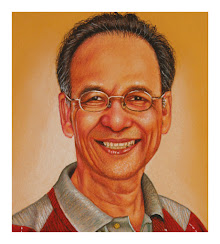
FROM DILIP MUKERJEA

"Genius is in-born, may it never be still-born."

"Oysters, irritated by grains of sand, give birth to pearls. Brains, irritated by curiosity, give birth to ideas."

"Brainpower is the bridge to the future; it is what transports you from wishful thinking to willful doing."

"Unless you keep learning & growing, the status quo has no status."
Showing posts with label Paul J Meyer. Show all posts

Wednesday, November 30, 2022

This elegant quote to me is the best definition for success.

It shows that success is more of a journey than reaching a destination.
It implies sort of a work in progress, with juice of growth.
It necessitates preplanning as a goal striving endeavour.
More importantly, it has to be expressed in personal terms.
In retrospect, my nascent exploration of developing personal mastery has had started with my initial participation in Paul J Meyer's Dynamics of Goal Setting back in the late seventies.
I was then a young manager.
It led me to reading the classic works of Napoleon Hill, Dr Maxwell Maltz, Dale Carnegie, Earl Nightingale, Og Mandino, just to name a few of my perennial favourites, which had impacted me tremendously, as I traversed the Highway of Life for more than seven decades.
As a matter of fact, Paul J Meyer's elegant quote:
"Whatever you vividly imagine, ardently desire, sincerely believe, and enthusiastically acted upon... must inevitably come to pass,"
is still framed and hung on the wall of my private sanctuary a.k.a. personal library today.

Tuesday, October 4, 2022

Interesting!

Notwithstandingly, entrepreneur and founder of the Success Motivation Institute in Waco, TX, USA, gave a nice and apt definition, back in the late sixties (but I encountered his great work back in the late seventies, when I participated in his pretty expensive Dynamics of Goal Setting program):

"Success is a progressive realization of worthwhile, predetermined personal goals."


Thursday, September 22, 2022

Oh, Yes!

Success is a decision to pursue the progressive realization of worthwhile, predetermined personal goals (with thanks to inspirational cues from Paul J Meyer, entrepreneur and founder of the Success Motivation Institute, Waco, USA).

Sunday, August 28, 2022

In retrospect, when I am reviewing my own journey on the Highway of Life for the last seven decades, I am indebted to Dr Maltz and his Pyscho-Cybernetics classic, and of course to other giants before me, for spurring my relentless quest for developing personal mastery, starting back in the late seventies.

One area, which I have had already written quite substantially here is opportunity sensing.
The other area is goal striving.
As I have had already mentioned earlier, my first encounter in the late seventies, was entrepreneur Paul J Meyer's Dynamics of Goal Setting program, which gave me the requisite skillsets, toolsets, actionsets and mindsets to get the ball roling.
In the ensuing years, as a professional in the corporate world (where I have had hung out for almost a quarter of a century), I was introduced to what folks called strategic visionising, and later on, scenario planning, which gave me another eye-opening dimension about goal striving, which corporate folks applied in creating a positive vision of the future, in an organisational setting.
More interestingly, they have duly empowered and facilitated my departure from the corporate world in the early nineties with  subsequent venture into following my own bliss, by setting up three small entrepreneurial outfits.
Without goal striving, both at the personal, professional and organisational level, I would not have come this far, in terms of personal success achievement.
I am now retyred (not a typo, just a novel way to express a new spin for me), enjoying the rustic laissez faire lifestyle in Vietnam, also a foodie paradise, where I have had relocated from Singapore more than a decade ago.

Saturday, August 20, 2022

I have had always been fascinated by the idea of goal striving, especially after having read Dr Maxwell Maltz's Psycho-Cybernetics classic, following my particiation in the Dynamics of Goal Setting program from Success Motivation Institute, Waco, TX, in the late seventies.

Here's a specific passage from the book about Dr Viktor Frankl, which intrigued me, but didn't strike me as much when I first read it:

"Viktor Frankl, dintinguished Austrian psychologist and author of Man's Search for Meaning, survived three years of imprisonment in Aushwitz, Dachau and other concentration camps during World War II.

Although he witnessed massive suffering, death and destruction, Frankl stated that one in twenty prisoners actually survived these death camps, and the primary reason for many of these survivors was their continued purpiose ffor existence.

These surviving prisoners set goals to either see their families again, fulfill a previous mission, or live long enough to inform the world of the atrocities of war. It was these goals that helped keep them alive, while others without a purpose for their continued survival, perished."

I must admit that I actually didn't understand this particular passage very well, or rather its significant implications, until I have had the wonderful opportunity to read Dr Frankl's book,  and also after a planned visit to the remnant of the Auschwitz concentration camp in Poland, as part of my holidays across Eastern Europe with my late wife Catherine, in the late eighties.

I thus remember vividly this elegant quote from Dr Frankl:

“Life can be pulled by goals just as surely as it can be pushed by drives.”

I fully concur with the concept that setting goals is a key element of becoming successful. They help us to work effectively and methodically, and they also help us to manage our tasks and priorities.

From my own experiences, it is best to also set short-term goals rather than just long-term goals, as these will help us to work towards our long-term goals, and keep us motivated as we will have small wins and mini-achievements along the way.

In retrospect, this has had been one of my best life lessons.


Monday, July 25, 2022

HOW TO CRAFT YOUR DEFINITE CHIEF AIM ~ MY BIGGEST TAKEAWAY FROM 'LAW OF SUCCESS' AND 'THINK AND GROW RICH' BY NAPOLEON HILL

I have had initially crafted the following simple design and execution template for myself in the late seventies or so, and subsequently expanded it to help high-school and pre-university students in Singapore throughout the nineties, as part of my strategy consultancy work in the schools, to set compelling, inspiring and overarching long-range goals and achieve goals in life.
Here are the operating mechanics:
A) First and foremost, know exactly what you want, and why, in terms of compelling, inspiring and overarching long-range goals and objectives:

a) what do I want to be?
b) what do I want to do?
c) what do I want to have?
d) what do I want to improve?
e) what do I want to change?
f) what do I want to learn?
g) where do I want to go?
h) who do I want to meet or engage as mentors?

in tandem with the following major life dimensions in your life:

i) academic pursuit (further and beyond);
ii) mental development;
iii) career aspirations;
iv) physical health;
v) financial wealth or financial development;
vi) family relationships, including romance;
vii) social networking;
viii) recreational ventures (including hobbies, interests, sports, vacations, etc.);
ix) spiritual development (including contributions to society, volunteering, religious pursuits, etc.);
x) entrepreneurial side-gigs, if any;

Take your time, a few days if needed as you are thinking about your
future!
You may end up with several useful ideas.
Narrow them down to say 3 to 5, by asking yourself, as you evaluate your goals:

  • Do I really like or want it?
  • Will I enjoy it when I get it?
  • Am I prepared to do whatever it takes to get it?

If Yes for all questions, proceed; if NO, it's a NO GO!
B) Translate all your long-range goals and objectives in (1) into specific, prioritised and executable tasks that you need to accomplish daily, weekly, monthly, quarterly, and even annually;
C) With the end in mind as formulated in (1) and (2), work out your start-point, end-point and the developmental path of transition points in between;
In tactical execution, (2) and (3) form the basis of your systematic game plan.
This is where you can factor in your learning agenda, or study plan, or even your side-gig project plan, if any.
D) Pinpoint specific tasks that you need to accomplish at each transition point till the endpoint;
E) Establish metrics to measure your progress, or milestone accomplishments;
F) Assign and allocate personal accountability, as some tasks may need to be shared, e.g. with team members, if any;
G) Identify and marshal resources that are required to get all the work done;
[I like to call them the 7 M's: Money; Methods; Men; Machines; Materials; Metrics; and Mojo!]
H) Schedule a timetable for completion of each predefined task;
I) Highlight potential problems or challenges that may crop up along the Highway of Life, as you traverse on it;
J) Brainstorm and wrap up a slew of possible strategies to deal with (I);
This is your contingency plan.
K) Institute some form of system, like a visual Pert Chart, to track, control and monitor your forward trajectory, as laid out in your systematic game plan, in conjunction with all the critical elements of (4) to (10);
L) Follow-up massively and follow-through consistently your systematic game plan;
M) Put in your sweat equity of intense effort and focused execution;
N) Stay focused on your strategic objectives, but remain flexible in your tactical execution;
The ultimate fire test of your goal setting and goal achieving is in (L),(M) and (N)!
A nice parting shot, as food for thought:

"Whatever you vividly imagine, ardently desire, sincerely believe, and enthusiastically act upon,... must inevitably come to pass. "

~ Paul J Meyer;


Friday, July 22, 2022

UNDERSTANDING THE POWER OF GOAL STRIVING:

Looking back at my own life, after having traversed the Highway of Life for more than seven decades, I like to say that, I can relate very well to these astute observations of Dr Maxwell Maltz.

Back in the mid seventies, when I was promoted to manager of a division, I was then only 27 years old.
My first investment into personal development was the facilitated 'Dynamics of Goal Setting' program from the Singapore distributor of Success Motivation Institute of Waco, TX, USA.
I remember vividly it was pretty expensive, and I even had to get a finance company loan for one year to pay for it.
The author of the program, Paul J Meyer, gave me the best definition for success:
Success is the progressive realization of predetermined, worthwhile, personal goals.
Nonetheless, that investment somehow spurred my nascent foray into acquiring more skillsets, toolsets, actionsets and mindsets about developing personal mastery.
Naturally along the way, I bumped into great motivational writings, among which 'PsychoCybernetics' by Dr Maltz, 'Law of Success' and 'Think & Grow Rich', both by Napoleon Hill, were most impactful.
As I progressed along the growth trajectory of my professional career tracking in the corporate world, attendant exposures to strategic visionising or planning, vision building, contingency planning, scenario planning, just to name a few, became part and parcel of my knowledge acquisition and management.
One thing that really stood out, as a common denominator in whatever I have had gained within almost a quarter of a century of my professional life, is the relevant core issue of goal setting and goal achieving, in both corporate/business and personal settings.
In the corporate world, having goals is always expressed as the power of having a positive vision of the future.
Drawing intellectual cues from author-filmmaker-futurist Joel Arthur Barker, having a positive vision of the future is the most forceful motivator for change — for success — that companies, schools, communities, nations, and individuals possess.
To cut to the chase, Dr Maltz was far ahead of his time, and I am glad to be able to have the wonderful opportunity to have read his writings, as well as others.


QUEST FOR DEVELOPING PERSONAL MASTERY:

In retrospect, when I am reviewing my own journey on the Highway of Life, I am indebted to Dr Maltz and his Pyscho-Cybernetics classic, and of course to other giants before me, for spurring my relentless quest for developing personal mastery, starting back in the late seventies.

One area, which I have had already written quite substantially here is opportunity sensing.
The other area is goal striving.
As I have had already mentioned earlier, my first encounter in the late seventies, was entrepreneur Paul J Meyer's Dynamics of Goal Setting program, which gave me the requisite skillsets, toolsets, actionsets and mindsets to get the ball roling.
In the ensuing years, as a professional in the corporate world (where I have had hung out for almost a quarter of a century), I was introduced to what folks called strategic visionising, and later on, scenario planning, which gave me another eye-opening dimension about goal striving, which corporate folks applied in creating a positive vision of the future, in an organisational setting.
More interestingly, they have duly empowered and facilitated my subsequent venture into following my own bliss, by setting up three small entrepreneurial outfits, after leaving the corporate world in the early nineties.
Without goal striving, both at the personal, professional and organisational level, I would not have come this far, in terms of personal success achievements.
I am now retyred (not a typo, just a novel way to express a new spin for me), enjoying the rustic laissez faire lifestyle in Vietnam, also a foodie paradise, where I have had relocated from Singapore more than a decade ago.


UNDERSTANDING THE DYNAMICS OF GOAL SETTING

These astute observations plus the Million Dollar Personal Success Plan by entrepreneur Paul J Meyer, who founded the Success Motivation Instituite, Waco, TX, actually represented my nascent journey into developing personal mastery, while participating in their Dynamics of Goal Setting program, back in the late seventies.

I was then a young manager, in the late twenties, working in a large German firm in Singapore. I was also just promoted from the position of an engineering executive.
It was from this point of my life that I came to know Dr Maxwell Maltz and his Psycho-Cybernetics classic.
Around the same time, I then got involved in reading up Napoleon Hill's work, particularly his Law of Success and Think & Grow Rich, among other popular success literature, mainly from the United States, during that era.
In retrospect, all of them started my deep personal interest in pursuing personal excellence.
Without the valuable lesson takeaways from all of them, the insightful knowledge acquisitions from further participation in numerous workshops, and the exchange of ideas and insights with myriad like-minded professionals along the way, I wouldn't have survived and sustained the almost quarter of a century in the corporate world and another 15 years of running my own business.
In particular, from the personal development angle, Paul J Meyer, Dr Maxwell Marlz, Napoleon Hill, Og Mandino, David Schwartz, Dale Carnegie, Earl Nightingale, Jim Rohn, Dr Win Wenger, Tony Robbins, just to name a few, had been tremendously great influences.
From the professional development angle, there were far more notable influences, and I would just name Dudley Lynch and Paul Kordis, for their published writings, especially their Strategy of the Dolphin and Code of the Monarch, were among the first to initiate my intellectual foray.
I must admit, though, that one quintessential common thing really stood out among all of them: the imperativeness and urgency of goal striving and the power of the human mind in creating success.
Suffice to say, it has had been a very long ride, with fond memories and sweet reminiscences, indeed.


Wednesday, June 29, 2022

I am just recapping and reviewing (my notes of) what Dr Maxwell Maltz had talked extensively about the success-type personality, which then reminds of what I have had previously read about the late Bob Proctor's work in this area. He posed an interesting question:

WHY DON'T WE DO THE THINGS WE KNOW WE SHOULD TO CREATE SUCCESS?
Interestingly, Bob Proctor also had a CD product that goes under the label of 'Success Habits'. He had deliberately listed 12 'Success Habits'.
Although I have not reviewed his product, I would like to take the liberty of using those labels for success habits as an intellectual platform to tackle his pertinent question, with random bursts of insights, drawing learning experiences from my own long journey on the Highway of Life.

1) Success:
- most of us have a foggy idea about success, except for equating it with money and/or fame;
- it's never the end-result or destination; it's always the ride or journey, and as such, there are always road blocks and even unexpected accidents, e.g. storms, to deal with; sometimes, we may need to take detours to continue the journey;
- Earl Nightingale and Paul J Meyer defined it best:
"Success is the progressive realisation of predetermined, worthwhile and personal goals";
- it's also pertinent to point out that success is to be measured not so much by the position that one has reached in life as by the obstacles which one has overcome while trying to succeed;

2) Decision:
- I once read that life is a sum of all our choices or decisions; unfortunately most of us like to sit on the fence;
- I am sure you can remember the jocularity of the proverbial 3 frogs sitting on a lily pod; two decided to jump into the pond; how many frogs are left on the pod?
- no wonder peak performance coach Anthony Robbins once said:
"It is in your moment of decision that your destiny is shaped";
What he is saying is that using the power of decision gives you the capacity to get past any excuse to change any and every part of your life in an instant;
- interestingly, good decisions come from experience, and experience comes from bad decisions;
- hence, indecisiveness is a stumbling block to success;

3) Risk:
- Most of us are risk adverse, including myself;
- I remember vividly during the late seventies, while I was a deputy divisional manager, one of my young engineers who left to start his own business [he wanted to make S$1 million before his 30th birthday] had posed me a question to the effect as to why I was still working for somebody else while I had more than a decade of professional experience; to be frank, risk was my concern at that point as I was gainfully employed; [that young engineer made it!]
- Helen Keller said it best:
"Security is mostly superstition. It does not exist in nature. Life is either a daring adventure or nothing".
- I am always bemused when I read this quotation from an unknown author:
"Never be afraid to try something new. Remember, amateurs built the ark; professionals built the Titanic."
- So, in late 1991, I left the corporate world after almost a quarter of a century, and the rest was history!

4) Persistence:
- I believe it was my persistence and perseverance that kept me going when I started my own small ventures during the early nineties, as the first 3 years were hell of a ride;
- the following advice from Paul J Meyer still rings true:
"90% of those who failed are not actually defeated. They simply quit!"
- in fact, I have learned that when defeat comes, accept it as a signal that your plans are not working, so rebuild those plans, and set sail once again toward your preferred outcome;

5) Responsibility;
- I am sure most readers can recall Stephen Covey's elaborate definition of "responsibility" in his debut classic, '7 Habits of Highly Effective People';
- For me, "responsibility" is taking charge of and taking action on one's own life;
- I just can't help thinking about what Spiderman's dying uncle had taught our young hero, as his parting advice:
"Great power comes with great responsibility!";

6) Confidence:
- I believe quite a lot of people, for one reason or another, suffer from low self-esteem; as a result, they have a poor image of themselves, and this always boils down to the lack of confidence in oneself;
- most of the time, this has also to do with one's own self-talk, especially the negative aspect;
- One problem I reckon has also to do with one's incessant need to compare with others - follow the Jones, so to speak; I always believe that we don't have to out beat anybody; we just have to be better our self everyday, and that's the first small step towards building self-confidence;

7) Action:
- action always follows decision, but the problem is that we often don't want to act on what we have decided; that's stupidity!
- from another perspective, famed scientist Marie Curie shared her thoughts this way:
"The common conception is that motivation leads to action, but the reverse is true - action precedes motivation. You have to 'prime the pump' and get the juice flowing, which motivates you to work on your goals. Getting momentum going is the most difficult part of the job, and often taking the first step is enough to prompt you to make the best of your day."
- remember, I have talked about "inertia" in an earlier post; also about "action-mindedness";
- Bruce Lee, whose fists shook the world, once said this:
"Knowing is not enough, you must apply. Willing is not enough, you must do.";
- Interestingly, futurist Joel Arthur Barker has this great perspective:
"Vision without action is daydreaming; action without vision is random activity; vision with action changes the world."
How about that?;
- Interestingly, as a counterpoint, action has consequences, but action also creates feedback for learning and opportunity;

8) Money:😎
- Most people like to hold the view that only after we have the money, we can then do something;
- I like what the cash flow guy Robert Kiyosaki has once taught me:
"Money is only an idea; if you want to have money in your hands, change your thinking!"
- it's also important to note that money isn't everything: I have some friends who are loaded, but surprisingly, they are still unhappy with their own lives.

9) Goals:
- many people fail in life, not for lack of ability or even courage, but simply because they have never organised their lives around a goal;
- undoubtedly, in any success or prosperity literature, old or new, goal setting & goal achieving always form one of the critical approaches to personal success;
- once your goals are set, life takes on a meaningful purpose, & everything else just falls into place - that's what I have found;
- in retrospect, you simply can't hit anything unless you have a target;
- successful companies, successful individuals & successful students have one thing in common: they have specific goals! Best of all, they know where they are going!
- I was so glad that I had learned about goal setting during my early professional years - many thanks to Paul J Meyer, Dr Maxwell Maltz and Napoleon Hill!
- Aristotle was right to day. and so was Dr Maxwell Maltz:
"Man is a goal-seeking animal. His life only has meaning if he is reaching out and striving for his goals."

10) Attitude:
- Attitude is everything - it's very true!
- A positive mental attitude can really make the difference;
- There is a wise saying from Zig Ziglar:
"It's your attitude, not your aptitude that determines your altitude!";
- put it in another way, aptitude may get you to the top, but it takes attitude to keep you there!;
- I remember in my employment days that knowledge and skills often help one to get a job, but poor attitude and bad habits can get one fired from the job!

11) Creativity:
- we are able to enjoy many modern technological conveniences today primarily because of the creativity and imagination of our forefathers;
- No wonder, Napoleon Hill once said:
"Ideas are the beginnings of all riches . . ."
- I don't know who said to this effect, but it makes sense:
"Ideas make money. Everything else is housekeeping."
- not only coming up with good ideas, but we must also have the will power to put them to work;
- it's also pertinent to point out that the problem is never how to get new ideas into your mind, but how to get old ideas out of the system;

12) Communications:

- well, just follow the intellectual cues of productivity strategist Stephen R Covey: Seek first to understand, then to be understood!

- To use empathic listening, listen patiently to what the other person has to say, even if you do not agree with it. It is important to show acceptance, though not necessarily agreement, by simply nodding or injecting phrases such as "I understand" or "I see."

Enjoy your reading, exploration and asssimilation!