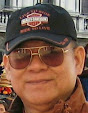
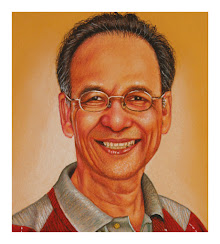
FROM DILIP MUKERJEA

"Genius is in-born, may it never be still-born."

"Oysters, irritated by grains of sand, give birth to pearls. Brains, irritated by curiosity, give birth to ideas."

"Brainpower is the bridge to the future; it is what transports you from wishful thinking to willful doing."

"Unless you keep learning & growing, the status quo has no status."
Showing posts with label Intersectional Moments. Show all posts

Saturday, April 25, 2009

IDEAS BUILD ON IDEAS!

I am always fascinated by the phenomenon of "ideas build on ideas".

If you have been following my weblog, you probably can recall the reported "conversation" between the beaver & the mousedeer at the vicinity of a dam. Here's the link to the blog post, by the way.

I reckon readers should be familiar with the work of change strategist & futurist Joel Arthur Barker, who wrote his debut book, 'Discovering the Future: The Business of Paradigms' during the mid 80's.

He rode elegantly on the seminal ideas of scientist Thomas Kuhn, whose 60's classic & benchmark book,'The Structure Of Scientific Revolutions', had profound as well as irritating effects on a lot of people, including other scientists, as far as the concept of "paradigm shift" in the scientific world is concerned.

With clarity & succinctness, Joel Arthur Barker then brought that brilliant concept into the corporate world, within the context of business futurism. He has even built a highly successful proprietary series of wonderful training videos to go with it.

For me, the most productive learning experience from the work of Joel Arthur Barker is understanding - and applying - the power of paradigm pliancy.

In contrast, entrepreneur/researcher Frans Johansson drew his inspiration from the work of the Medici family during the Renaissance era to write his wonderful book, 'The Medici Effect: Breakthrough Insights at the Intersection of Ideas, Concepts, & Cultures' in 2004.

[For more information, readers can go to this link.]

In a nut shell, the book's fancy title actually refers to an explosion of creativity and imagination that occurred in Florence, Italy, during the Renaissance era. It stretched from the late 14th century where it started right up to the early 17th Century, where it had spread to the rest of Europe.

During that period, the powerful & influential Medici banking family funded artists, artisans, painters, sculptors, and even thinkers and scientists from many different cultures and disciplines to come together in Florence to debate, discuss, and discover new ideas.

[I was holidaying in Florence with my wife in November 2006 & had read that, out of 1,000 European artists, painters & sculptors during that period, about 350 of them had lived and/or worked in Florence, Italy.]

Through their generous patronage, we are able to speak of and admire the wonderful masterpieces & elegant work of Michelangelo, Leonardo Da Vinci, Botticelli, Donatello, Raphael, Ghiberti and countless others.

The book is about how all or each of us can create our own "Medici Effect" by applying the concept of "inter-sectional ideas, cultures, disciplines & strategies in new & previously unexplored ways".

Dilip Mukerjea likes to call it, "Junction Dynamics"!

From my perspective, it's akin to making deliberate juxtapositions!

Nonetheless, for me, the most productive learning experience from the work of Frans Johansson is understanding the power of creating "inter-sectional moments of AhAs".

Very interestingly, in recent times, Joel Arthur Barker has come up with a new business concept which he calls 'Innovation at the Verge".

[For more information, readers can go to this link.]

He explains the "verge" as "where something & something different meet.

According to him, "Innovation at the Verge" is when two or more elements that are very different from one another are joined together to create a single idea that solves problems the separate elements could not.

He has given the example of a forklift that is also a weighing scale.

Do readers now see my point: "ideas build on ideas"!

Think about it:

- Ned Herrmann's "Whole-Brain Problem Walkabout" via understanding of his brain dominance profile instrument;

- Roger von oech's "Creative Whacks" - explorer, artist, judge, warrior;

- Michael Hewitt-Gleeson's "Seven Thinking Caps" - via multicoloured caps;

- Edward de bono's "Six Thinking Hats" - via multicoloured hats;

- IDEO's Strategies for Defeating the Devil's Advocate and Driving Creativity Throughout Your Organization via their process methodology as embodied in the "Ten Faces of Innovation";

So, who is the progenitor? In my view, any attempt will only be a purely academic exercise.

[As a matter of fact, there seems to be a "verbal jujitsu" revolving on the net between Edward de bono & his one-time protege & collaborator, Michael Hewitt-Gleeson, with regard to who actually had started the idea of multicoloured hats or caps. Readers can read debono's version at this link; Gleeson's version at this link.]

Sunday, February 1, 2009

MEMORABLY CREATIVE INSTANCES

Dilip Mukerjea, writing in his book, 'Surfing the Intellect" Building Intellectual Capital for a Knowledge Economy', took the opportunity to divert from his sober route to share some life's lighter moments, which he aptly called "creative instances".

For me, if they really tickle your funny bones, then, I would dare to say that you have crossed into what researcher/entrepreneur Frans Johansson has brilliantly called the "intersectional moments", based on his excellent book, 'The Medici Effect".

To recap:

"Intersections are places where ideas from different fields & cultures meet & collide, igniting an explosion of extraordinary new discoveries."

The author believes that today's greatest innovators are likely found hanging out - actually, learning & exploring - at the intersections of diverse disciplines: biology, mathematics, business, art, & politics.

By attracting talented souls from so many different fields & cultures - poets, philosophers, scientists, architects, painters, sculptors & artisans from all over Europe to come together in Florence, Italy, between the 13th & 17th centuries - the powerful & wealthy Medici family got all these creative people in contact with one another to trade ideas & collaborate on various endeavours.

This intersection of concepts & diverse backgrounds kicked off the Renaissance, one of the most innovative eras in human history.

My point here is that humour (read: innovation) often come about when you connect two seemingly unrelated ideas or topics to come up with something funny (read: fresh & new).

In fact Dilip Mukerjea put it beautifully as a chapter in his book:

'Everything Connects to Everything Else'.

I have extracted a quick sampling from his book:

[Salvador Dali was robbed while on a visit to New York, but he managed to get a good look at the offender and was able to provide the police with a rough sketch of the felon.

For the next two weeks New York police searched for a man with a head like a horse, a fried egg on his forehead, and a sword in his mouth.]

The mayor had officially opened the one-man art show and was browsing along the paintings when he stopped with a start in front of a picture of a woman reclining nude on a couch.

“That’s my wife,” he cried. “You scoundrel. You have had my wife up here posing nude in your studio.”

The artist, a little terrified, said it wasn’t the case at all. “I painted it from memory,” he said.

[Salvador Dali took Picasso aside and said, “Excuse me friend, could I have a word in your eyeball?”]

An artist and his model were smooching on the sofa when they heard a car arrive.

“Quick, it’s my wife,” cried the artist.

“Get your clothes off and pretend we’re working.”

[Question on golf etiquette: What do you do when your opponent claims to have found his ball in the rough, and you know he is a liar because you’ve got it in your pocket?]

A touring golf professional was having a drink at the club’s bar when he was approached by a chap with a white cane and dark glasses who introduced himself as a golf champion.

“I am a champion of the Blind Golfers’ Association and as one champion to another, I would like to challenge you to a match which could be a fund-raiser for the blind.” He said he didn’t want any favours and told the pro he was keen to play for S$50 a hole.

The embarrassed pro tried to avoid the challenge, but the blind man was so insistent he finally agreed.

“Okay, when will we play?” he asked.

“Any night. Any night at all.”

[In a very respectable hotel the old bloke in charge of the cloakroom had been in the job for years and never bothered to give a ticket when coats were handed over to him.

A reporter got interested in him and asked the manager how the old geezer kept track of so many coats without dockets.

“Oh, don’t worry about old Ted. He’s been doing the job for years. Never had a complaint,” said the manager.

The reporter decided to put him to the test on the next busy Saturday night. When leaving he asked for his coat and when he received it he said, “How do you know if this is my coat?”

“I don’t,” replied Ted.

“Then why did you give it to me?” said the reporter with a hint of triumph.

“Because that’s the coat you gave to me, sir,” said Ted.]

“How long have you been wearing that corset, Fred?”

“Ever since my wife found it in the car,”
he replied.

[A lawyer and his wife were out walking when a blonde on the other side of the street waved and blew him a kiss. The wife demanded to know who she was.

“Oh, I just met her recently. Professionally of course,” he said.

“Whose profession, yours or hers?” said the wife.]

The lovers were entwined in a passionate embrace on the loungeroom floor when suddenly a car was heard coming up the driveway.

“Quick!” the woman shrieked. “That will be my husband. He’s a policeman and he’s twice as big as you.”

He companion hopped about frantically and said, “Where’s the back door?”

“We haven’t got one,” she replied.

“Well, tell me quickly,” he said, “where would you like one?”

[All the images in this post are the intellectual property of Dilip Mukerjea.]