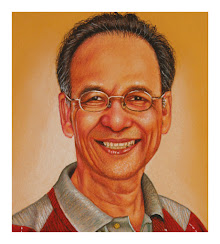
FROM DILIP MUKERJEA

"Genius is in-born, may it never be still-born."

"Oysters, irritated by grains of sand, give birth to pearls. Brains, irritated by curiosity, give birth to ideas."

"Brainpower is the bridge to the future; it is what transports you from wishful thinking to willful doing."

"Unless you keep learning & growing, the status quo has no status."
Showing posts with label Piggybacking. Show all posts

Thursday, August 19, 2010

A SIMPLE LESSON ON CREATIVITY FROM MR LEE KUAN YEW: PIGGYBACKING

I have assembled the facts for the following real story - with a valuable lesson to learn from the creativity standpoint - following a lead from a business friend, Philip Merry, via Dilip Mukerjea.

The Changi International Airport in Singapore is recognised as one of the best airports in the world, with 80 airlines serving 200 cities in 60 countries.

Today, the international airport has established itself as a major aviation hub in the Asia-Pacific region. I understand it handles an annual passenger capacity of more than 70 million a year.

Interestingly, the international airport owes its genesis to a decision that was made back in the 1970's, when our then Prime Minister Mr Lee Kuan Yew (from 1953-1990) chose to shift Singapore's international airport from Paya Lebar to Changi. [At that time, Changi was a military airport, a legacy from the British.]

Paya Lebar during that period was already facing capacity constraints, & the easy way out would have been to build a second runway at the old airport. Building another runway would mean lower land acquisition costs & fewer uncertainties.

On the other hand, relocating the airport to Changi would cost S$1 billion.

There were also engineering challenges to building a new airport at Changi.

Moreover, when our then Prime Minister gave the go-ahead signal for Changi in 1975, Singapore was still reeling from the aftermath of the 1973 oil crisis & also the fall of South Vietnam to the communists insurgents from the north.

What actually convinced our then Prime Minister to pick Changi?

Mr Lee Kuan Yew, now Minister Mentor, revealed his side of the story during the recent SNEF's 30th Anniversary Employers' Summit @ Resort World.

He was talking about the importance of living, learning & venturing overseas for our younger generation.

He related that he himself gained new ideas from spending time in Britain as a young man in his twenties & later in the United States.

For instance, he had noticed, at the Logan International Airport in Boston, that planes took off & landed over water, & hence created no footprint of sound of the aircraft over the city.

So, against the recommendations of the British aviation consultants, he opted for a major policy decision to reclaim land in Changi for a new airport, where planes would take off over water, instead of building a second runway at Paya Lebar.

According to Minister Mentor, that policy decision in 1975 to write off the S$800 million Paya Lebar Airport and build the S$1.5 billion Changi International Airport was 'one of the best investments' Singapore has ever made.

In a nut shell, & looking from a creativity standpoint, isn't that piggybacking on an already proven idea, or more specifically, ideas built on ideas?

Naturally, there are other contributing factors too, like overseas exposure to new stimuli or new environment, the power of observation, bringing forth past knowledge & experiences to converge on resolving a problem, & not forgetting the moral courage & political will to push ahead the decision despite the uncertain prevailing conditions.


[All the digital images in this post are the intellectual property of Dilip Mukerjea.]

Monday, October 5, 2009

CONCEPTUAL SYMBOL: The Co-Pi-Fro Process


In these two beautiful composite conceptual symbols, Dilip has systematically arranged the three earlier conceptual symbols, namely Copycat or Copycatting, Piggyback or Piggybacking, & Leapfrog or Leapfrogging, to line up in a sequence to form the Co-Pi-Fro process, which is the essence of making a quantum leap in one's creative process, by "riding on the shoulders of giants".

That's to say, Ideas Build On Ideas!

Isn't that interesting?

Although Leapfrog or Leapfrogging may seemed to be the end-point, I would want to consider it separately or independently from the first two, especially when one decides to take a sudden detour or an unbeaten path during the creative journey, in order to make a breakthrough.

[Excerpted from the 'work-in-progress', tentatively entitled 'Brainaissance', by Dilip Mukerjea. All the conceptual symbols in this post are the intellectual property of Dilip Mukerjea.]

CONCEPTUAL SYMBOL: Piggyback or Piggybacking


[Excerpted from the 'work-in-progress', tentatively entitled 'Brainaissance', by Dilip Mukerjea. All the conceptual symbols in this post are the intellectual property of Dilip Mukerjea.]

Sunday, April 5, 2009

IS 'PIGGYBACKING' A TRULY CREATIVE INITIATIVE?


Actually, my first impression of 'piggybacking' is the picture of a NASA space shuttle 'piggybacking' on top of a Boeing 747 cargo plane, which I have seen many many years ago.

Well, for the purpose of this post, 'piggybacking' is also a term commonly used in the field of creativity & innovation to describe a creative initiative, whereby one rides on the ideas of other people, or from other disciplines, to come up with a new &/or better idea, especially during a brainstorming exercise.

Tactically, 'piggybacking' is combining, modifying & expanding other people's ideas. 'Hitch-hiking' is apparently another similar term often used to describe the process. Overall, it is based on the concept that ideas build on ideas.

In other words, riding or "standing on the shoulders of giants", to paraphrase Sir Isaac Newton.

Come to think of it, this implies what the 'Book of Ecclesiastes' had said centuries ago that "there is no new thing under the sun" rings true.

Many creativity experts have in fact argued that:

- all ideas are evolutions of previous concepts, or conceptual combinations;

- creativity is cumulative & incremental;

- creativity can be defined as recombination: it is the creation of something new from the combination of elements that have previously existed;

- innovations today are always combinations of previous ideas, products that are already out there, being used every day;

In the book, 'How Invention Begins: Echoes of Old Voices in the Rise of New Machines', professor emeritus John Lienhard explains how major creations like the steam engine, the airplane & the printing press came about.

In virtually every case, the credited inventor built on many ideas preceding his own. To some degree, the author says, an invention is the product of group intelligence.

He posits that the quest for a single canonical inventor of a new technology is illusory, because all inventions are the sum of many contributions.

As a matter of fact, business scholar Richard Ogle, writing in his fascinating book, 'Smart World: Breakthrough Creativity & the New Science of Ideas', reaffirms this interesting nugget:

Originally, Xerox's research team had a crackerpot PC design, but it was a tiny rival Apple, thanks to the two wonderful Steves, who were better plugged into the critical hobbyist world, which in turn triggered the PC goldmine.

According to the author, some inventors succeed not by inventing from scratch, but by using lots of established ideas & then pushing that knowledge into a new direction that leads to a major discovery.

I certainly like his principal premise in the provocative book: the source of creativity lies "out there," in the network of connections between people and ideas.

The key resides in what he calls "idea-spaces," a set of nodes in a network of people (and their ideas) that cohere and take on a distinctive set of characteristics leading to the generation of breakthrough ideas, e.g. the amazing scientific discovery of Watson & Crick, as well as the Gutenberg press, among many others.

A couple of weeks ago, I have read an interesting blog-post (possibly by innovation strategist Keith Sawyer) about Dr Chi-mao Hsieh, a professor at the Missouri University of Science & Technology who has figured out a way to measure the relatedness of all the component ideas in a new idea by researching the inventory of patents.

His findings:

- the most successful patents have an intermediate degree of relatedness;

- patents that cite more other patents are most successful;

Interestingly, industry watcher & technology strategist Patricia Seybold has revealed in her inspiring book, 'Outside Innovation: How Your Customers Will Co-Design Your Company's Future', about the phenomenon of "outside innovation", whereby the most innovative companies are now using lead customers, partners, suppliers, universities, contract labs & other sources outside the company to jointly develop new products or technologies.

She has also maintained that internal R & D departments of these companies are being redeployed to scout for new products & technologies in the marketspace, including overseas.

Undoubtedly, at least from the standpoint of 'piggybacking', Mother Nature - a logical playground of ideas - has been modern technology & engineering's greatest teacher. Please read my earlier post in the 'Optimum Performance Technologies' weblog.

So, in a nut shell, & considering most of today's modern conveniences, which have their origins or connections to 12,000 years of ancient history, based on the exploratory work of scholar & documentary producer James Burke, 'piggybacking' is a truly creative initiative.

[Please peruse his wonderful book, 'Connections from Ptolemy's Astrolabe to the Discovery of Electricity: How Inventions are Linked & How They Cause Change throughout History', or better still, get hold of & watch his entire collections of DVDs.]

By the way, to help you build your concepts while brainstorming, I like to offer this wonderful tip from creative director Robert Pratt:

"Don’t be afraid to piggyback off ideas that, for the moment, don’t seem to have anything to do with your problem. Sometimes hitchhiking off an unrelated concept may lead a winding productive path right back to your original destination, or an even better destination than you originally intended. Remember, your idea should be pliable at this point. Nothing is engraved in stone."

[to be continued in the Next Post. I will share my personal observations of 'piggybacking' in the movie industry, from which action movies are a pet subject of mine.]