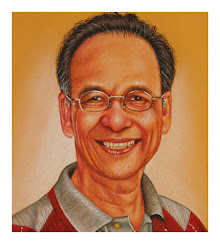
A nice talk by Prof. Jack Matson of PennState at TEDxPSU: Transforming Failures Into Success
Showing posts with label Jack Matson. Show all posts
Showing posts with label Jack Matson. Show all posts
Thursday, November 3, 2022


Wednesday, October 5, 2022
EMBRACING FAILURE AS A STRATEGIC MODEL
I have had actually written this blog piece several years ago, in response to an email exchange with award-winning innovator and also author of Innovate or Die: A Personal Perspective on the Art of Innovation, by Dr Jack V Matson.
It was in connection with the concept of 'Intelligent Fast Failure',
or IFF, which he had orginally conceived in the early nineties, as part of
the engineering curriculum design for The Penn State University (The Leonard
Center for Innovation & Enhancement of Engineering Education.
He had sought my personal views, by posing the following questions:
- what is your experience with the IFF concept?
- has it been difficult for others to grasp?
- do you know of people who have used it successfully? if so, how? in what
ways?
I have had come to realise, with a little bit of wisdom on hindsight, that
my broad understanding of the IFF concept came from few major
strands, prior to reading his wonderful book, 'The Art of innovation:
Using Intelligent Fast Failure', which was the precursor to Innovate or Die.
#1) Over the years, reading the life stories of inventive minds
like Thomas Edison, Alexander Grapham Bell, The Wright
Brothers, Henry Ford, Albert Einstein, Paul
MacCready, James Dyson, as well as entrepreneurial minds like Richard
Branson, Sim Wong Hoo (Creative Technology), Ronald
Sim (OSIM), etc., especially understanding how they had dealt with various
failures in their own unique ways;
#2) from the 'Money & You' seminar in Adelaide, Australia, during
the early nineties, from where I had learned of the "axiom":
"The greatest failure in life is the failure to participate in your own
life."
#3) reading about the global iconoclast and futurist R Buckminster
Fuller and his great work, especially when he had chosen to dedicate halff
of a century of his remaining life to working for global humanity, as
documented in his wonderful book, 'Critical Path' as well as manifested
in many of his patented artefacts e.g. geodesic dome, Dymaxion map, just to
name a few.
It was actually his personal experiment as 'Guinea Pig
B' (B for Bucky as he was affectionately known to most people); one of his
"axioms" stood out, among many others:
"There are no failed experiments; only unexpected outcomes".
[Note: Bucky had failed miserably in several business ventures. In fact, he had
also failed to honour his last personal commitment to his daughter, who later
died in his arms, as he had spent too much time boozing.]
#4) eventually reading Dr Matson's 'The Art of Innovation', from
which I had picked up two superb insights:
i) move as quickly as possible from new ideas to new knowledge, by making
small & manageable mistakes (read: "learning experiences");
ii) keeping multiple experiments going on simultaneously that require minimal
investment with the idea that one of these might bloom first;
I also took the opportunity to point out to Dr Matson that, while
most "successful" people had approached "learning from
failures" as launch pads for renewed actions after the
"failures" had happened, he had established "embracing
failures" as a strategic mental model to allow people to fail forward
and fast in an intelligent and fearless manner.
That's to say, his IFF concept is proactive and anticipatory. That's
the distinction I see.
On that note, and with all the understanding that I had gained from the
foregoing exposures, I had started my small post-corporate-world ventures
during the early nineties, as follows in one go:
- promoting seminars from overseas;
- writing a subscription newsletter;
- setting up a small book store;
- creating a strategy consulting business;
Sadly, my first two ventures ran only for about two years, and ceased immediately
after that, but the knowledge and experience gained allowed me to try out the
design and development of my own seminars and workshops, which went off well,
following a slow start.
Then, the foregoing change, plus the remaining two ventures, became my
"bread & butter" lines.
Frankly, as I had told Dr Matson in my response that, I don't think it would be
difficult for people to grasp the concept of using "failures as
learning experiences", or "bouncing back from
failures", so to speak, but whether they could understand the
distinction from his orginal IFF concept would be something else.
As a nation, at least from my personal perspective, I reckon Singapore had been
a great example of the "embracing failures to move forward" philosophy,
especially when Singapore was kicked out of the then Malaysian confederation in
mid-1965, and also when the British colonial forces pulled out completely in
the early 70s or so.
The complete historical events had already been documented in Minister Mentor
Lee Kuan Yew's memoirs, From Third World to First: The Singapore Story 1965 to 2000.
As for the knowledge of individuals from the "failures as stepping stones
to success" perspective, I told Dr Matson that the published
stories of:
- the Malaysian businessman Billi Lim in his book, Dare to Fail;
- the late Malaysian entrepreneur Lim Goh Tong, of the Genting Group,
in his autobiography, My Story; and
- the chairman of global technology outfit Creative Technology, Sim
Wong Hoo, in his semi-autobiography, Chaotic Thoughts from the Old Millennium;
would be worth pursuing.
Dr Matson was delighted with my response. He wrote back:
"Thank you so much for your insightful response. You placed IFF in
exactly the correct context.
Many others have commented on failure and its meaning in retrospect.
As you point out, my spin is a proactive embracing
approach to failure as the price of knowledge aquisition."
In reality, as I thought about it further, 'Intelligent Fast
Failure' is in fact a rapid learning methodology.
Unlike our traditional school system, where we learn the lesson first, & then
take the test . . . with IFF, as applied in the real world, one takes the
test first, in order to get the lesson.
In layman terms, this is often known as the "university of hard
knocks".
As a strategic model for a venture, irrespective of whether it is business or
professional or even personal, it nonetheless takes personal courage in dealing
with the perceived fear of failure, a strong conviction in self-efficacy, and
most importantly, the personal willingness to play, explore and experiment in
its execution.
Drawing from my own personal experience, I reckon another defining factor is
the focus on primary objectives set out at the beginning of the venture, with
the added operational flexibility in the final approach to reaching those
objectives amidst unexpected changing circumstances.


Friday, July 10, 2009
CAN WE FAIL? IF SO, HOW? & WHAT CAN WE DO ABOUT IT?
While browsing the Amazon online catalog this morning, I have stumbled upon Jim Collin's new book, 'How The Mighty Fail: And Why Some Companies Never Give In'.
I haven't yet acquired the book to read, but I am certainly intrigued by several questions posed by the author:
- How do the mighty fall?
- Can decline be detected early and avoided?
- How far can a company fall before the path toward doom becomes inevitable and unshakable?
- How can companies reverse course?
From the product description, I have came to this passage:
"Decline can be avoided. Decline can be detected. Decline can be reversed. . . Decline, it turns out, is largely self-inflicted, and the path to recovery lies largely within our own hands. We are not imprisoned by our circumstances, our history, or even our staggering defeats along the way. As long as we never get entirely knocked out of the game, hope always remains. The mighty can fall, but they can often rise again."
"Decline. . . is largely self-inflicted. . ."
I like that, as it implies choice. It is analoguous to 'Misery is also an Option'.
Nonetheless, it is obvious that the same situation also applies in the personal perspective.
I reckon it would be interesting to read the book in terms of finding out how we can enhance our anticipatory prowess, & develop some sort of a personal early warning system to failure.
Looks like this would be something interesting too for award-winning innovator Jack Matson to think about, & to add another perspective on to his own Intelligent Fast Failure philosophy. Jack, are you reading this?
The book is now in my shopping cart with Amazon.
Upon reading it, I will then share with readers the author's exposition of the five step-wise stages of decline, & how we can substantially reduce our chances of failing all the way to the bottom. Please stay tuned!
Friday, March 27, 2009
INTELLIGENT FAST FAILURE
 I have read the book 'Innovate or Die : A Personal Perspective on the Art of Innovation' by Jack Matson, an award-winning innovator, during the nineties.
In reality, this book is an enhanced version of the author's two earlier books, respectively entitled 'The Art of Innovation: Using Intelligent Fast Failure' & ‘How to Fail Successfully: A Bold Approach to Meeting Your Goals Through Intelligent Fast Failure’.
The latter two books were originally published in 1991, with the earlier one by The Penn State University (The Leonard Center for Innovation & Enhancement of Engineering Education).
The books' core philosophy was based on the author's personal experiences in exploring creativity & innovation with engineering design students in his 'Failure 101' or ‘Intelligent Fast Failure’ courses at the university (first at the University of Houston, later at Penn State).
He had taught engineering students to unlearn years of practising risk aversion, stressing the connection between creativity & risk. He had encouraged them to realise that failure was essential in developing design skills & judgement.
In a nut shell, as I had understood it, ‘Intelligent Fast Failure’ was basically a fast learning process, using failure (results) as a springboard.
Instead of experimenting with only one project idea, students could have several project ideas to work on at the same time. If one would fail, they could modify or adjust it or quickly pick the next one to work on. This experimentation would accelerate the learning process, which would encourage the students to get through the failure results more quickly, before low confidence or low self esteem could set in.
As a result, the students could reach the knowledge acquisition curve more quickly, where they would be able to find out what would work & what would not work.
His principal premise in the book was this:
"No issue is more important to the engineer, or entrepreneur, than intelligent failure."
I had read the author’s books enthusiastically, especially during the early 90's, when I felt, as a mechanical engineer by training, I could relate readily to the author's teaching philosophy.
At that time, I also felt that the author's unique concept of experimenting with creativity, particularly in the field of engineering design, would empower me to go forward & experiment simultaneously with other aspects of my own chosen life pursuits - research, consultancy, training & development, coaching, networking, globe-trotting & personal hobbies.
I eventually moved on, with further inspirations from other authors/books, to establish a strategy consultancy business, run a newsletter as well as operate a small retail outlet in early 1992.
To this day, I still think that this is an excellent book about creativity & innovation in action.
I strongly recommend reading this book if you are serious about wanting to learn how to manage failure & to develop an appetite for risk in your life &/or your work.
The book, generally written in a light-hearted manner, is packed with true-to-life examples, personal cases, & experiences of innovators excelling in the art of innovation on an organisational, civic or personal level.
Subscribe to:
Posts (Atom)




 Posts


