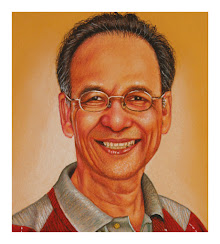
FROM DILIP MUKERJEA

"Genius is in-born, may it never be still-born."

"Oysters, irritated by grains of sand, give birth to pearls. Brains, irritated by curiosity, give birth to ideas."

"Brainpower is the bridge to the future; it is what transports you from wishful thinking to willful doing."

"Unless you keep learning & growing, the status quo has no status."
Showing posts with label Creative Opportunity Finding. Show all posts

Thursday, May 21, 2009

CREATING OPPORTUNITIES: THE LONG TAIL EFFECT


Writing in the 'Ideas on Ideas' edition of The Braindancer Series of bookazines, Dilip Mukerjea exhorts:

Just remember, yesterday’s peacock is today’s feather duster!

Success can lead to failure, and what failed yesterday, could succeed spectacularly tomorrow.

This is the essence of the Long Tail Effect.

Interestingly, the expression ‘The Long Tail’ was first coined by Chris Anderson in an October 2004 Wired magazine article to describe the niche strategy of businesses, such as Amazon.com or Netflix, that sell a large number of unique items, each in relatively small quantities...for substantial returns.

Anderson has later extended it into the book 'The Long Tail: Why the Future of Business is Selling Less of More' (2006).

He has argued that products that are in low demand or have low sales volume can collectively make up a market share that rivals or exceeds the relatively few current bestsellers and blockbusters, if the store or distribution channel is large enough.

The internet is having a profound effect on consumer market dynamics, and it's breaking all the rules.

In fact, for any industry where distribution can be expanded using the internet and the logistics of delivery can also be facilitated, the Long Tail can flip the current market upside down.

The Long Tail Effect happens when the exponentially growing availability of stuff, like news, consumer products, entertainment, and even software, becomes readily available to well, just about everyone.

So, to recap in a nut shell, when a shift like this takes place, there will always be opportunity in the marketspace.

[For more information about the Long Tail Effect, please go to Chris Anderson's weblog on the WIRED Blog Network.

All the images in this post are the intellectual property of Dilip Mukerjea.]

Friday, March 20, 2009

DEVELOPING PARADIGM PLIANCY

What Dilip Mukerjea has talked about in an earlier post, entitled 'Paradigm Paradise vs Paradigm Paralysis', is basically the critical importance of developing paradigm pliancy as we navigate the 21st century.

In a nut shell, paradigm pliancy is just the purposeful search for new ways to stretch the mind & break out of the box, or rather, 'paradigm paralysis'.

According to change strategist/futurist Joel Arthur Barker, who first alerted the corporate world to the business of paradigms during the 80s, it's an active behaviour in which we constantly question & challenge our prevailing paradigms by asking the 'paradigm shift' question:

"What do I believe is impossible to do in my field of activity today, but if it could be done, would fundamentally change my way of doing it for the better?"

To me, as a model for change, it is analogous to 'Developing Mindfulness' as advocated by Dr Ellen Langer of Harvard University in her classic book, 'Mindfulness'.

Also, my sentiment is best captured in the apt quote by French novelist Marcel Proust (1871-1922), as follows:

"The real voyage of discovery consists not in seeking new landscapes but in having new eyes."

So, how does one develops paradigm pliancy?

First things first. For a quick start:

1) Seeing the old world in new ways:

- that's seeing the commonplace with new eyes, transforming the familiar to strange & the strange to familiar;

2) Challenging your daily status quo, assumptions & premises:

- that's daring to question your sacred cows & traditional taboos;

3) Making novel connections;

- that's bringing together seemingly unrelated objects, events or ideas, in a way that leads to new revelations;

4) Recognising new patterns;

- that's perceiving significant similarities & contrasts of objects, events or ideas in the world out there;

In the end analysis, considering the many similarities in outcomes, I like to equate 'developing paradigm pliancy' with 'creative opportunity finding'.

Recommended Readings, based on my personal favourites:

i) 'Future Edge: Discovering the New Paradigms of Success', by Joel Arthur Barker;

ii) 'Wide Angle Vision: Beat Your Competition by Focusing on Fringe Competitors, Lost Customers, & Rogue Employees', by Wayne Burkan;

iii) 'The Whack-A-Mole Theory; Creating Breakthrough & Transformation in Organizations', by Lindsay Collier;

iv) 'Breakthrough! The Problem-solving Advantage: Everything You Need to Start a Solution Revolution', by Debbe Kennedy;

vi) 'Business Blindspots: Replacing Your Company's Entrenched & Outdated Myths, Beliefs & Assumptions With the Realities of Today's Markets', by Benjamin Gilad;

vi) 'Thoughtware: Change the Thinking & the Organization Will Change Itself ', by Philip Kirby;

[Note: Wayne Burkan, Lindsay Collier & Debbe Kennedy have collaborated with Joel Arthur Barker in the past. From my point of view, their subsequent writings essentially help to expand our understanding of the paradigm phenomenon from different angles.

The remaining two works are great for helping to make the future a function of your renewed thinking.]