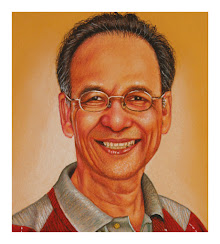
FROM DILIP MUKERJEA

"Genius is in-born, may it never be still-born."

"Oysters, irritated by grains of sand, give birth to pearls. Brains, irritated by curiosity, give birth to ideas."

"Brainpower is the bridge to the future; it is what transports you from wishful thinking to willful doing."

"Unless you keep learning & growing, the status quo has no status."
Showing posts with label Goal Striving. Show all posts

Saturday, September 24, 2022


Another way to put it:

Stay focused on your strategic goals, but remain flexible in your tactical execution!

Tuesday, September 20, 2022

I am taking the opportuniy to recap - and refresh - my own understanding of the operating mechanics of the goal striving mechanism as envisaged by Dr Maxwell Maltz in Psycho-Cybernetics.

As I have had already mentioned, this servo-mechanism, as Dr Maltz defined it, is encapsulated within the Reticular Activating System or RAS located in the thalamus region of our Reptilain core, which in turn sits on top of our spinal chord.
It's basically our Central Sensory Awareness Controller.
“Servo-mechanisms are divided into two general types:
(1) where the target, goal, or answer is known and the objective is to reach it or accomplish it, and
(2) where the target or answer is not known and the objective is to discover or locate it.
The human brain and nervous system operate in both ways.”
“An example of the first type is the self-guided torpedo, or the interceptor missile.
The target or goal is known—an enemy ship or plane. The objective is to reach it. Such machines must “know” the target they are shooting for. They must have some sort of propulsion system that propels them forward in the general direction of the target. They must be equipped with “sense organs” (radar, sonar, heat perceptors, etc.), which bring information from the target.
These “sense organs” keep the machine informed when it is on the correct course (positive feedback) and when it commits an error and gets off course (negative feedback).
The machine does not react or respond to positive feedback. It is doing the correct thing already and “just keeps on doing what it is doing.”
There must be a corrective device, however, that will respond to negative feedback.
When negative feedback informs the mechanism that it is “off the beam,” too far to the right, the corrective mechanism automatically causes the rudder to move so that it will steer the machine back to the left.
If it “overcorrects” and heads too far to the left, this mistake is made known through negative feedback, and the corrective device moves the rudder so it will steer the machine back to the right.
The torpedo accomplishes its goal by going forward, making errors, and continually correcting them. By a series of zigzags it literally gropes its way to the goal.
Dr. Norbert Wiener, who pioneered the development of goal-seeking mechanisms in World War II, believes that something very similar to the foregoing happens in the human nervous system whenever you perform any purposeful activity—even in such a simple goal-seeking situation as picking up a pen from a desk.”
“1. Your built-in Success Mechanism must have a goal or “target.” This goal, or target, must be conceived of as “already in existence—now” either in actual or potential form.
It operates by either (1) steering you to a goal already in existence or (2) “discovering” something already in existence.
2. The automatic mechanism is teleological, that is, it operates or must be oriented to “end results” goals. Do not be discouraged because the “means whereby” may not be apparent.
It is the function of the automatic mechanism to supply the means whereby when you supply the goal. Think in terms of the end result, and the means whereby will often take care of themselves.
The means by which your Success Mechanism works often take care of themselves and do so effortlessly when you supply the goal to your brain. The precise action steps will come to you without stress, tension, or worry about how you are going to accomplish the result you seek.
Many people make the mistake of interfering with their Success Mechanism by demanding a how before a goal is clearly established.
After you’ve formed a mental image of the goal you seek to create, the how will come to you—not before. Remain calm and relaxed and the answers will arrive. Any attempt to force the ideas to come will not work.
As Brian Tracy wrote, “In all mental workings, effort defeats itself.”
3. Do not be afraid of making mistakes, or of temporary failures. All servo-mechanisms achieve a goal by negative feedback, or by going forward, making mistakes, and immediately correcting course.
4. Skill learning of any kind is accomplished by trial and error, mentally correcting aim after an error, until a “successful” motion, movement, or performance has been achieved.
After that, further learning, and continued success, is accomplished by forgetting the past errors, and remembering the successful response, so that it can be imitated.
5. You must learn to trust your Creative Mechanism to do its work and not “jam it” by becoming too concerned or too anxious as to whether it will work or not, or by attempting to force it by too much conscious effort.
You must “let it” work, rather than “make it” work. This trust is necessary because your Creative Mechanism operates below the level of consciousness, and you cannot “know” what is going on beneath the surface.
Moreover, its nature is to operate spontaneously according to present need. Therefore, you have no guarantees in advance. It comes into operation as you act and as you place a demand on it by your actions.
You must not wait to act until you have proof—you must act as if it is there, and it will come through.
“Do the thing and you will have the power,” said Emerson.”
In retrospect, I must say, with my training background in engineering, this is truly an intellectual masterpiece of Dr Maltz.
Going back to the late seventies, when I first encountered the classic, following my participation in the Paul J Meyer's Dynamics of Goal Setting program, I am truly indebted for what they have had brought me to who and where I am today, especially in terms of being future-focused, goal-directed and action-oriented.


Wednesday, September 7, 2022

Dr. Maxwell Maltz, writing in his Psycho-Cybernetics classic, demonstrates how our brain and nervous system (or subconscious) work together as a goal-striving mechanism that operates automatically to achieve any goal we set before it, automatically making directional corrections as needed, much like a self-guided torpedo operates.

I like to recap the basic principles by which the Creative Success Mechanism works, as put forward by Dr Maltz:'

"1. Your built-in Creative Success Mechanism must have a goal or target. It must be conceived of as “already in existence now,” either in actual or potential form.
Your Creative Success Mechanism either steers you toward a goal already in existence (like a torpedo) or it ‘discovers’ something already in existence.

2. Your Creative Success Mechanism is teleological, that is, it operates or must be oriented to ‘end results.’ Do not be discouraged if the means to the solution are not apparent.

It is the function of the automatic mechanism (sub-conscious) to supply the means for the goal we set. Think of the goal, and means will often take care of themselves.
But be cautioned, many people interfere with or defeat their Creative Success Mechanism by demanding a how before a goal is clearly established. Once the mental image of the goal is clearly established, the how will come to you.
I have experienced this reality quite recently as I set a goal to eliminate a nettlesome business debt.
Once the goal was truly imagined and embraced, creative ways to eliminate that debt tumbled into my consciousness like never before. Progress has been remarkable.

3. Do not be afraid of making mistakes or temporary failures. It’s the way servo mechanisms work – on negative feedback, or by going forward, making mistakes and immediately correcting course.

4. Skill learning is accomplished by trial and error, mentally correcting aim after an error, until a ‘successful’ motion, movement, or performance is achieved.
After that, continued success is accomplished by forgetting the past errors, and remembering the successful response, so that it can be imitated.

5. You must learn to trust your Creative Success Mechanism to do its work and not “jam it” by becoming too concerned or too anxious as to whether it will work or not, or by attempting to force it by too much conscious effort. You must “let it” work rather than “make it” work.
The Creative Success Mechanism operates below the level of consciousness, so you cannot ‘know’ what is going on beneath the surface. Moreover, its nature is to operate spontaneously according to present need.
There are no guarantees in advance. It comes into action as you act and as you place demand on it by your actions."

Wednesday, August 31, 2022

Talking about the significance of goal striving, I like to add Jim Rohn, one of Tony Robbins' early mentors,  to drive home my point.

Here's are some of Jim Rohn's words of wisdom, which resonate with the goal striving phenomenon and the power of the creative success mechanism:

"Goal-setting is powerful because it provides focus. It shapes our dreams. It gives us the ability to hone in on the exact actions we need to perform to achieve everything we desire in life."
“The big challenge is to become all that you have the possibility of becoming. You cannot believe what it does to the human spirit to maximize your human potential and stretch yourself to the limit.”
“Life and business is like the changing seasons. You cannot change the seasons, but you can change yourself. Therein lies the opportunity to live an extraordinary life – the opportunity to change yourself.”


Tuesday, August 30, 2022

GOAL STRIVING

In retrospect, this was the vital part of the classic, Psycho-Cybernetics, by Dr Maxwell Maltz, that really struck a chord with me, as I encountered it for the first time during the late seventies, for it enhanced my understanding of goal setting, as I have had been taught earlier by the Dynamics of Goal Setting program.

[As mentioned earlier, my participation in the Dynamics of Goal Setting actually led me to the work of Dr Maxwell Maltz.]
Dr Maltz wrote:
"... That's the trick. To find your purpose. To discover your mission. To find the juice of life that will drive and motivate you to take action and fulfill any desire. How is this done?
Be outcome specific!
Decide specifically what you want, take some form of action immediately for its attainment, and use the following conditions to develope your goals:
  1. Never question or doubt your ability to accomplish any goal. If you do, you will sabotage your efforts before you begin.
  2. When compiling your written goals, let your pen run freely, and leave any fears behind.
  3. Review your thoughts and feelings on what really excites you and what you truly enjoy doing.
Why? Because successful people love what they do and view their work as a labour of love, not a job. Why waste your time doing things you don't enjoy or aren't passionate about? Put your energy, effort and time into finding your niche in life.
Ask yourself the following questions:
  • What do I enjoy and love doing?
  • What really interests me?
  • Who do I want to become?
  • What skills and training will I need to learn?
  • What resources do I have that can help me?
  • What resources do I need?
  • Where will I be a year from now? Three years from now?
Then ask yourself, "What specifically do I want?"...
Once you have examined these questions and arrived at some possible answers, use the following outline as a guide for developing your written goals:
WRITTEN GOAL GUIDELINE
  1. Define goal and be as specific as you can.
  2. Your goal must be controlled by you and not dependent upon the service of others for its attainment.
  3. Develop an "evidence procedure" to check your progress.
  4. Your goal must be your desire and not what someone else wants for you.
  5. Your goal must be ecological for you, meaning are there any downsides or negative consequences which will prevent you from taking a new set of actions.
This is how it's done. You write the blueprint, make your choices and begin the chase.... "
This is really a masterpiece from Dr Maltz!

Sunday, August 28, 2022

In retrospect, when I am reviewing my own journey on the Highway of Life for the last seven decades, I am indebted to Dr Maltz and his Pyscho-Cybernetics classic, and of course to other giants before me, for spurring my relentless quest for developing personal mastery, starting back in the late seventies.

One area, which I have had already written quite substantially here is opportunity sensing.
The other area is goal striving.
As I have had already mentioned earlier, my first encounter in the late seventies, was entrepreneur Paul J Meyer's Dynamics of Goal Setting program, which gave me the requisite skillsets, toolsets, actionsets and mindsets to get the ball roling.
In the ensuing years, as a professional in the corporate world (where I have had hung out for almost a quarter of a century), I was introduced to what folks called strategic visionising, and later on, scenario planning, which gave me another eye-opening dimension about goal striving, which corporate folks applied in creating a positive vision of the future, in an organisational setting.
More interestingly, they have duly empowered and facilitated my departure from the corporate world in the early nineties with  subsequent venture into following my own bliss, by setting up three small entrepreneurial outfits.
Without goal striving, both at the personal, professional and organisational level, I would not have come this far, in terms of personal success achievement.
I am now retyred (not a typo, just a novel way to express a new spin for me), enjoying the rustic laissez faire lifestyle in Vietnam, also a foodie paradise, where I have had relocated from Singapore more than a decade ago.

Monday, August 22, 2022

In retrospect, and apart from the angle of understanding the significance of image psychology, the vital lessons I have had gotten out of this classic was appreciating the imperativeness and urgency of embracing goal striving (particularly, Nostalgia for the Future) and opportunity sensitivity when I first read it in the late seventies.

Saturday, August 20, 2022

I have had always been fascinated by the idea of goal striving, especially after having read Dr Maxwell Maltz's Psycho-Cybernetics classic, following my particiation in the Dynamics of Goal Setting program from Success Motivation Institute, Waco, TX, in the late seventies.

Here's a specific passage from the book about Dr Viktor Frankl, which intrigued me, but didn't strike me as much when I first read it:

"Viktor Frankl, dintinguished Austrian psychologist and author of Man's Search for Meaning, survived three years of imprisonment in Aushwitz, Dachau and other concentration camps during World War II.

Although he witnessed massive suffering, death and destruction, Frankl stated that one in twenty prisoners actually survived these death camps, and the primary reason for many of these survivors was their continued purpiose ffor existence.

These surviving prisoners set goals to either see their families again, fulfill a previous mission, or live long enough to inform the world of the atrocities of war. It was these goals that helped keep them alive, while others without a purpose for their continued survival, perished."

I must admit that I actually didn't understand this particular passage very well, or rather its significant implications, until I have had the wonderful opportunity to read Dr Frankl's book,  and also after a planned visit to the remnant of the Auschwitz concentration camp in Poland, as part of my holidays across Eastern Europe with my late wife Catherine, in the late eighties.

I thus remember vividly this elegant quote from Dr Frankl:

“Life can be pulled by goals just as surely as it can be pushed by drives.”

I fully concur with the concept that setting goals is a key element of becoming successful. They help us to work effectively and methodically, and they also help us to manage our tasks and priorities.

From my own experiences, it is best to also set short-term goals rather than just long-term goals, as these will help us to work towards our long-term goals, and keep us motivated as we will have small wins and mini-achievements along the way.

In retrospect, this has had been one of my best life lessons.


Friday, July 22, 2022

UNDERSTANDING THE POWER OF GOAL STRIVING:

Looking back at my own life, after having traversed the Highway of Life for more than seven decades, I like to say that, I can relate very well to these astute observations of Dr Maxwell Maltz.

Back in the mid seventies, when I was promoted to manager of a division, I was then only 27 years old.
My first investment into personal development was the facilitated 'Dynamics of Goal Setting' program from the Singapore distributor of Success Motivation Institute of Waco, TX, USA.
I remember vividly it was pretty expensive, and I even had to get a finance company loan for one year to pay for it.
The author of the program, Paul J Meyer, gave me the best definition for success:
Success is the progressive realization of predetermined, worthwhile, personal goals.
Nonetheless, that investment somehow spurred my nascent foray into acquiring more skillsets, toolsets, actionsets and mindsets about developing personal mastery.
Naturally along the way, I bumped into great motivational writings, among which 'PsychoCybernetics' by Dr Maltz, 'Law of Success' and 'Think & Grow Rich', both by Napoleon Hill, were most impactful.
As I progressed along the growth trajectory of my professional career tracking in the corporate world, attendant exposures to strategic visionising or planning, vision building, contingency planning, scenario planning, just to name a few, became part and parcel of my knowledge acquisition and management.
One thing that really stood out, as a common denominator in whatever I have had gained within almost a quarter of a century of my professional life, is the relevant core issue of goal setting and goal achieving, in both corporate/business and personal settings.
In the corporate world, having goals is always expressed as the power of having a positive vision of the future.
Drawing intellectual cues from author-filmmaker-futurist Joel Arthur Barker, having a positive vision of the future is the most forceful motivator for change — for success — that companies, schools, communities, nations, and individuals possess.
To cut to the chase, Dr Maltz was far ahead of his time, and I am glad to be able to have the wonderful opportunity to have read his writings, as well as others.


QUEST FOR DEVELOPING PERSONAL MASTERY:

In retrospect, when I am reviewing my own journey on the Highway of Life, I am indebted to Dr Maltz and his Pyscho-Cybernetics classic, and of course to other giants before me, for spurring my relentless quest for developing personal mastery, starting back in the late seventies.

One area, which I have had already written quite substantially here is opportunity sensing.
The other area is goal striving.
As I have had already mentioned earlier, my first encounter in the late seventies, was entrepreneur Paul J Meyer's Dynamics of Goal Setting program, which gave me the requisite skillsets, toolsets, actionsets and mindsets to get the ball roling.
In the ensuing years, as a professional in the corporate world (where I have had hung out for almost a quarter of a century), I was introduced to what folks called strategic visionising, and later on, scenario planning, which gave me another eye-opening dimension about goal striving, which corporate folks applied in creating a positive vision of the future, in an organisational setting.
More interestingly, they have duly empowered and facilitated my subsequent venture into following my own bliss, by setting up three small entrepreneurial outfits, after leaving the corporate world in the early nineties.
Without goal striving, both at the personal, professional and organisational level, I would not have come this far, in terms of personal success achievements.
I am now retyred (not a typo, just a novel way to express a new spin for me), enjoying the rustic laissez faire lifestyle in Vietnam, also a foodie paradise, where I have had relocated from Singapore more than a decade ago.


Tuesday, June 28, 2022

To me, the acronym of S.U.C.C.E.S.S. to denote success traits as created by Dr Maxwell Maltz, writing in his Psycho-Cybernetics classic is indeed a marvelous piece of work, attesting to the intellectual horsepower and mental bandwidth of the author.

The first letter stands for Sense of Direction.
It resonates pretty well with the intellectual cues of Napoleon Hill (Definiteness of Purpose), Dr Edwards Deming (Constancy of Purpose), Tony Robbins (beginning part of his Ultimate Success Formula) and Joel Arthur Barker (Power of Vision, with corroborating research findings from Dutch social scientist Fred Polak, management consultant Jim Collins, psychologist Martin Seligman, Canadian educational psychologist Dr Benjamin Singer, and not forgetting, Austrian psychologist/psychiatrist Dr Viktor Frankl).
In a nut shell, and putting it in layman terms, it's all about the fact that goals set direction, in tune with Dr Maltz's concept of goal striving.
Other than the myriad aspects of Imagination, Opportunity Sensing, and Theatre of the Mind, this Goal Striving perspective of Dr Maltz actually fascinated me the most, ever since having read his classic for the first time in the late seventies.
It has had also benefitted me the most as a professional working in the corporate world during the ensuing years from the late seventies.
Interestingly, Dr Maltz added in his Prescription for establishing a Sense of Direction:
  • Get yourself a goal worth working for. Better still, get yourself a project;
  • Decide what you want out of any situation. That means, you must know your principal objective;
  • Always have something ahead of you to look forward to - to work for and hope for;
  • Always look forward, for the Nostalgia for the Future can keep you youthful;
  • When you're not striving, not looking forward, you are really not living;
  • Get interested in some projects to help others, not out of a sense of duty, but because you want to;
Bravissimo!