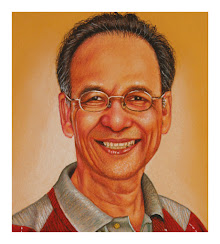
FROM DILIP MUKERJEA

"Genius is in-born, may it never be still-born."

"Oysters, irritated by grains of sand, give birth to pearls. Brains, irritated by curiosity, give birth to ideas."

"Brainpower is the bridge to the future; it is what transports you from wishful thinking to willful doing."

"Unless you keep learning & growing, the status quo has no status."
Showing posts with label Sustainability. Show all posts

Wednesday, July 7, 2010

USING BIOLOGICAL INNOVATION TO SPUR THOUGHTS ON CORPORATE INNOVATION


I am taking the liberty of pulling out some "raw" but "rich" ideas from Dilip Mukerjea's work-in-progress, tentatively entitled 'Innovation Ecosystems Lifescape'.

"Limits are the platform from which innovation springs in nature.

As each stage of development reaches its limits, new creativity emerges. If this innovation is adequate to the challenge presented by the limits, a more capable species or a richer ecosystem results. If limits are removed — for example, if fire is repressed — even a complex forest may be destroyed, because other limits that had been held in check finally impose themselves in force.

The most valuable resources of the rainforests are not the trees or other physical resources but the relationships, the complex array of designs.

Ecosystems are not isolated entities with impenetrable borders. Every ecosystem is nested within, borders on, or overlaps with other systems.

(Bacteria are nested in organs, and organs in individuals. Families are nested in communities. Species are nested in ecosystems, ecosystems in the biosphere, the biosphere in the planet, and so on).

When ecosystems overlap without nesting within one another, they define an ecological verge on which they may engage in a kind of battle.

A verge is a rich mixture of ecosystems that happens where two distinct forms meet with each other and begin to intermix. Often, two species seek to inhabit the same niche, but they will not be successful.

According to the competitive exclusion principle developed by biologist Garrett Hardin, at least one of the organisms must adapt or die. Thus, while nested systems may in effect cooperate, overlapping ones often foster competition. The competition often leads to co-adaptations in which the systems become interdependent, one bordering on or even nesting within the other.

Verges are places of conflict, but also of positive change. They bring together diverse systems and set the stage either for their integration or for their destruction.

The world has been forced to shift focus, from the industrial economy founded on the use of machines to multiply human muscle, to a more information-based economy with the capacity to expand the human mind.

Three forces are compelling this convergence: environment, technology, and values:

In the rainforest, nature uses feedback to “close the loop.” In the face of limits, feedback triggers adaptations that lessen or make an end-run around physical constraints.

In business, we are much like a deaf and blind skydiver.

Business operates with only two senses: taste and touch. Our businesses have a sense of taste in that we know what is going on inside the business – what our immediate bottom line is. And our businesses have a sense of touch in that we know the effect of what is happening directly to us from the outside, we feel it right now, this quarter.

In the rainforest, the evolution of every creature is shaped by feedback, adaptation, and learning.

The processes of breakdown and buildup in living systems are called their metabolism.Within every living system, from a forest to a cell, raw materials are drawn in and broken down into simpler forms in a process biologists call catabolism.

Then, inside each cell, enzymes, cellular factories, or other agents take the pieces and rearrange them in more complex forms — a process called anabolism. In this process, certain values are lost, traded for new ones that yield a new whole. In other words, new resources are gained as others are lost.

If all forms of life were linked together in simple food chains, they would quickly run out of resources. Conversion rates are extremely low: Often 1 percent or less of the caloric content of one link is converted to calories by the next.

For example, plants convert into energy no more than 2 percent of the sunlight that reaches them. Sheep that eat grass or cows that eat corn keep about 1 percent of that. People that eat the sheep or the cows keep 1 percent of that.

This entire three-link food chain ends up “wasting” 99.99988 percent of the original energy of the sun. Are we wasting corporate innovation resources in the same way?

How does nature overcome such extreme wastefulness?

By drawing species together in complex food webs. Food webs offer major efficiency gains over simple food chains.

In a web, energy “wasted” in one process isn’t really lost. It just shoots of to the side, where nature tends to put it to its best local use, in whatever form it’s in. Thus webs contain vastly more connections than classic descriptions of food chains.

Most species eat or are eaten by ten to 1,000 other species.

Resources cascade through the web as they are transformed back into their simplest forms and are drawn back through the web again as they meet and combine with other resources to take on more complex forms, in an endless nonlinear flow. These resources do not usually cycle back into the same forms, since that would require the consumption of more energy to transport and reform them.

Instead, they are taken up in their present form, to fill a local need to which they are already suited. This could inspire Innovation Chains that come together to form Innovation Webs within organizations.

All pollution and all waste is lost profit.

The Achilles heel of the industrial economy is the linear system that is its principle profit driver.

Industrial companies in essence take raw materials and fuels from nature, cycle them through the economy as products, then throw them away as garbage. This is an “open loop” system, a linear food chain that exploits nature’s resources and leaves only waste at both ends.

Value doesn’t come from physical resources per se, but from their design. All fossil fuels and other raw materials are made from the same fundamental components. It is the design of these resources, not simply their physical content that gives them their value.

Similarly, businesses don’t create value by consuming materials but by combining them into forms that yield new qualities.

Eliminate everything that doesn’t deliver value, and you can maximise both economic and environmental performance.

Matter is like paint to the painter; it is neither the source of value nor the inspiration, but only the medium to express it. Ford’s vision, his breakthrough innovation, was to use machines to make machines.

Thus, Henry Ford’s breakthrough – his assembly line system – was so efficient that it drove down the cost of cars, leading to dramatic boost in his volume, the economic equivalent of replication.

Ford’s sales success led in essence to the company’s selection by the economy and forced his competitors to either adapt in response or leave the market.

One of the most significant costs of the assembly line was the human cost.

By removing brainwork from the factory floor and centralising it at the top of the machinelike structure of the business, Ford ultimately undermined the resilience of his design. His system lacked a quality essential to long-tern sustainability: the ability to foster dynamic, continuous change and improvement.

As a result, Ford was slow — very slow — to develop a manufacturing system with the capacity for learning and continuous improvement.

The most valuable forms of capital in the learning organizations are knowledge, gained through feedback and learning, and changes in design — that is, adaptation.

Create more than you consume … use limits as a springboard to abundance!"

Say Keng's personal comments:

The subversive idea at the centre of Dilip's writings here is that Mother Nature is the logical playground of new insights.

She has long been the originator - inventor - of much of the technology & engineering we use today. Just sit back & reflect when you play with your cellphone or notebook.

In other words, she has been modern technology's first teacher. Our master teacher, to be more precise!

A case in point: studying the dirt repellent surface of the lotus - an age old symbol of purity in Asia - rising spotless out of muddy water led to the invention of self-cleaning glass as well as concrete.

As a matter of fact, many of Mother Nature's simple rules, so to speak, can be used as a basis for strategy & execution.

I was in fact intrigued by Dilip's perspectives, not least because they chimed with a conviction that had been growing in my own mind as I pondered over my own intellectual explorations with biomimicry, sustainability, as well as "the innovative power of intersectional or verge ideas" from the brilliant work of R Buckminster Fuller, Wayne Burkan, Frans Johansson, John Hagel, John Seely Brown, Judi Neal & Joel Arthur Barker.

Anyway, I will share more about the latter in later blogposts. Please stay tuned!

Wednesday, June 30, 2010

BUILDING A SUSTAINABLE FUTURE: A Planet Earth-friendly Essay from Dilip Mukerjea

THE BOY AND THE FROG (Joke)

A boy was crossing the road one day when a frog called out to him and said, “If you kiss me, I’ll turn into a beautiful princess.” He bent over, picked up the frog and put it in his pocket.

The frog spoke up again and said, “If you kiss me and turn me back into a beautiful Princess, I will stay with you for one week.” The boy took the frog out of his pocket, smiled at it and returned it to his pocket.

The frog then cried out, “If you kiss me and turn me back into a beautiful Princess, I’ll stay with you and do *Anything* you want.” Again the boy took the frog out, smiled at it and put it back into his pocket.

Finally the frog asked, “What is it? I’ve told you I’m a beautiful Princess, that I’ll stay with you for a week and do *Anything* you want. Why won’t you kiss me?”

The boy said, “Look, I’m a major. I don’t have time for girlfriends, but a talking frog is really cool.”

So what do we understand from this anecdote? A few suggestions:

• temptations are always present

• being ugly has its uses

• having a fresh perspective stimulates opportunity-spotting

The boy had a fresh perspective. We too need a fresh perspective on serious issues. (Humour is serious business, ergo the anecdote with a purpose).

The major driver of economic growth in the twenty-first century will be REdeveloping our nations, REvitalising our cities, and REhabilitating and expanding our ecosystems.

The “RE” economy is here: pay attention to it, or become obsolete!

Restorative development is the key to becoming future-ready. It is the only wellspring of wealth and the fountainhead that can fuel our future towards continual economic growth without limit.

The ‘Restoration Domain’ comprises the largest new economic growth cycle since the
beginning of the Industrial Revolution (18th – 19th centuries).

We must focus not just on the successful management of urban infrastructure projects and power generation, but on restoring what we have already allowed to degrade!

Management is a side issue; what we need is LEADERSHIP, at all levels, to REsurrect the possibilities that are already within our grasp.

The Past: economic growth based primarily on the exploitation of new resources and territories must give way to:

THE PRESENT: economic growth based on expanding our resources and revitalising the domain we already occupy.

Our tendency to keep “piling on” rather than on ‘restoring’, can only end in collapse. This has been in the name of “new development” … all very good, to a point, but destined to end in the throes of THREE GLOBAL CRISES:


(1) The Constraint Crisis ~ The universe may be expanding but our planet isn’t. If we keep expanding our population on a planet of finite size, simple logic plots a clear path to Armageddon.

(2) The Corrosion Crisis ~ Most of our built (“developed” hah!) environments are antiquated and decrepit, dangerously decayed, and often based on irrelevant, dysfunctional designs. No ROI, but ROT (Returns on Thoughtlessness).

(3) The Contamination Crisis ~ (AA) the fragile immune systems of human beings and wildlife, and (BB) the ecosystems that produce our soil, air, food, and water, are victims of industrial, military, and agricultural pollution assaults on our lives.
Societies that are aware of, and are acting on, the precepts of “REstoration,” will contribute to the vast majority of harmonious development on our planet.

This is a new frontier of opportunity. The foremost leaders of this Millennium will be those who guide their nations and organizations towards REstoration.

If you think you can’t make money in ‘restoration’ just take your car into a workshop or your body to a doctor…or your face to the cosmetic surgeon.

We can use a Tripod Metaphor to depict the three modes (legs) of the development life cycle:

(1) New Development: whilst it launches most communities and civilizations, it turns virgin land into farms, highways, and buildings¬ ~ and irreplaceable virgin resources into products and waste. This process is reaching its natural terminus. It cannot go on ad infinitum.

(2) Maintenance & Conservation: This is a less turbulent mode; it is ever present, but seldom dominant.

(3) Restorative Development: This is an enterprising, dynamic, high-energy initiative that restores, redeems, and re-enchants our relationship with the existing built and natural environments…in construction, ecology, government, and business.

RENEW has dethroned NEW.

CONSIDER: almost every acre of arable land on our planet is either being farmed or has been paved into highways or homes. Meanwhile, the earth’s inventory of real estate is actually shrinking in real terms, due to rising sea levels. And much of the remaining land is losing its value due to

* desertification
* salinisation
* contamination, and other ailments.

What worked before is becoming irrelevant: the solutions of the past are becoming the problems of the present…unless we redesign our systems.

What systems? We are living in the ICE Age (Information, Communication, Entertainment).

Each of these three domains offers immense business opportunities, … and problems.

Redesigning with a restoration consciousness is needed…for every incarnation of architecture, in our travel systems, our habitats, and in the way we produce and consume energy.

We live in a hyperconnected world. Teenagers have become screenagers. Physical has become metaphysical. Visual has become virtual. Technology offers short-term novelties (we may call them “solutions”) with long-term costs.

We must REthink the architecture of travel, and the design and development of our ecosystems.

THERE IS NO LIFE WITHOUT ENERGY.

Energy is the raw resource behind “power generation.” We have focused primarily on fossil fuels (coal, oil, and gas)…but at a high cost! Be it global warming, greenhouse gases, genetically modified foods, or geopolitical tensions, the problems and the solutions all point to energy…and ‘power generation’.

“Power Generation” cannot be “managed” without understanding ‘the flow of energy’ … and the logic of ecosystems:

BEWARE, AND BE AWARE: ecosystem services include “energy management” (that is, ‘power
generation’ and the uses of generated power) via:

• considerations towards air and water purification,

• genetic resource development and storage

• healthful aesthetics and

• carbon sequestration (turning atmospheric carbon dioxide into oxygen and non-gaseous forms of carbon, such as wood, in order to mitigate global climate change).

WERE THESE SYSTEMS TO GO “ON STRIKE” FOR EVEN A FEW WEEKS, ALL HUMAN CIVILISATION WOULD QUICKLY COLLAPSE.

Science and technology are advancing at an exponentially rapid rate. Today, despite the pollution and waste created from the use of fossil fuel power generation, there is still hope in this area if we marshall our resources to (aa) use fossil fuels wisely (bb) create clean fuels that will be renewable and reusable.

The resources that are actually disappearing at a catastrophic pace are not our ‘power generation’ systems but what we have always taken for granted as being inexhaustible:

* topsoil
* fisheries
* fresh water
* clean air, and
* genetic wealth such as crop diversity

We are losing those elements that are produced only by complex living systems!!!

The Stone Age did not run out because we ran out of stones, but because we came up with better ways of doing things.

Thus, we need to switch to renewable, nontoxic sources of energy, raw materials, pharmaceuticals, and chemicals. Only then can we be assured of living healthier, more
enjoyable lives.

This topic is immense, but worth pursuing: it offers a new realm of unlimited economic growth, social revitalization, and planetary health.

Here is some wisdom from one of my role models, Anne Frank:

“How wonderful it is that nobody need wait a single moment before starting to improve the world.”

(Anne Frank, 'The Diary of Anne Frank')

A concluding anecdote:

The child comes home from his first day at school.

Mother asks, “What did you learn today?”
The kid replies, “Not enough. I have to go back tomorrow.”

And WE have to go back ….until we have the solutions to how we can move ahead, from harm to harmony!

Wednesday, April 15, 2009

INNOVATE TO INVIGORATE


Sustainability and the Triple Bottom Line, must be a part of development, of which there are three modes:

- new development;
- maintenance/conservation; and
- restorative development (the longest-lasting mode);

A gargantuan new category of business opportunities is opening up in the domain of restorative development . . . where focus is placed on the restoration of both natural and built environments.

We can’t afford to focus solely on new development; and though (perhaps) not as expensive as new development, maintenance/conservation development is still costly.

Both ignore what already exists, but has been allowed to degrade, pricipally due to the triple crises of corrosion, contamination, and constraint (not enough land).

Restorative development is the opposite of the one-way developmental path taken by the other two modes. The wastage in one-way development is evident when we see its passage from:

forest into farm, wetland into factory, clean air and water into toxicity, living soil into lifeless dirt, the consumption and depletion of non-renewable resources, and so on.

These paths of wastage have never had any counterbalancing activity...until now.

As Storm Cunnigham declares: “We are witnessing the birth of the global Restoration Economy.”

This is critical, before so much of our planet deteriorates, disappears, or dies. In 'The Sleepwalkers', Arthur Koestler describes the development of scientific thought, how the great thinkers of the past, such as Kepler, Galileo and Newton, seem to have wandered around and around the concepts they were seeking until they eventually stumbled upon them.

Robert Frost deftly generalises this intellectual process in a two-line poem: “We dance around in a ring and suppose. The secret sits in the middle and knows.”

In 'Non Zero', Robert Wright addresses how human culture has developed by finding non zero-sum games to play; he writes: “In highly non-zero-sum games, the players’ interests overlap entirely. In 1970, when the three Apollo 13 astronauts were trying to figure out how to get their stranded spaceship back to earth, they were playing an utterly non-zero-sum game, because the outcome would be either equally good for all of them or utterly bad. (It was equally good.)”

May the choices we make about our businesses be such that they are equally good for our planet!

We must Innovate to Invigorate!

Other than the three crises imaged above, we could equally consider the escalation in oil prices, the growth of international debt, and alarming climate change. But these too are connected to the triple crises of constraint, corrosion, and contamination.

[Excerpted from the 'Igniting Innovation' edition of The Braindancer Series of bookazines by Dilip Mukerjea. All the images in this post are the intellectual property of Dilip Mukerjea.]

Tuesday, April 14, 2009

THE CREATIVE CONSCIENCE

The financial bottom line is no longer the only measure of business success. In order to guarantee our planetary survival, the human creative conscience must aim to protect, preserve, and propagate a sustainable world.

Today’s best-run organisations pay heed to the need to nurture and nourish a world where success comes from social, environmental, and economic performance factors.

A company will not be allowed to continue business if its success stems solely from financial returns, especially if these returns are at the expense of social disharmony and environmental degradation.

General Electric, focusing on climate change, has garnered great returns. In the last six years, its wind energy business, acquired from Enron, has quadrupled in revenue. The company is attracting customers galore via its fuel-efficient jet and locomotive engines, and natural gas turbines, all designed to minimise greenhouse gas emissions. GE has sold over $1 billion worth of wind and natural gas turbines to China, and is slated to amplify sales across the planet.

In 2004 PepsiCo managed to surpass Coca-Cola in terms of market cap for the first time in history. The secret lay in establishing an overlap between increased market share and healthier lifestyle habits of the general public.

These are just two examples that show the benefits of companies finding the “sweet spot” between their business interests (the shareholders) and the interests of the general public (the stakeholders).

Sustainability addresses our consciences, where businesses must strive not just for an impact on profits, but equally so, for an impact on the world. People, Planet, and Profit.

Sustainable development is about business, not philanthropy per se... assuming that the values of a business are a recognition that profit is entwined within the dynamics of people and planet. It is systemic. Thus, for an enterprise to succeed, sustainable development must be an integral part of a company’s core business.

NOTE: The ‘triple bottom line’ (TBL) expression was coined by John Elkington in 1994. It was later expanded and articulated in his 1998 book Cannibals with Forks: the Triple Bottom Line of 21st Century Business.

Sustainability, itself, was first defined by the Brundtland Commission of the United Nations in 1987.

The concept of Triple Bottom Line demands that a company’s responsibility be to ‘stakeholders’ rather than shareholders. In this case, ‘stakeholders’ refers to anyone who is influenced, either directly or indirectly, by the actions of the firm.

[Excerpted from the 'Igniting Innovation' edition of The Braindancer Series of bookazines by Dilip Mukerjea. All the images in this post are the intellectual property of Dilip Mukerjea.]

Say Keng's personal comments:

For me, the best way to understand what Dilip Mukerjea has written in the foregoing essay is to go back to what American biologist Barry Commoner, now 92, had originally conceived as the First Law of Ecology during the 70's:

"Everything is Connected to Everything Else. There is one ecosphere for all living organisms and what affects one, affects all."

By the way, it's analogous to what Leonardo da vinci had said more than five centuries ago.

Sunday, March 1, 2009

PRESENT & FUTURE ISSUES, by Dilip Mukerjea


The purpose of life is to have a life of purpose . . . and to have our dreams unfold with perfect precision. But we are slaves of mineral resources; without them, we retrogress into darkness . . . or so we fear.

The raw materials that propagate life, in any form, are sources of energy, and fresh water. The former are primarily fossil fuels: coal, oil, and gas. Oil figures most prominently within this list as we have become utterly dependent on what it can enable us to enjoy.

But oil will soon run out . . . the industrial demands of Third Millennium industries is built on ‘catching up’, greed, ego, and an unrelenting thirst for power.

Water represents life, in all its infinite forms. And drinking water is in danger of becoming more scarce than the oil we have come to take for granted. What’s horrifying is that our rampant consumption of oil has depleted and polluted our reserves of water!

Oil energises our industries; water energises our bodies, and our consciousnesses.

Energy rules our lives. The mind is energy, powering and empowering protoplasm; it is the same energy that comes bursting forth from the sun, the same subtle rays. Our thoughts are products of this phenomenon.

Our lives have also come under the influence of five G-forces:

Global Warming and Greenhouse Gases:

Global Warming refers to the increase, and speed of increase, of the average temperature on Earth. As the Earth is getting hotter, disasters like hurricanes, droughts and floods are getting more frequent.

Many scientists infer that the global warming we are experiencing is not a product of natural causes. Man is responsible, they say.

The sun is the Earth’s primary source of energy, a burning star so hot that we can feel its heat from over 150 million kilometers away. Its rays enter our atmosphere and shower upon our planet.

About one third of this solar energy is reflected back into the universe by shimmering glaciers, water, and other bright surfaces. Warming land, oceans, and the atmosphere, absorb two thirds.

Much of this heat radiates back into space, but some of it is stored in the atmosphere. This process is called ‘the greenhouse effect’. Without it, the Earth’s average temperature would be a chilling -18 degrees Celsius, despite the sun’s constant energy supply.

Geopolitics:

the art and practice of using international political power. Mishandled political power can destabilise the equilibrium needed by our species to survive and thrive on our planet.

Genomics:

the study of the genomes of organisms. The field includes intensive efforts to determine the entire DNA sequence of organisms and fine-scale genetic mapping efforts. Foreknowledge of our gene maps could impact our evolution, towards a greater good, or towards Armageddon!

Globalisation:

integrating the parts into a whole, on a global basis. Local outputs integrated across the planet produce global outcomes. The domains are infinite, and include economics, technology, culture, education, trade and commerce, and to a certain extent, politics too.

Chaos Theory informs us that we must pay attention to our “sensitive dependence on initial conditions;” thus, seemingly negligible local causes could cascade into massively significant global effects!

Genetically Modified (GM) Foods:

GM foods or GMOs (genetically-modified organisms) most commonly refer to crop plants created for human or animal consumption using the latest molecular biology techniques. These plants have been modified in the laboratory to enhance desired traits such as increased resistance to herbicides or improved nutritional content.

The enhancement of desired traits has traditionally been undertaken through breeding, but conventional plant breeding methods can be time consuming and are often not accurate.

Genetic engineering, on the other hand, can create plants with the exact desired trait rapidly and with great accuracy. Like most things in life, there are pros and cons to the GM domain: its creation can lead to our destruction . . . or to our salvation.

Life begins with questions . . . and ends with even more questions. Quo vadis? Wither goest thou?

We need to ask ourselves this question in order to preserve, protect, and promote the well-being of generations to come.

If we continue on our present path, there is a real danger of us enjoying the dubious distinction of being the first generation to annihilate ourselves . . . and our planet! Our irresponsible thoughts, decisions, and actions can have cataclysmic effects.

Whether it is ascending temperatures on our planet, or ascending temperatures within ourselves, we are on a parallel path to destruction. Instead of whining “Something must be done,” we must state, “I must do something!”

We need to exhibit self-leadership . . . towards the best interests of humankind. It will multiply into a fresh consciousness, one worthy of us dispensing love and light across the planet.

A shortage of fuel is not as critical as a shortage of wisdom! The time for burying our heads in the sand has run out. Deadlines have all too often become lines of the dead!

Our associations, internal and external, must lead us from harm to harmony. A sustainable planet requires not just economic prosperity, but also social justice and environmental well-being. These critical factors are known as “The Triple Bottom Line.”

We owe much to the Children of the Third Millennium: we are guilty of being the first generation in the history of human evolution to have robbed exponential amounts of their future. Either we move ahead, or stay dead.

The future calls upon us to learn how to learn, so that such education can trump warfare! Brain force will then have replaced brute force.

What’s to be done? Here is a capsule summary of action points that will inspire epiphanic transformations within us:

VOID: stay open, surrender to a state of vulnerability, unblocked, so that resources can flow into you; much as a vacuum attracts elements to it with great force.

ALIGN: stay aligned with the forces of nature, much as a sailor follows the wind and the current in order to get to her destination. Nature, in order to be commanded, must be obeyed.

ASK & QUESTION: Declare your needs, seek answers via insightful questions, born of commitment. Once your situation is out in the open, forces will mobilize in your favour.

EXPAND & MAXIMISE: Use every resource that is relevant to your growth as a child of Divinity. Not every growth leads to development: a garbage heap may grow, but it is not developing; you may be developing, but no longer growing. Aim to grow and develop by using all your resources boldly, intelligently, generously.

GIVE: become a conduit for goodness; whatever flows into you will multiply if you allow it to flow out of you with interest!

STAY GROUNDED & CONNECTED: The past is no more, the future is not yet. Stay in the present, grounded and connected to immediate realities. You can then guide your present good intentions towards future great outcomes.

VISUALISE YOUR VISION: Form and function follow thought and feeling. When you visualize your vision, using every sense in your being, you have closed the gap between present and future; what transpires becomes predetermined, in your favour.

GRATITUDE: express gratitude on a continual basis for the good and the bad that might have come your way. Good days bring forth a good mood, but bad days should challenge you to bring forth an even greater mood. Lead from your heart, and your mood will stay resurgent.

ACT to ACTIVATE: As you visualize your vision, so must you live your vision, as if it were real: metaphysical becomes physical. Becoming becomes being!

ENGAGE & RECIRCULATE: Our cosmos is systemic; the currents of life are meant to circulate, not stagnate. Once you engage, aim not to be static (like a puddle) but dynamic (like a raging river). Movement generates movement, and what you give out will come back amplified.

RECEIVE: In order to keep the circulatory circuit alive, do not just give; be equally open to receive, in order to give back more!

RECYCLE & REVITALISE: There is no waste in nature; thus, stay natural, use and recycle your resources so as to stay continually vitalised, and revitalised.

The arrow of time is a key, headed towards its lock: when opened, we shall awaken, and a new world will have come into being.