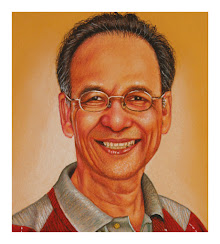
FROM DILIP MUKERJEA

"Genius is in-born, may it never be still-born."

"Oysters, irritated by grains of sand, give birth to pearls. Brains, irritated by curiosity, give birth to ideas."

"Brainpower is the bridge to the future; it is what transports you from wishful thinking to willful doing."

"Unless you keep learning & growing, the status quo has no status."
Showing posts with label Thomas Edison. Show all posts

Tuesday, August 9, 2022

A valid observation from one of America's greatest inventors!

Interestingly, Dr Maxwell Maltz mentioned quite a lot about Thomas Edison in his Psycho-Cybernetics classic:
  • his well-known cap naps, when stymied by a problem (that's probably how the idiom "sleep on it" came about!);
  • Edison approached his projects by employing a process of elimination. He was convinced that experimentation was a process of eliminating what doesn't work. He always did well to keep accurate records of every experiment;
  • not discouraged by numerous failed attempts; when asked if he were discouraged because so many attempts proved unavailing, he would say, "No, I am not discouraged, because every wrong attempt discarded is another step forward.".
  • his loss of a lab worth millions in a fire with no insurance didn't deter him from his seemingly aggressive goal-oriented atttitude: When someone asked: "What in the world will you do?" Edison responded: "We will start rebuilding tomorrow!" That's also the essence of stick-to-itiveness!

Tuesday, January 25, 2011

MAKING STRATEGIC CONNECTIONS

Here's an interesting story from Tim Hurson, author of 'Think Better: An Innovator's Guide to Productive Thinking':

The great American inventor Thomas Edison had observed ripples on the surface of water in a glass. Of course, this was caused by sound vibrations. [Remember the same phenomenon in the 'Jurassic Park' movie?]

He then made an incredible unexpected connection while daydreaming and seeing these ripples.

He thought: If sound vibrations could make the surface of the water ripple, what would happen if he could somehow freeze these ripples? Could he reconvert them into sound?

Intrigued, he tried it first with tin, capturing the vibration of a needle and allowing it to etch into the soft metal. When he attached a megaphone to the needle that was being vibrated by these etches, he heard the sound!

The world’s first sound recording machine was born. Amazing.