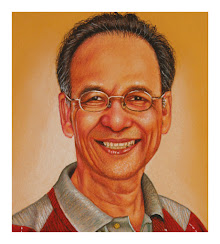
FROM DILIP MUKERJEA

"Genius is in-born, may it never be still-born."

"Oysters, irritated by grains of sand, give birth to pearls. Brains, irritated by curiosity, give birth to ideas."

"Brainpower is the bridge to the future; it is what transports you from wishful thinking to willful doing."

"Unless you keep learning & growing, the status quo has no status."
Showing posts with label Strategy Formulation. Show all posts

Wednesday, November 9, 2022

JUST SHARING A PERSONAL MUSING ON STRATEGY FORMULATION:

"Strategy, at its heart, is always about positioning for future competitive advantage."
I can't recall who had said this or defined it as such.
Nevertheless, I have found it to be a valid statement.
Moreover, I know one thing for sure: 'Strategy' implies "thinking strategically about the future".
Let's see whether I can dissect it and explore where it will lead me to.
Strategy:
In military jargon, this is "generalship" or science of planning, directing and maneuvering large scale military forces into the most advantageous position, prior to actual engagement with enemy forces.
For me, it's actually a "mental model" for thinking about what I want to do in the future.
Dr Karl Pribram, of Stanford University, calls it an "image of achievement". Dr David Ingvar of Lund University in Sweden terms it as "memory of the future".

These findings from the two eminent brain scientists imply that man has the innate ability to "see" the future.
I strongly believe that whatever I think and do always happens thrice:
- first, as an "idea" or "concept" inside my head - psychologists call it "mental construct";
- secondly, as a plan when I write it down so that I can crystallise my thoughts about the "idea";

- thirdly & finally, as a physical reality when I put my "idea" to work according to the plan in the real world;
That's why it's always important to formulate a strategy in life.
For lay persons, it's "goal setting". For corporations, it's "strategic visioning".
Come to think of it, I reckon 'daydreaming', particularly in the case of kids, is also a form of strategy formulation, even though they don't actually understand it.

Surprisingly, adults do that too, even though they don't realise its power.
I also believe very strongly that everything is possible in life; it's just a question of strategy and dsicipline.
To formulate a strategy, I know these are the first things first:
- what do I want?
- where am I?
- where do I want to go?
Positioning:
For me, there are two important issues here.
First, there is this issue of currency: what do I have or possess at the moment?
To understand it, I need to do an internal audit of myself. A SWOT, to be more precise. A SWOT will generally provide me with information about what I would need as additional resources or support.
Next, there is the issue of relativity - a position relative to the confluence of various external forces acting on me as well as other people in &/or around my space, in one way or another.
A good way to look at external forces is to use the acronym TEMPLES to determine exactly what can affect or impact my strategy:
- technology;
- economics;
- money;
- political;
- legal aspects;
- ethical & ecological aspects;
- social-demographics;
To look at people in and/or around my space that have the greatest impact, strategy-wise, the best way is first, determine my particular role in each instance as I interact with them.
There is also the issue of perception in the eyes (and the mind) of people around me. This one is a little bit more complicated.
Future:
For me, this is a "time frame" or "scenario" some time - near or distant - ahead. It generally denotes an "unknown territory" - a place where I have not been before. I recall the tag line from the Star Trek TV series: "... to go where no man has gone before."
It's always important to think about the future. There is nothing much I can do about my past, although I can learn quite a lot from it. There is, nevertheless, a lot of stuff I can do in the present. This where my strategy - and plan of action - can come in.
Naturally, I would need insight about myself, my personal aspirations, my SWOT i.e. all the inputs from my understanding of 'Positioning'.
I also need some hindsight about what works well before, what resources I have, as well as foresight about what's out there, what's possible. Also, what-ifs, why nots. I also need a better view of the situation (BVS).
To have a better future, it's always important to explore it, think about it, plan for it and then put the plan to work, right now. In other words, I have to invent it.
Having a future scenario set in my mind, I reckon it's much easier for me to anticipate a lot of stuff that goes with it.
If I don't do that, some one else will do it for me, and I may not like it at all.
A "future" can also be the "edge" of my personal comfort zone.

According to Judith Barker, there is always danger in the comfort zone.
Sometimes, I need to push myself to the edge i.e. to stretch myself - to enter the stretch zone, so to speak.
Opportunities - more specifically, possibilities to grow, to learn, etc. - are abundant in the stretch zone.
Competitive:
This term naturally has some negative connotations.
For me, the best way to look at it is to always consider doing things better than what I have done before, instead of comparing myself with others.
It also means I should always leverage on what I know and what I have.

A lot of personal creativity is needed here, too.
I think it was Billy Joel, a famous singer, who said something like this:

"We don't have to be better than anybody; we just have to be the only one doing what we do."
Therefore, I must constantly strive to build on my existing competency. Life-long learning, especially learning new things, is one.
By the way, what are the personal as well professional competencies for the 21st century?
Advantage:
For me, this is, in essence, creating distinctions so that I am visibly different from the others.
Advantage can also mean "one step ahead of the competition".

It is important to take note that the competition does not sleep.
Stretching it further, advantage can also denote "putting myself on the toes" all the time. Be prepared - for oportunities as well as contingencies.

Continual improvement, too!
In fact, if I practise strategic thinking - with active and fluid use - all the time, I reckon I can sustain my competitive advantage in the long run.
I think it's also important to practise strategic foresight or future-casting.
That's all, folks!

Friday, March 9, 2012

SO, WHAT IS A BUSINESS STRATEGY?

So, what is a business strategy?

According to Strategy & Leadership: The Capable Strategist,

Strategy is "the result of choices executives make, on where to play and how to win, to maximize long-term value."

It is different from vision, mission, goals, priorities, and plans.

Go to this link to read further so as to understand the clear distinction from Booz & Company senior partner Ken Favaro.

Sunday, April 3, 2011

QUESTIONS TO PONDER ABOUT YOUR STRATEGY

Question 1: Will your strategy beat the market?

Question 2: Does your strategy tap a true source of advantage?

Question 3: Is your strategy granular about where to compete?

Question 4: Does your strategy put you ahead of trends?

Question 5: Does your strategy rest on privileged insights?

Question 6: Does your strategy embrace uncertainty?

Question 7: Does your strategy balance commitment and flexibility?

Question 8: Is your strategy contaminated by bias?

Question 9: Is there conviction to act on your strategy?

Question 10: Have you translated your strategy into an action plan?
 
[Source: McKinsey Quarterly]

Wednesday, January 26, 2011

STRATEGY GRAND TOUR

If you are new to the concept of strategy formulation, the following [though belated, but still relevant] slideshare presentation offers some quick & interesting lessons on many possible approaches:

Wednesday, August 11, 2010

THE 5 STRATEGY TOOLS FOR STRATEGIC EXPLORATION, FROM JOEL ARTHUR BARKER

A recent casual conversation at the Hanis Cafe in the NLB Building on North Bridge Road with Dilip Mukerjea brought up the work of futurist-filmmaker-author Joel Arthur Barker into limelight, so to speak.

Our conversation had somehow centred on the collation of powerful & yet pragmatic strategy tools as part of a tentative curriculum for Dilip's newest pet project, the Brainaissance University.

Joel Arthur Barker is one of my most favourite authors. I like to rate his deliberate forays in recent years into the exploration of the" law of unintended consequences" [in particular, with the application of his proprietary methodology known as the 'Implications Wheel';] as well as "innovation on the verge" as truly exemplary.

The five strategy tools for strategic exploration had originally been highlighted in Joel Arthur Barker's debut book, 'Discovering the Future: The Business of Paradigms', during the mid-eighties. He had self-published the book, which later became 'Future Edge' in the early nineties or so. [The paperback version is 'Paradigms: The Business of Discovering the Future'.]

To share my thoughts with readers, here's my recap to Dilip:

1) Influence Understanding: understanding how your perceptual sensitivity & fluidity of perception affect your environmental scanning, & eventually, your decision making;

2) divergent thinking: discovering more than the one right answer;

3) convergent thinking: organising for evaluation all your integrated information with prioritised choices;

4) mapping pathways: using visual approaches to chart out your journey; [Dilip has his proprietary visual planning methodology known as "lifescaping"]

5) imaging: putting your explored ideas into pictures or visual models; [Dilip has his own visual tools, e.g. "splash-mapping"; "thumb-charting", "note-boarding", just to name a few; in fact, in recent months, we had iointly created one or two new ones, one of which, we had just simply it call 'mandala map';]

Despite the transpiration of almost a quarter of a century, I still think the foregoing strategy tools are still relevant in today's era of digital convergence.

For me, at the end of the day, it's the concrete results that you produced by using the foregoing strategy tools, which in turn propel you to move forward faster... better... & maybe, cheaper than your competition!

So, enjoy your exploration & assimilation!

Saturday, October 31, 2009

SPLASH MAP ON THE FIVE COMPETITIVE FORCES


I am sure most readers are probably familiar with Prof Michael Porter's Five Forces Model, which slices the competitive environment into the following five areas:

1. Bargaing power of Suppliers;
2. Threat of New Entrants (& the attendant barriers to entry);
3. Bargaining power of Customers;
4. Threat of Substitutes;
5. Competitive Rivalry within an Industry;


To recap in a nut shell, an industry's profit potential is largely determined by the intensity of competitive forces within the industry.

According to Prof Porter, a good understanding of the industry's competitive forces & their underlying causes is a crucial component of strategy formulation, which is the building of defences against the competitive forces, or finding a viable position in an industry where the forces are weaker.

The foregoing Splash Map by Dilip Mukerjea captures the model of the five competitive forces as conceived originally by Prof Michael Porter.

Monday, April 13, 2009

A WAY OF STRATEGY (NI TEN ICHI RYU)


1. Do not think dishonestly.

2. The way is in the training.

3. Become acquainted with every art.

4. Know the ways of all professions.

5. Distinguish between gain & loss in worldly matters.

6. Develop intuitive judgement & understanding in everything.

7. Perceive those things which cannot be seen.

8. Pay attention even to trifles.

9. Do nothing which is of no use.

[Source: 'A Book of Five Rings' (Go Rin No Sho), a strategy guide, from the spiritual perspective, by Japan's legendary combat strategist Miyamoto Musashi (1584AD-1645AD).]

Tuesday, March 17, 2009

THE ULTIMATE FIGHTING WEAPON


The jo (Japanese short staff) has been recognised as the ultimate fighting weapon in martial arts. It was invented and used by Muso Gonnosuke, the only man to defeat Musashi Miyamoto, Japan’s greatest swordsman, in combat.

In the first duel between these two antagonists, Muso fought with a rokushaku bo (Japanese long staff, literally a ‘six foot stick’).

The battle that took place resulted in his first and only defeat at the hands of Musashi, the master swords-man in the early 1600s.

Retreating to the mountains to meditate upon his defeat, Muso considered how Musashi had successfully fought him with a long and a short sword. These weapons had blocked Muso’s bo in such a way that he was unable to withdraw his weapon safely.

Muso scrutinised his bo and observed that it was most prominently scored at the two ends by Musashi’s sword cuts. These marks were roughly in the last one foot at each end of the bo. In other words, the central four feet of this six foot weapon remained largely unmarked.

Enlightened by a ‘divine insight’ Muso decided to chop off the two marked ends and thus created the jo ~ a four-foot staff. His logic was that if he could learn how to fight with the shorter weapon, Musashi’s sword strokes, assuming they followed the previous pattern, would predominantly miss the jo. This would enable Muso to enter and attack Musashi with greater success.

Muso developed a new style of fighting, calling it shindo muso ryu jojutsu. In a second duel between these two combatants, Muso inflicted Musashi’s only defeat. He too spared his opponent’s life, and entered the history books by becoming the only man to ever beat the master swordsman.

Muso applied the ‘Measles Chart’ in his thinking by noticing the sword cuts on his bo, and using his ‘divine insight’ to eliminate these disadvantageous areas.

~ I am indebted to Sensei Julio Toribio for this slice of history.

[Excerpted from the book, 'Surfing the Intellect: Building Intellectual Capital for a Knowledge Economy', by Dilip Mukerjea. All the images in this post are the intellectual property of Dilip Mukerjea.]

Say Keng's personal comments:

Please stay tuned for a forthcoming blog post on the 'Measles Chart' from Dilip Mukerjea's itinerant toolbox.

Miyamoto Musashi is Japan's most revered combat strategist from the 16th century. His work as embodied in the 'Book of Five Rings' is well-read by Japanese businessmen as a strategy guide, just like Chinese military strategist Sun Tzu's 'Art of War' by the world at large.

To me, one of the greatest lessons I have picked up from the sword saint is that you must train daily in the way of strategy: "Practice, Practice, Practice".