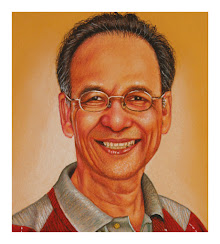
FROM DILIP MUKERJEA

"Genius is in-born, may it never be still-born."

"Oysters, irritated by grains of sand, give birth to pearls. Brains, irritated by curiosity, give birth to ideas."

"Brainpower is the bridge to the future; it is what transports you from wishful thinking to willful doing."

"Unless you keep learning & growing, the status quo has no status."
Showing posts with label Albert Einstein. Show all posts

Tuesday, October 11, 2022

It reminds me of the witticism often attributed to Albert Einstein: 

“Insanity is doing the same thing over and over and expecting different results.” 

(Also credited as “Einstein Insanity”). 

Monday, October 3, 2022

Introducing:

Einstein’s Formula for Success, 
by success coach Ron White

Albert Einstein had a formula for success. Can you believe that? 

One of the greatest minds of all time developed a math formula for success! I suggest you read this carefully—this may be the most important math equation you will ever see.

Einstein said, “If A equals success, then the formula is: A=X+Y+Z.

X is work.
Y is play.
Z is keep your mouth shut.”

Einstein no doubt had an excellent sense of humor. 

Let’s look at the 3 variables in this equation. They are:

1. Work
2. Play
3. Keeping your mouth shut!

1. Work: 

Albert Einstein had a tremendous work ethic and because of that gave more to society and modern science than any person in recent times.

2. Play: 

Einstein, however, did not work 24 hours a day and made time for fun and relaxation. His idea of fun may have been different than yours, but that doesn’t mean it still wasn’t play.

3. Keeping your mouth shut: 

Finally, my favorite part of his success formal is to keep your mouth shut. I genuinely believe that the person who talks the least says the most. 

A friend of mine complains that the woman he is dating talks too much. I don’t know how to break the news to him; the problem is not that she talks too much. It simply is the fact that he is irritated that he isn’t able to talk. 

Now, let me just say this is not a generic man and woman statement. 

I am speaking about a specific person I know. His desire is to constantly talk and because he likes to talk so much, he will talk in circles. If you let him talk long enough he will repeat the same thing three times and then contradict himself. His desire is not to hear but to be heard.

Albert Einstein, on the other hand, had nothing to prove. He felt no need to be the “Chatty Cathy” he could have been with his knowledge. It wasn’t important to him to talk to everyone he met and talk over their heads to demonstrate his IQ. Instead, he learned the value of quietness and solitude.

Shift your mindset from being a talker to a listener. It has been said that you can make more friends in five minutes by becoming interested in others than you can make in five years of trying to get others interested in you! 

How do you become interested in others? You ask questions and then keep your mouth shut!

Dale Carnegie wrote the best-selling book How to Win Friends and Influence People. One of the key premises of this book was that everyone’s favorite subject is actually themselves and that the sweetest sound to their ears is the sound of their own name. 

Einstein knew this and realized he could influence others by choosing his spots to speak and validating others by extending them the courtesy of listening.

[Extracted from a past issue of the Denis Waitley's Newsletter] 

Tuesday, September 27, 2022

My response to a picture posed in the Ultimate Breakthrough 2022 Challenge Original Tony Robbins Community:

Just sharing:
Books only give you "word experience"!
Only when you have put the acquired strategies and tools to work in your life, then you get "world experience".
That's to say, knowledge is not measured by what is stored in your head; it's always defined by your productivity, i.e. what you do and what you don't do.
As the Smartest Person of the 20th Century Albert Einstein put it so eloquently:

"Knowledge is Experience; Everything Else is just Information!"
To paraphrase Tony Robbins at the Ultimate Breakthrough 2022 Challenge:

"Let Your Lessons Lead to Actions! ...What changes your life is not learning more. What changes your life is making decisions & using your personal power & taking action." 

Here’s a quote that is particularly insightful and motivating:

''Any fool can know. The point is to understand.''
~ Albert Einstein, physicist and Nobel laureate;
I really love this quote, but I feel it should continue and end as follows:
“Any fool can know. The point is to understand and apply.”
It is often said that knowledge is power, but in reality, knowledge is only potential power.
It is only true power when it is applied in your life or work or business, like the rubber tyre meeting the macadamised road. In engineering terms, it's the delivered horsepower that matters.
Remember, it’s not enough to have knowledge. Any fool can have knowledge. The point is understand and apply the knowledge.
As a matter of fact, I would like to put it this way:

Applying what you know creates ''world'' experience, resulting in valuable feedback as to what works and what doesn't work. Everything else is just information, or ''word'' experience.
Think about it. Are you really applying your knowledge?

Friday, September 16, 2022

AN ACID TEST OF UNDERSTANDING

To me, the acid test for understanding a concept or an idea, irrespective of whether it comes from a book, or a seminar, or a talk, or even just a casual conversation, is often reflected in your ability to articulate what you have learned from it, and more importantly, your ability express it in your own words.

I am always puzzled when I often asked, especially professional folks, about their learning takeaways after having read a book, or attended a seminar or even listened to a talk, I often get at best a perfunctory reply.

Worst still, in many instances, I often get a blank response.

Then, think about this: what's the point of reading a book, or attending a seminar, or listening to a talk? or, what's the point of telling the world that you had attended this talk or that seminar?

After all, as I have argued before in my earlier Facebook postings, true knowledge is measured by what you do, i.e. your productivity, and not by what's stored in your head.

Or, is it because they just don't want to share with the world at large about what they had learned?
From my own experience, personally as well as professionally, knowledge can only spiral upward if shared, as often epitomised in the axiom, 'Knowledge Shared is Power Squared'.

According to my opinion, additional aspects of the acid test of understanding will necessarily come in the form of your ability to relate your learning takeaways with what you have already mastered before, as well as your ability to mingle or juxtapose them with other known concepts or novel ideas, especially from the standpoint of using them in different contexts of personal application.

I often like to cajole folks that, if you could explain a concept or idea to your grandmother, and she could understand you clearly, then you had thoroughly understood what you had learned.

Think about it.


Sunday, August 28, 2022

Continuing from my earlier posts pertaining to developing an opportunity-sensitive mindset, building on what I have had learned from Dr Maxwell Maltz in the late seventies, and then throughout the ensuing years while riding on the shoulders of other giants before me, here's my next Viewpoint Strategy:

VIEWPOINT STRATEGY ~ SEEING THROUGH DIFFERENT LENS:

Albert Einstein, acknowledged by Time Magazine as the Smartest Person of the 20th Century, demonstrated to us in the early twentieth century that if we look at anything through a different lens, what we perceive will be different.
It's actually called REFRAMING!
Although reframing may have its origins in neuro-linguistics programming or NLP, it is actually just a simple process of changing the context or representation of a problem or issue at hand.
In reality, it is "shifting the meaning of" or "changing the way we think about" the problem or issue at hand.
That is to say, the meaning of anything is found essentially in the mental frame within which we view it.
According to NLP experts, when we perceive something as a problem, that's the message we send to our brain.
Then, the brain produces states in our body that make it a reality.
When we change our frame of reference by looking at the same problem from a different viewpoint, we can change our response to it.
More precisely, we can change our perception and/or representation about anything – object, event or process, situation, circumstance, people, idea – by according it a different meaning, and thus, allowing us to take a different approach & giving us new possibilities for the actions that we might take & the responses we might execute.
This is what reframing is all about.
For a better understanding, I like to point out that reframing is about changing perception.
However, since I am not an NLP junkie, I will approach reframing from a slightly different perspective.
I want to use reframing as a strategy for problem solving and opportunity discovery.
Over the years, I have learned more than a dozen possible ways – remember, I rode on the shoulders of giants before me - to see an issue or a problem or a challenge through diffferent lens or reframing, and would like to share them with readers:
1) Personality Frame:
- Just imagine that you are the issue or problem or challenge and adopt the personality of a particular person, and then explore how you would feel and act exactly within the issue or problem or challenge;
- In Synectics brainstorming methodology, we call this the 'personal analogy' approach;
2) Opposite Frame:
- Look at contrasting possibilities of the issue or problem or challenge;
- Our mind tend to look at only "similarities", and often "contrasts" can add another dimension to our viewpoint;
3) Flex Frame:
- Change the attributes of the issue or problem or challenge to see how you can flex it at will, say with the help of the well-known SCAMPER methodology;
- Explore the problem by shifting from pessimistic to optimistic, and then back to neutral standpoints;
4) Future Frame:
- Play with futuristic scenarios to see how the issue or problem or challenge can be addressed, especially when you have unlimited power, money, time, and resources;
- Your futuristic scenarios can take the form of global, regional, industry, market, product, organisational or personal levels;
5) Failure Frame:
- Approach the issue or problem or challenge from the standpoint of “failing forward faster”, by viewing the potential consequences as "opportunities";
- Our mind tend to look at "success" only, whereas looking at "failure" brings many possibilities to the issue or problem or challenge, often not recognised from looking the other way;
6) Fun Frame:
- Approach the problem from the standpoint of a curious child, with awe, joy and wonder at your disposal;
- Just imagine: When we could see the world through the eyes of a child, we would see the magic in everything!
7) Friends Frame:

- Get as many viewpoints as possible about the problem from your friends, especially those who aren't afraid to be honest with you, or even family members or colleagues;

- This approach will certainly help to remove some of your own blind spots;

8) Fame Frame:

- Imagine you are Einstein or Edison or Tesla, & explore how your new self would solve the problem;

- You can also include celebrities &/or renowned thought leaders like Peter Drucker or even MM Lee Kuan Yew;

9) Fiction Frame:

- Imagine your are Sherlock Holmes or Dick Tracy or Columbo, & then explore how they would
tackle the problem;

- Try MacGyver;

10) Fantasy Frame:

- Go to the extremes, or out of this world, into 'Fantasyland', to explore the problem;

- Just imagine how 'Alien' &/or 'Predator' would tackle the problem & come up with a solution;

11) Flip-side Frame:

- Look at the upside & the downside or reverse side of the problem;

12) Whole-Brain Frame:

- Explore the problem by walking around the 'rational bottom-line', 'conservative procedural', 'emotional people-oriented', & 'intuitive big-picture', viewpoints;

13) Five Senses Frame:

- Explore the problem using all the five physical senses, e.g. seeing, listening, smelling, tasting & touching;


Wednesday, August 10, 2022

Our imagination is one of the keys to a productive life. 

In fact, life is only limited by a lack of imagination. 

Our imagination is the key to untold worlds when we grow up as children. 

And it has been shown that children with very active imaginations are more likely to dream as adults and strive for more things.

As a matter of fact, the late Bob Proctor said it best:

"Imagination is the greatest nation in the world! 

Remember - no limitation can be placed on you by any one but yourself.

With your imagination you have a unique ability to draw on an infinite source of supply."

"We can build anything in our imagination that's where all creation begins in your life.

Of course, I haven't yet forgotten what Albert Einstein had asseted:

"Imagination is everything. It is the preview to life's coming attraction."

Thursday, August 4, 2022

Here's an inspiring quote from one of my role models in life, Albert Einstein:

"I have no special talent, I am only passionately curious."
During my heydays of strategy consulting and training development in Singapore, I often run "idea-mapping" and "visual thinking" workshops for kids and teens, as well as for professional adults.

With the aid of comics and the story-boarding technique from the movie world, I often used Einstein's life-story to share with them, especially the kids and teens, as to why curiosity and imagination are critical requisite skills for them to have if they would want to have a great future in the 21st century.

When Einstein was a small boy, his father gave him a magnetic compass which sparked his curiosity and imagination as to why the needle would always point north.

That was the humble beginning of his lifelong fascination with learning about the mysteries of the Universe.

More importantly, as a young boy, he had early influences from his uncle, Jacob, an electrical engineer, who taught him algebra and geometry.

Fascinatingly, it was his mother, a pianist, who had influenced him on his interest in music. She taught Einstein how to play the violin.

I have learned that throughout his early years of growing pains, Einstein had enjoyed visiting art galleries and museums, love sailing, and often went mountain climbing.

There were a handful of good and powerful habits which I had deliberately singled out for kids and teens to emulate:
- he was always curious, starting with the magnetic compass since childhood;
- he always had a book with him, and so, he loved reading;
- he always carried a note-book with him, to jot down his ideas and thoughts;
- he made a lot of good friends, and enjoyed many stimulating conversations with them;
- he always asked questions, and exhorted that one should always keep asking questions;
- he excelled in Math and Science at a very young age;
- he often borrowed notes from his class buddies to expedite his own learning; that's to say, he understood leverage;
- he loved to write scientific articles for magazines; in fact, one of the four critical papers he wrote was the precursor to winning the coveted Nobel Prize;
- he valued peace, even though his ideas let to the invention of the atomic bomb;
- he was always humble, and even bothered to respond to letters from kids who wrote to him from all over the world;
- he was never afraid of making mistakes;
- he had a good sense of humour;
- he loved to daydream, but had used it constructively to carry his so-called "thought experiments";
- he had very strong visuo-spatial skills, which allowed him to stretch his imagination; that's to say, he often could play scenarios in his head to test out his pet theories;
- he adored simplicity;

Tuesday, July 26, 2022

I call this approach of Albert Einstein as the acid test of understanding a newly learned concept. 

It includes:

- your ability to articlate what you have just learned;

- your ability to draw examples from your own experience, to illustrate it, where feasible;

- your ability to connect it to other already-known concepts in your headspace;

- your ability to apply it intelligently in a novel or different context;

This is akin to one of the principal tenets of the famed Feynman Technique.

Wednesday, July 20, 2022

I particularly like this astute assertion of Matt Furey, President of the Psycho-Cybernetics Foundation:


"Overcoming obstacles is infinitely easier when you change your mental images from 'IMPOSSIBILITY' to 'PROBABILITY': from 'THERE IS NO WAY' to 'HERE'S THE WAY'!"


Imagination is truly the power behind novel experiences. In order to crea I te new things we must first imagine them in our minds and our consciousness.
As Albert Einstein so cleverly put it, “imagination is everything. It is the preview of life’s coming attractions,” I love this visual imaging of a preview of coming attractions.
Let us imagine new ways of being, living and doing, and also let it reawaken the magic that lies within us and remind us of the gift of our imagination.

Sunday, April 1, 2012

THE WORLD'S MOST POWERFUL PORTABLE COMPUTER AT YOUR SERVICE... IT'S ABSOLUTELY FREE, FOR LIFE!

We are truly blessed by Mother Nature.

Each and every one of us is given a superduper portable computer on the day we were born. It comes with a necktop cranial configuration, linked intricately via an information superhighway running through our entire physical body.

Even though it does not come with a factory instruction manual, it has been specifically designed for continual lifetime usage.

It is true that it may not have the mathematical crunching power of a computer from Cray Research, and neither can it match the fast evaluation capability of the one once known as IBM Deep Blue, which eventually out-maneuvered World Champion Grand Master Gary Kasparov in several chess games during the mid-nineties or so.

However, it's an established fact that no known computer system  in the world can surpass its intuitive sensing capability. As an example, it can quickly "connect the dots" or instantly "smell a rat", so to speak, which a computer of today will hardly be able to do it.

Scientists of today have yet to realistically fathom the breadth and depth, of its vast neuronal power, which is believed to run into millions and millions of gigabytes, considering the intensity and complexity of its neuroplasticity and neurogenesis, notwithstanding its often idiosyncratic aspects.

Within its elegant cranial configuration located tightly between your two ears, there are, at least as I view it, three state-of-the-art, multi-core CPUs, running under an active, as well as interactive, self-organising operating system, with multi-modal, multi-path, multi-sensory, parallel networking and pattern recognition capability.

Unlike any known computer system ever been built by man, its retinal-resolution binocular - and stereoscopic - camera, with each aperture opening far more complex than the entire space shuttle, and twin super high-fidelity sound recorders, each with acutely discerning capacity, are far more superior and unparalled in terms of their ability to scan and sense the environment, distant or near.

It has also a virtually unlimited memory capacity, with holographic capabilities. With such a memory, you can learn, think, strategise, reason, decide, plan, anticipate, judge, evaluate, create, design, execute, play and work with it to your fullest potential and to your heart's content.

All basic softwares are already factory-installed, so to speak, and ready to run, but you have total freedom to delete old programs and to download or upgrade to new programs.

Interestingly, it has an uncanny propensity to create its own programs, especially when you least expected them, some of which may be good, and some may be  malicious.

Sad to say, just like any computer system, it is always susceptible to virus, especially the deadly type known as thought virus.

Hence, you need to seek out and get skilled training, and also, you need to invest in learning more about how to keep yourself future-ready, particularly from experts like learning chef and braindancer Dilip Mukerjea.

Operationally, it never has to be taken out for cleaning or recharging or even maintenance. However, when riding a motorbike, it's strongly advisable that you put on a crash helmet. This is to make sure that your bony framework around it stays intact in the event of an unlikely accident.

It weighs about 1.5 kg, and that's about 1% to 2% of your body weight, but its energy consumption alone accounts for more than 20% of that of your physical body. Hence, it is imperative that you constantly keep your physical body in peak performance state all the time.

Nonetheless, you can rest assured that it can go wherever you go.

Best of all, it requires no special carrying case. Also, you do not have to incur additional handling and shipping costs, even when flying.

You do not have to consign it to the baggage section of any carriage.

You do not have to place it under the seat or in the overhead compartment, especially when flying.

More importantly, it cannot be lost in transit, and always arrives safely in one piece when you do.

It has its own perpetual built-in bio-electro-chemical power supply, and requires no additional batteries, extension cords, adaptors and connectors.

You can use it day and night, almost everywhere, on land, sea and in the air.

You can take it into any country without a special customs permit.

As long as you stay in peak performance state, and unless you subject it to abuse, it will remain functional throughout your life span.

The only unpleasant thing for a large majority of folks in the long run is that it has a low component reliability, due to aging and disease, but high system dependability, with a design life of up to 90 years or more, provided that you keep yourself physically active, intellectually alive and socially interactive.

Although it does not come with factory warranty, many renowned end-users, including Albert Einstein and Gary Kasparov, had confirmed that the more they had used it, the better, faster and more powerful they became! To echo Dilip Mukerjea, your brainpower is defined by usage, and not age.

Many thanks to Mother Nature!

Monday, March 12, 2012

INSPIRING QUOTE FOR MONDAY MORNING


"Every one is a genius. But if you judge a fish by its ability to climb a tree, it will live its life believing that it is stupid."

~ Albert Einstein, (1879-1955), German-born theoretical physicist, who developed the 'Theory of General Relativity', effecting a revolution in physics. For this achievement, Einstein is often regarded as the 'Father of Modern Physics';

Saturday, August 7, 2010

Friday, May 7, 2010

MAKING THOUGHTS VISIBLE, A LESSON FROM ALBERT EINTSEIN

According to creativity expert, Michael Michalko, writing about his 'A Theory about Genius' in the wonderful book, 'Cracking Creativity: The Secrets of Creative Genius', creative geniuses in science, art, and industry throughout history often relied on their visual thinking approaches to make important breakthroughs.

One great example came from Albert Einstein.

"One of the most complete descriptions of Einstein's philosophy of science, was found in a letter to his friend, Maurice Solovine. In the letter, Einstein explained the difficulty of attempting to use words to explain his philosophy of science because, as he said, he thinks about such things schematically.

The letter started with a simple drawing consisting of (1) a straight line representing E (experiences), which are given to us, and (2) A (axioms), which are situated above the line but not directly linked to the line.


[Note: This is an approximation. Einstein's original sketch is in the Albert Einstein Archives, the Hebrew University of Jerusalem, Israel.]

Einstein explained that psychologically the A rests upon the E.

There exists, however, no logical path from E to A, but only an intuitive connection, which is always subject to revocation. From axioms, one can make certain deductions (S), which may lay claim to being correct.

In essence, Einstein was saying that it is the theory that determines what we observe. Einstein argued that scientific thinking is speculative, and only in its end product does it lead to a system that is characterized as "logical simplicity."

Unable to satisfactorily describe his thoughts in words, Einstein made his thought visible by diagraming his philosophy's main features and characteristics."

What intrigues most about the Einstein Sketch is the "intuitive connection" from 'E' to 'A'. That's the fuzzy part, which I like to know more about. Dilip Mukerjea likes to call it, 'Junction Dynamics'.

Thursday, December 10, 2009

POWER VOCABULARY: ACTIVE INERTIA

I have picked up the fascinating new term "active inertia" from Prof Donald Sull of the London Business School.

I have just started to read his latest book, 'The Upside of Turbulence: Seizing Opportunity in an Uncertain World'. The book has this great tag line on the inside front flap:

"A provocative user's guide to a world where the only thing that doesn't change is change itself."

In the book, he describes "active inertia" as the current preoccupation of today's executives when dealing with turbulence in the marketplace.

They respond to turbulence by accelerating activities that worked in the past.

According to him, drawing on relevant historical examples from the business world, executive saw changes in the market & responded, but hardened commitments channeled their actions into familiar grooves.

In the book, among others, he brings up the classic examples of US Steel & General Motors as well as dinosaurs like Digital, Wang & Data General.

Actually, come to think of it, the term "active inertia" is an oxymoron.

It somehow reminds me of the term "temporary insanity", often attributed to the iconic physicist Albert Einstein, who once commented as follows:

"... doing the same thing over and over again and expecting different results."

As a matter of fact, Dilip Mukerkea has an interesting corollary:

Are you busy living or busy dying?

[In his book, Prof Donald Sull dedicates one whole chapter, Chapter IV, to the subject of "active inertia". Readers can go to this weblink of the author's weblog in Financial Times to read some excerpts from the book.]

Saturday, September 5, 2009

A GENTLE REMINDER FROM ALBERT EINSTEIN

"Time & space are modes by which we think & not conditions in which we live. The intuitive mind is a sacred gift & the rational mind is a faithful servant. We have created a society that honors the servant & has forgotten the gift. The world we have created is a product of our thinking. It cannot be changed without changing our thinking."


Friday, September 4, 2009

GREAT MINDS THINK ALIKE!

I am intrigued by what I have just realised while reading.

The great Chinese philosopher, Confucius (551BC-479BC), made this observation:

"If I am walking with two other men, each of them will serve as my teacher. I will pick out the good points of the one & imitate them, & the bad points of the other & correct them in myself."

Then, in a slight contrast, I read that the brainy Albert Einstein (1879-1959) often used walking as some sort of a relaxation routine, during which he would think about philosophical & sicentific issues.

He often walked with his bosum buddies who were fellow scientists at the Princeton University, & used the opportunity to discuss his favourite stuff.

Einstein said that walking with someone else always shifted his personal creativity into shared creativity, which could foster new ideas.

Wow! I like that.

No wonder, I often find, as concurred with Dilip, my regular 'pow-wows' with Dilip over a cuppa of tea mutually very stimulating & enriching.

Well, come to think of it, Knowledge Shared is Power Squared!