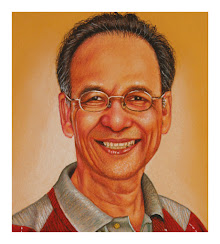
FROM DILIP MUKERJEA

"Genius is in-born, may it never be still-born."

"Oysters, irritated by grains of sand, give birth to pearls. Brains, irritated by curiosity, give birth to ideas."

"Brainpower is the bridge to the future; it is what transports you from wishful thinking to willful doing."

"Unless you keep learning & growing, the status quo has no status."
Showing posts with label Personal Change. Show all posts

Friday, August 5, 2022

 They are self-explanatory, for the first step in personal change is to become aware of your own bullshit! 


Friday, April 18, 2014

POWERFUL IDEAS ("idées puissantes") FROM INSOO KIM BERG AND STEVE DE SHAZER

A nice collection of idées puissantes ("powerful ideas") from psychotherapist team, Insoo Kim Berg and her husband Steve de Shazer  [both died unexpectedly a few years apart in the 2000s]:
• If it isn’t broken, don’t fix it.
• If it works, go with the flow.
• If it isn’t working, do something different.
• The solution to an issue—any issue—is almost never that closely related to the problem.
• This explains why the way people think and talk about problems is almost guaranteed to be different than the way they think and talk about solutions.
• The first place to look for solutions is to exceptions: ask yourself what has been working that you really hadn’t noticed all that much.
• The next best place to look for solutions is to what makes sense, now that you’ve thought a little more about it.
• What usually matters most are small, right, smart, good (that is, moral) next steps that may put you on the path to big changes.
• People need to be reminded (and none of us ever wants to forget) that the future is both created and negotiable.
• Not all change is a problem, and problems do not happen all the time. But change is inevitable.
[Excerpted from LEAP!Psych weblog of Dudley Lynch, President of Brain Technologies Corporation and author of 'LEAP!: How to Think Like a Dolphin & Do the Next Right, Smart Thing Come Hell or High Water', among others. He is one of my most favourite strategist authors.]


Monday, February 15, 2010

YOUR BEST FRIENDS MIGHT BE YOUR WORST ENEMIES...

Here's an interesting brief from the global training & performance improvement outfit, Vitalsmarts, which helps to shed some light on the above matter.

In a nut shell:

A study conducted by the authors of 'Influencer: The Power to Change Anything', a New York Times bestseller about behavioural change, found that people who surround themselves with friends who actively encourage or support their efforts are significantly more likely to succeed at achieving new goals (up to 38 percent more likely).

Go to this link to read the brief in its entirety.

Tuesday, December 15, 2009

SOLVING THE MYSTERY OF LEADING PEOPLE THROUGH CHANGE

The following piece of beautiful thoughtware comes from Dilip Mukerjea as he thinks through a major change initiative for a client, just before he departs for India on a private trip on Monday morning:

Humans are hard-wired to resist change. We are programmed not to change. Bizarre, but true. This is because we are wired to survive, so we hang on to what has worked in the past…even when it becomes irrelevant! This is a consequence of entrenched, previously successful mental maps!

In fact, for change and transformation to happen, the fundamental process is as follows:

Stage 1: Do the right thing and do it well;

Stage 2: Discover the right thing is now the wrong thing;

Stage 3: Do the new right thing, but do it poorly at first (learning is taking place);

Stage 4: Eventually, do the right thing well;

Change starts with a history of doing the right thing and doing it very well, but then something happens: The environment shifts, and the right thing becomes the wrong thing.

Now consider this fact, using a fighter jet airplane as an example:

When approaching the speed of sound, Mach 1, powerful but usually invisible sound waves bunch tighter and tighter together, forming a massive wall of energy that tries to buffet and shake the plane right out of the sky.

Without sufficient thrust, lift, and proper aerodynamic design, disaster is inevitable as this sound barrier combines with the forces of gravity to crush the plane and bring it crashing back to earth. Lucky for the pilot of this plane, the designer possessed an in-depth understanding of these fundamentals to achieve breakthrough, letting her punch through the sound barrier as though it were a puff of smoke.

Change in institutions follows the same path.

The faster a leader tries to force change, the more shock waves of resistance compact together, forming a massive barrier to success. Instead of a sound barrier though, the leaders of these institutions confront a “brain barrier” composed of preexisting and successful mental maps. These incredibly powerful maps determine how people see the world of work, guiding their daily steps and behaviours.

Indeed, our heads are chock full of such maps! They frame our personal views of the world.

When change and transformation are needed, the challenge of remapping the mental terrain brings us to critical barriers that prevent sustainable strategic change.

What are the natural gravitational forces that suppress change and build brain barriers to breakthroughs? The answer lies in three questions that capture the essence of failed change.

And if we can understand why change fails (and it often does), we can figure out what the necessary thrust, lift, and aerodynamics are for pulling off breakthrough change.

• Why, when opportunities or threats stare people in the face, do people fail to see the need to change?

• Even when people see the need, why do they often still fail to move?

• Even when people move, why do they fail to finish – not going far or fast enough?

If we can grasp why people fail to see, move, and finish, and if we can break through these three barriers, we can deliver strategic change.

Leaders need to ensure that their people are not blinded by the light of what they already see. It is not that “an old dog can’t learn new tricks.” Rather, it is that an old dog has a devil of a time unlearning old tricks!!

When the maps in people’s heads begin to fail, the first reaction is to deny the failure, and the second reaction is to try harder by doing even more of what you know how to do best—even if it is no longer relevant, and perhaps, suicidal!

Tremendous effort and energy are required to get people to change, thus the need for visionary leadership!

Unless old mental maps are cracked or maybe even shattered, the journey to significant, and new, growth cannot happen.

The most prevalent reason for failed change is the first brain barrier — the failure to see. But even when you break though here, there is the next barrier to overcome.

With clear destinations, required resources, and valued rewards, you can break through the second, the failure-to-move barrier.

And even if one gets through the first two brain barriers, if the institution fails to focus on finishing, all the prior investment to break through the first two barriers is totally wasted. Thus the need for visionary leadership—one that can ensure commitment from everyone involved in the transformation process!

In summary, and another way to encapsulate the above points, the institutions in need of change need to follow the CBA path:

Conceive, Believe, and Achieve.

These three stages in implementing change successfully are designed to correspond with and overcome the three gravitational forces or barriers to change.

To break through the first barrier, people must conceive the old right thing as wrong and see the new right thing.

To break through the second brain barrier, people must believe in the path that will take them from doing the new right thing poorly to doing it well.

Finally, to break through the third barrier, people must achieve and know they have achieved the desired results.

Bon Voyage! Dilip.

Friday, December 4, 2009

THE CHANGE FORMULA

Change can be hard for most people, including myself during my early years of exploring & executing personal change, but it doesn’t have to be mysterious or complicated.

I realise, after the hard knocks, all it takes is just thinking about & doing things differently.

To help myself to understand change better during those tough years, I had often used the following interesting formula (often attributed to Michael Beer, writing in his 'Organization Change & Development: A Systems View', during the early eighties):

Successful Change = (D x M x P) > C

Successful change is a function of the relationship between four variables:

- dissatisfaction with the way things are (“D”);

- a different model for the future (“M”);

- the process of achieving the new model (“P”); &

- the costs of making those changes (“C”);


Change can be accomplished successfully if people are unhappy with the way things are, if they have a plan for an alternative, and if there is a way to turn the plan into reality.

When the variables are multiplied together, all of those i.e. dissatisfaction, a model, and a process, must be greater than the rational and emotional costs involved.

Regardless of the costs, if any of the other variables approach zero, your chances of bringing about real change are rather slim.

Wednesday, September 9, 2009

THE EMOTIONS OF CHANGE

Here's the link to an interesting - although belated - article on 'The Emotions of Change' by Dr Paul Kordis, co-author of 'The Strategy of The Dolphin' (with Dudley Lynch).

He is also the founder of the Human Capital Sustainability outfit.

I find the author's illustration with the wave theory & the idea of the emotional stages of the discovery trough & the recovery trough, drawn from the work of Dr Elizabeth Kubler-Ross, rather fascinating.

Saturday, September 5, 2009

A QUICK LESSON IN CHANGE MASTERY

According to martial art Aikido sensei, for personal change to take place, three things have to be realised:

1 - We cannot change what we do not acknowledge. We must first know the problem to change it;

2 - We must then accept the problem as it is, & allow it to be. Then be flexible & flow with its energy;

3 - We can then ask ourselves the following questions: Could I welcome it? Could I let it go? Would I let it go? When?

Personally, I believe that once we acknowledge & then accept change in the form of things, people, events & happenings for what they are, we are unlikely to waste our precious time on frustrations & worries.

Likewise, once we embrace change readily, the world around us will change for the better, without much effort on our part.

Monday, April 27, 2009

ARE YOU EXPERIENCING BREAKTHROUGHS?


Are you experiencing breakthroughs? or . . . have you broken down, irrelevant to the present, relegated to the past?

The concept of jobs is becoming obsolete. There will be work aplenty, and that will require incessant creativity. It is now well known that our counterparts at the end of the 21st century will see today’s struggle over jobs as a fight over deck chairs on the ‘Titanic’.

You may feel secure in your present situation. But only one thing is sure: the notion of a permanent job is an illusion.

Consider the story of Balmung, the magic sword. It belonged to Siegfried, the Germanic hero. Balmung was so sharp that it could slice an armoured warrior in two, from the top of his helmet to the soles of his iron boots. But the cut was so fine that the wounded man could not even feel it. Until he moved. And then he fell into two pieces.

You may feel likewise. But just wait until you leave your job. We live in perilous, gyrating times.

And the possibilities are exciting. New challenges are bringing us to the threshold of our minds.

The choices that dominate:

- Education or Extinction!

- Creativity or Catastrophe!

- Innovation or Incineration!

[Adapted & excerpted from the 'Igniting Innovation' edition of The Braindancer Series of bookazines by Dilip Mukerjea. All the images in this post are the intellectual property of Dilip Mukerjea.]

Say Keng's personal comments:

While re-reading Dilip Mukerjea's foregoing brief essay, I am again reminded of this wonderful quote, which had often reverberated throughout my entire career span in the corporate world (attributed to American psychologist & physician Dr George Crane):

"There is no future in any job. The future lies in the man who holds the job."

With that note, I like to share 10+1 'Great Action Words' (adapted from futurist/change strategist Jim Carroll) for everyday use in the workplace, as transformational grammar to help you get into the right frame of mind to create your own personal future:

- OBSERVE trends as well as fads around you;

- Learn to THINK & THINK to learn;

- CHANGE your habitual routines;

- DARE to take some risks;

- BANISH killer &/or negative phrases from your daily vocabulary;

- EXPERIMENT with new concepts & ideas to create novel ways of doing things;

- EMPOWER yourself as well as everybody around you with new skills;

- QUESTION your assumptions & beliefs as well as your organisational code;

- GROW by tackling challenges & grabbing opportunities;

- D0 to renew yourself & others around you;

- ENJOY your passion & enthusiasm;

[Jim Carroll is the author of two superb guides, 'What I learned from Frogs in Texas: Saving Your Skin with Forward-Thinking Innovation' (2004) & 'Ready, Set, Done: How to Innovate When Faster is the New Fast' (2007). I have already reviewed them on Amazon as well as in the 'Optimum Performance Technologies' weblog.]

Friday, March 6, 2009

PERSPECTIVES ON CREATIVITY

Creativity is inborn; it is the quality we bring to the activities we perform. It is an attitude, an approach that is inside-out, not outside-in.

Do not confine creativity to anything in particular.

In expressing ourselves, no matter what we do, even in mere walking, there is creativity.

When we sit silently, in contemplation, doing nothing, it is the non-doing that can be a creative act.

Buddha sitting under the Bodhi Tree, doing nothing, is one of the greatest creators the world has ever known.

Recognise that creativity is within; then consciously let it loose . . . and enjoy its flow.

We come into this world with a specific destiny - something to fulfill, some message to deliver, some work to be completed. We are not here accidentally - we are here meaningfully.

There is a creative purpose within us. The Whole intends to do something through us.

Any life lived fully will be creative. Some salient elements of creativity include:

- Consciousness . . . how awake, and awakened, are you to life, and to your state of being?

- Compassion . . . are you aflame with empathy, do you have feeling towards diverse aspects of life?

- Connectivity . . . are you able to seek opportunities and see possibilities by connecting the dots of life?

The individual who can develop these three qualities simultaneously becomes a three dimensional artist. The person who claims, and exclaims, that it ‘impossible’ to be creative is a victim of being polarised at one extreme of a set of continuums. He or she behaves in self-defeating ways, such as:

- Self-Consciousness, instead of Flow;

- Perfectionism, instead of Self Acceptance;

- Flat Intellect, instead of Bubbly Intelligence;

- Blind Belief, instead of Open-Mindedness;

- The Guru Game instead of Self Acceptance and Acceptance of Others for who and what they are;

To unlock your creative potential, or to disentangle yourself from creative confusion, consider these perspectives:

- Become a Child Again;

- Be Ready To Learn;

- Find bliss in the Ordinary;

- Be a Dreamer;

To remain aligned, and stimulated, ask yourself four questions:

- Do you live in the NOW?

- Do you look for esteem from without?

- Do you exercise all of your intelligences?

- Do you understand that life is a form of energy and information exchange?

[Excerpted from the 'Ideas on Ideas' edition of The Braindancer Series of bookazines by Dilip Mukerjea. All the images in this post are the intellectual property of Dilip Mukerjea.]

Say Keng's personal comments:

The way I see it, the crux of Dilip Mukerjea's principal premise in the foregoing essay is very obvious: WE ARE ALL BORN CREATIVE!

When we believe that creative solutions can be found at all times, we can start to see many possibilities ahead.

Our first or preliminary thoughts serve to prime our minds.

With the foregoing thoughts as raw material, our imagination, & fueled by our passion & enthusiasm, then propel us to spring forward. They open up possibilities & opportunities, often beyond the few limited options we initially entertained.

The eventual outcome is a redefinition, & may even be a reinvention, of ourselves that we would never have thought of in the first place.

From my perspective, I always see creativity as the igniter in the whole endeavour of opportunity finding as well as personal change.

Monday, February 23, 2009

CHANGE CREATES CONSEQUENCES, CONSEQUENCES CREATE CHANGE

The overriding observation that emerges from the process of evolution is that:

Should we permit change to overwhelm us?

Shouldn't we be proactive in anticipating change, then flowing with it, or better still, in effecting change, and having a flow with us?

Furthermore, if humans have emerged so dominant from an initial position of significant inferiority, we should consider: to be in business today, it is time for us to take up the business of imagination.

Imaginative thoughts led to action, which effected constantly improving change. This process drove the march towards civilisation. By thinking, feeling, and doing, we are able to continually change the architecture of the brain.

By constantly stimulating our brains, by seeking out novelty, according value, and imbuing passion into our endeavours, we begin to appreciate now dynamically kaleidoscopic our brains really are.

Here's a thought for you:

What are you clinging on to that is no longer relevant?

What must you give up in order to realise your destiny?

Answer these questions and enjoy a return on your imagination!

[Excerpted from 'Brain Symphony: Brain-blazing Practical Techniques in Creativity for Immediate Application', by Dilip Mukerjea. All the images in this post are the intellectual property of Dilip Mukerjea.]

Say Keng shares his personal experience:

The pertinent questions posed by Dilip Mukerjea were more or less the same questions that had confronted me during the early nineties, when I was contemplating what to do with the second half of my life.

I was then 43 years old, working in quiet desperation as a corporate rat, looking good, but going nowhere.

I then realised that for things to change around me, I got to change first. To be the change I wanted to see in my life, so to speak.

So, I left the corporate world, where I had spent twenty four years of my working life, to pursue my passion: reading. I started a small, but unique, book store - that's how I met Dilip Mukerjea; published a newsletter; & established a consultancy outfit for small business. The rest was history.

In retrospect, & with the wisdom of hindsight, I dare to say this: your life will change in direct proportion to the degree that you change.

Also, your personal rate of change must preferably be higher than the external rate of change in the environment. For me, this resonates well with management guru Peter Drucker's insightful advice:

'One cannot manage change; one can only be ahead of it!"

Frankly, in a nut shell, I want to conclude that change is all about you:

- knowing yourself;
- knowing what you want;
- exploring how to get what you want;
- studying & understanding your environment;
- developing a strategy & following it through;
- using whatever resources you have, e.g. imagination;
- managing yourself effectively & efficiently;
- paying attention to your own results;
- making your corrections, where appropriate; &
- connecting effortlessly with everyone else in your life;