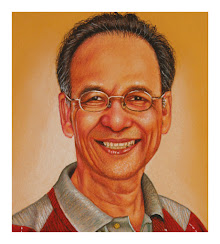
FROM DILIP MUKERJEA

"Genius is in-born, may it never be still-born."

"Oysters, irritated by grains of sand, give birth to pearls. Brains, irritated by curiosity, give birth to ideas."

"Brainpower is the bridge to the future; it is what transports you from wishful thinking to willful doing."

"Unless you keep learning & growing, the status quo has no status."
Showing posts with label Memory Management. Show all posts

Friday, October 7, 2022

My take on a question in Quora:
Why do we forget? Why do those with perfect memory not forget anything?
Frankly, you shouldn’t get hung up on this phenomenon which psychologists often call, the “Forgetting Curve”.
According to science. “forgetting” is a natural phenomenon. It’s a vital part of the brain’s natural process of consolidation and diagnostics.
As a matter of fact, “memory” is essentially an active, dynamic process of the brain from our initial selective perceptual capture of sensory impressions of our physical environment, our subsequent processing of what is important from the impressions, particularly in terms of conceptual coherency and personal relevancy, all the way to our so-called long term memory storage.
Throughout this seemingly elaborate process, almost all our 100 billion brain cells are firing on all cylinders.
That’s to say, learning transfer is basically a hardwired bio-electro-chemical activity.
More importantly, it’s always subjective, due to our prevailing expectations, biases, prejudices, fears, hopes and even frustrations.
As I have understood, based on my decades of exploring the intricacies and idiosyncrasies of the human mind, at the physical core of our brain, there is actually no physical entity of “our memories”.
Our recall of “memories” is always reconstructed through the firing synapses of the brain’s vast neural networks.
That’s why as a student, in order to beat this deadly impact of the what is now known as the Ebbinghaus Effect, or better known to most folks as the ‘Forgetting Curve’, we need to do a number of things while learning/studying:
- make sure that we have an interest in learning new things, as interest permeates all learning endeavours;
- make sure that we pay attention while learning/studying;
- make sure that we understand a new concept thoroughly at the very beginning of learning/studying;
make sure that we do a 3 R’s Strategy: Recap, Review and Reinforce, - for deeper processing of what we have just learned to allow better and faster recall when needed, especially during test/exam time;
- make sure we institute a Spaced and Distributed Practice in lesson revisions/rehearsals, within 24 hours, failing which about 80% will be lost; within the next 7 days / next 30 days/ next 6o days/ next 90 days until test/exam time;
- make sure that we remain stress-free and relaxed during learning/studying, and more importantly, before and during test/exam time, as stress is considered a fight-flight response by our reptilian brain, which is one of the major gateways to our learning/thinking brain, or better known as our cerebral cortex;
By the way, there is no such thing as a perfect memory. Only a trained memory.

Hopefully all these cogitations will now make sense to you. 


Thursday, September 24, 2009

ACTION POINTS FOR YOU & YOUR BRAIN II

[continued from the Last Post.]

Dilip Mukerjea, writing in his book, 'Building BrainPower: Turning Grey Matter into Gold', offers the following Action Points for Your Memory Management:

1) Inject colour and diversity into your life.

2) Look, think, link, and ink the stimuli of life; it will build your memory muscle.

3) Make dramatic beginnings and entrances (start starts!).

4) Dare to imagine, unleash your sense of fun! Risk it and realise what you have been missing!

5) Observe with a purpose, then link, connect, and realise whatever you wish to remember.

6) Take regular breaks between prolonged learning sessions.

7) Apply your memory skills to numbers, data, names and faces.

8) Use the Memory Principles constantly.

9) Review constantly - see things again, preferably using Mind Maps, Imagination techniques, and interactive discussions; this practice embeds information into long term memory.

10) Ensure that your diet is healthy; remember that three-quarters of the word 'diet' is terminal ('die') if what you ingest is unhealthy.


[to be continued in the Next Post: Actions Points for Your Creativity.]

Saturday, September 12, 2009

THERE IS NO LEARNING WITHOUT MEMORY!

Dilip Mukerjea, writing in his new book, 'SuperBrain Study Skills', outlines the following major elements in building a superb memory, without which learning cannot take place:

Interest:

Interest is the creative force that gives birth to intention, a sense of purpose.

From this phenomenon, we arouse attention, a laser-like focus that keeps our resolutions on track.

Imagination:

Imagination is the raw material that, acted upon, transforms intention into reality.

Business investments in today's marketspace receive returns only when their ROIs is a Return on Imagination, & by extension, a Return of Intuition, with the bonus, a Return on Innovation.

Enthusiasm:

Enthusiasm, reflecting its Greek ancestry, fills us with divinity, a spirit of Godliness, a joyous quest for the best.

Energy:

Energy oxygenates our aspiration. It transports what was once impossible, then improbable, to become inevitable.

Association:

Association happens when we coalesce random stimuli from our outpourings of knowledge & imagination.

A multiplicity of associations generate infinite possibilities, especially when the relationships are vivid (colourful), dynamic (moving), & dramatic (emotionally exaggerated).

To sum up, MEMORY = INTEREST + IMAGINATION + ASSOCIATION + ENTHUSIASM + ENERGY

Say Keng's personal comments:

When it comes to learning, & also to help in remembering one's learning journey, interest is always paramount.

As a matter of fact, for me & also Dilip, interest always implies attentional focus, primary concern as well as intentional curiosity, which come into play during the learning journey.

Richard Saul Wurman, information architect & author of the classic, 'Information Anxiety', said it best:

"Learning can be seen as the acquisition of information, but before it can take place, there must be interest; interest permeates all endeavours & precedes learning. In order to acquire & remember new knowledge, it must stimulate your curiosity in some way."

Wednesday, March 4, 2009

THE WORLD'S MOST IMPORTANT GRAPH

Writing in his wonderful book, 'Unleashing Genius with the World's Most Powerful Learning Systems', Dilip Mukerjea introduces the world's most important graph, the Graph of Recall.

There are five major points at which we recall items easily:

PRIMACY:

This is the term used for the first things we recall. Most people can come up with at least a few items at this stage.

REPEATED:

This is the traditional way of recalling. Repetition reinforces recall!

OUTSTANDING:

We find that it is easy to recall items that suddenly pop up out of the blue. It's the same as if a pink and purple dinosaur crashed through the ceiling of your home; you'd never forget it, even in ten thousand reincarnations!

PERSONAL ASSOCIATIONS:

Different people recall different items at different times. It is personal, since we are all unique. This is why the starburst of personal associations occur at various points on the Graph of Recall.

RECENCY:

This is the term used for the last few items we recall. Like the other phenomena above, it comes naturally to us. And it keeps on working away in our brains, silently, until suddenly, much later, it helps us connect with other stuff in our heads, and whoosh! we come up with fresh ideas."

Because the Graph of Recall addresses the natural points of recall, it has an infinite range of applications, addressing all aspects of life!

Some examples:

GIVING A SPEECH

Make a star start! This is when your audience is wide awake! Even if you are nervous, go for it, because they'd ready to listen to you. Repeat, in different ways, what you have to say to them.

From time to time, throw in some stuff that wows! them with outstanding features, such as humour, suspense, shock, and sparkle. Don't try to impress, express! Remain who you are and remember that your audience consists of unique individuals. Speak to them all, as well as to each of them. This is how they will personally associate with what you have to say.

Finally, make a star finish, and zap them with something to remember you forever!

STUDYING

Never study in looooong stretches. Take regular, brief, "brain b-r-e-a-k-s", every thirty to sixty minutes. Start with a quick preview of your material. Take a short break. review your material at regular intervals. Personalise your text with your own notes in the margins and on separate paper.

Make your material outstanding by using colours to highlight, to underline, and in your images that correspond to the written passages.

Before ending your study sessions, pay special attention to the recency effect so that you make a running start when you come back to your sessions later on. That way, when you return, you do so with your memory at a high level of 'recall availability'.

MEETING PEOPLE

Once again, follow the formula given on the graph. You have only one shot at making a first impression, but . . . don't TRY to make an impression. Be yourself, and make an impact by approaching people with:

(1) a happy smile;

(2) your arms open, and your heart facing them;

(3) eye contact that shows them you are there, and not spaced out;

(4) your senses alert to what they are saying, indicating that you are listening carefully;

(5) your voice warm and sincere, enthusiastic when appropriate;

Repeat their names so that you are able to remember them easily. This also emphasises a feature of 'personal association'. Look for some outstanding features om their faces to make them effortlessly recognisable.

And, when you leave, do so with goodwill and respect towards them. the time that you have spend with them should be a precious part of your life. Pay special note that the last things you say or do will be remembered, so do so with love and sincerity!

[All the images in this post are the intellectual property of Dilip Mukerjea.]