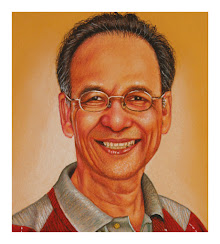
FROM DILIP MUKERJEA

"Genius is in-born, may it never be still-born."

"Oysters, irritated by grains of sand, give birth to pearls. Brains, irritated by curiosity, give birth to ideas."

"Brainpower is the bridge to the future; it is what transports you from wishful thinking to willful doing."

"Unless you keep learning & growing, the status quo has no status."
Showing posts with label iCAPitalism Seminars. Show all posts

Tuesday, July 13, 2010

IF YOU ARE A CEO OR HR DIRECTOR, PLEASE DROP IN TO TAKE A LOOK...

Just double-click on the respective image as shown below to get the "blown-up" perspective for your easy reading.


[For a hard copy or more information about on-site or off-site engagements for your organisation, please write to Dilip Mukerjea at email: dilipmukerjea@gmail.com]

Thursday, July 8, 2010

DILIP MUKERJEA'S CORPORATE PROGRAMS @SINGAPORE INSTITUTE OF MANAGEMENT

Here's a current overview of Dilip Mukerjea's corporate programs under the auspices of the Singapore Institute of Management (SIM):

THE BUZAN TECHNIQUES: BUILDING BRAINPOWER

~ 14th to 16th July 2010
~ 27th to 29th October 2010

BRAINDANCING

~ 26th to 28th August 2010
~ 30th November to 1st December 2010

LIFESCAPING

~ 15th to 17th September 2010

BRAINTALES

~ 2nd to 3rd November 2010

For the individual program synopsis, & other pertinent details, please click on the appropriate program headings as outlined above.

Thursday, April 22, 2010

DILIP MUKERJEA'S BRAINAISSANCE PORTFOLIO (CORPORATE DOMAIN)

I like to give readers a quick virtual tour of Dilip Mukerjea's colourful catalog - latest edition - of his portfolio of products & services under the Brainaissance program targetted at the corporate domain, including entrepreneurs, professionals & managers.

Wednesday, December 9, 2009

BE DISTINCT, OR BECOME EXTINCT: DIFFERENTIATE YOUR OFFERINGS

[continued from the Last Post.]

[My personal musings, inspired by Page 4 of 'The Brainaissance Program of iCAPitalism Seminars with... The World's Most Powerful Learning Systems for... The Learning Economy', by Dilip Mukerjea.]

I believe it was corporate skunk Tom Peters who first came up with the 'distinct or extinct' mantra way back in the nineties.

Since then, many other authors or consultants have rode on it to distill various ideas & strategies for readers or clients to create distinctions &/or differentiate offerings.

Interestingly, while preparing for this blog post, I came across an amusing challenge, as appended below, from a personal branding expert, who has signed himself off as 'iMicrobrand' in the 'Small Business Online Community' forum:

He has posed the question:

How do you find out if you are Distinct or Extinct?

& has suggested:

1. Open your browser and type in your name;
2. Observe how many times your name appears;


He has added further:

"How many times did you come up?

Are the results connected to what you want the world to know you for?

If you are not populating the natural means by which people are finding your products and services today, then 9 times out of 10 you are not properly branded!!

This small oversight could cost you literally thousands of dollars."

Wow! Give it a go with your own name. Meanwhile, I have already done mine, using my Copernic Agent Pro. My personal response to the search findings: exuberant & exhilarating!

What do you think, as you ponder over your own personal experience with the foregoing exercise, & at the same time, over Dilip Mukerjea's exhortation via his imaginal picture?

Meanwhile, I like to leave this wonderful quote from the Grande Mademoiselle Coco Chanel as food for thought:

“In order to be irreplaceable, one must always be different.”

[By the way, I have traced the personal branding expert, iMicrobrand' to Vincent Hunt of Sapien Harbor, a US-based Personal Consultancy specializing in helping individuals & companies think differently. I like his tagline: Rethink. Redefine. Reinvent. Many thanks, Vincent, for your sharing.]

[to be continued in the Next Post.]

Tuesday, December 8, 2009

CHANGE, ON YOUR TERMS, OR BE SHORT-CHANGED ON THE MARKET'S TERMS!

[continued from the Last Post.

My personal musings, inspired by Page 4 of 'The Brainaissance Program of iCAPitalism Seminars with... The World's Most Powerful Learning Systems for... The Learning Economy', by Dilip Mukerjea.]

The following pertinent question from Dilip Mukerjea can be quite scary.


I reckon, the only option for us today, as part of our longer term strategy to survive & thrive, is to keep on learning new things, & at the same time, keep on learning to apply technology-enablement to increase our personal productivity, so that we become more productive, efficient & irreplaceable.

I recall my early exposures as a working professional to what futurist Alvin Toffler has once described as "a turbulent environment filled with revolutionary reversals, surprises, & competitive upsets..." as far back as the late eighties or early nineties.

At that time, I had also just started to indulge myself in the beautiful writings of economist Paul Zane Pilzer.

The following jottings in my ideas scratchpad came from his brilliant work, particularly 'Unlimited Wealth: The Theory and Practice of Economic Alchemy':

"... The overwhelmingly largest determinant of success today for both the individual & the organisation is the speed with which they can accept, learn, & work with technological change... Prosperity today belongs to the person & organisation that learns new thins the fastest..."

"... The key to achieving financial success today, or success in any field for that matter, is being able to learn new things. And the key to having the ability to learn new things, is developing confidence in your ability to learn...'

"Indeed, technology is advancing on so many fronts that the main constraint on innovation today is not so much the capacity of engineers & entrepreneurs to come up with new ideas, but their ability to keep abreast of & integrate the latest developments from fields outside their own particular specialty..."

Just imagine that he wrote all that in the early nineties, & to me, they are still very relevant today.

As a matter of fact, Dilip Mukerjea has recently made a wonderful observation in an expert advisory to a client [actually, an extract from his currently still 'work-in-progress' book, tentatively entitled 'Brainaissance'] as follows:

"Corporations and capital markets differ in their attitudes towards the forces of creative destruction ~ specifically, in the way they enable and manage this phenomenon. Corporations focus on operations. They aspire to function perpetually as ‘going concerns’, and thus work on the assumption of continuity.

Capital markets have no such concerns — they function on the presumption of discontinuity; their focus is on creation and destruction. Whilst corporations may tolerate long-term underperformance, markets have no qualms about annihilating the underperformer.

Outstanding corporations might stand out amongst the downtrodden, but unless they become perpetual learning organisms, the very processes that led them to success will anchor them to failure.

The choice for organisations: change, on your terms, or be shortchanged on the market’s terms!"


The foregoing insightful observation certainly sums up very well what Dilip has originally in mind when he poses the question as outlined in the foregoing imaginal picture.

[to be continued in the Next Post.]

Wednesday, December 2, 2009

WAGING WAR AGAINST THE IDEOLOGY OF COMFORT & THE TYRANNY OF CUSTOM

[My personal musings, inspired by Page 4 of 'The Brainaissance Program of iCAPitalism Seminars with... The World's Most Powerful Learning Systems for... The Learning Economy', by Dilip Mukerjea]


As I look closely at the page as shown above, I have come to realise that there are actually five key aspects for me to elaborate, each represented by an imaginal picture.

That's to say, based on what I had already committed from the onset of sharing my personal musings, I have to outline five personal perspectives, over five subsequent blog posts, starting with this one.

The first aspect is, as usual, the pertinent question posed by Dilip Mukerjea, as shown below:


The first thing that strikes me when I read the question from Dilip is recalling the salient points from the wonderful book, 'Leading Change: Overcoming the Ideology of Comfort & the Tyranny of Custom', by noted leadership expert James O'Toole.

In a nut shell, & drawing my intellectual cues from the author, leaders who are tough, manipulative, dictatorial, or paternalistic, have only themselves to be blamed for driving or pushing their organisations to mediocrity &/or early death, when instituting organisation-wide change initiatives under their charge.

Interestingly, when employees down the line, whose status quo - meaning: psychological comfort - is being challenged by leaders who are apparently still stuck in an outmoded Machiavellian approach, resistance from the ground build ups & gradually skyrockets.

They become powerful prisoners in the comfort zone, & often delay the acquisition of requisite change until it's too late.

On the other hand, about 90% of organisational change initiatives fail, & a majority do so because of "cultural barriers".

The author aptly outlines more than thirty realistic examples of "cultural barriers" as evidence of the ideology of comfort & the tyranny of wisdom.

To employees, organisational changes always bring about a perceived personal loss of some sort. More importantly, most employees do not fear change, rather they fear what is unfamiliar & unsettling. To them, "what's in it for me?" is real & legitimate.

In the end analysis, perceived irrelevancy &/or perceived fear of personal loss are the major causes of resistance to change.

I reckon change leaders just have to deal patiently & intelligently with these seemingly powerful opponents to change within their organisations.

I recommend reading the book for its brilliant illumination on the subject of leading change.

[to be continued in the Next Post.]

Friday, November 20, 2009

SEEING IS BELIEVING: THE POWER OF VISION

[My personal musings, inspired by Page 3 of 'The Brainaissance Program of iCAPitalism Seminars with... The World's Most Powerful Learning Systems for... The Learning Economy', by Dilip Mukerjea]


Where do you see yourself?

What is the significance of the foregoing question posed by Dilip Mukerjea, against the backdrop of a beautiful imaginal brain profile created by him?

He is basically accentuating what author, futurist & film maker Joel Arthur Barker has exhorted in the proprietary 'The Power of Vision' video training program, first released during the early nineties:

'A positive vision of the future is the most powerful motivation for change'.

Citing the research done by Dutch sociologist Fred Polak, American business researcher Jim Collins, Austrian psychiatrist Viktor Frankl & Canadian educator & psychologist Benjamin Singer, respectively on the successes of nations, companies, individuals & even school children, it has been found that, when they began their climb they did not have the right resources & they didn't even have any strategic advantage.

What they all had in common was a positive vision of their future.

The message here is that circumstances do not determine the outcome, only vision does.

Having a vision is imperative to success. Vision is an essential ingredient in living to win.

Even a child building a sand castle on the beach has some sort of picture in his or her head telling them what to do next. It’s vision.

If you want to be successful in any significant endeavor - you first need to have a 'vision of the future'.

From the neurological perspective, I always like to correlate the 'vision of the future' to the 'image of achievement' as postulated by Dr Karl Pribram, Professor Emeritus of Stanford University, one of the prime architects of our modern understanding of the brain.

According to him, all our behavioural actions are governed by our 'image of achievement', & without it, we cannot succeed in our endeavours.

A 'vision of the future' or an 'image of achievement' is a picture that is seen with the mind's eye.

It is not your present reality, but what you believe as your destiny manifest in the present.

It is more than just being able to imagine something in the future. In a nut shell, the 'vision of the future' or 'image of achievement' becomes so powerful that it cause you to step into it, & live your future each day.

I often like to use the personal example of Arnold Schwarzenegger in my training workshops to illustrate the power of vision.

As documented in the book, 'Fantastic: The Life of Arnold Schwarzenegger', by Laurence Leamer, Arnie was interviewed about what he planned to do now that he had retired from body building in 1976. He nonchalantly responded with his thick Austrian accent:

"I'm going to be the #1 box office star in all of Hollywood."

Arnie's first attempt as an actor was a box office flop, but he explained as follows that he would use the same process he had used in bodybuilding. [By the way, Arnie was five times Mr Universe & seven times Mr Europa.]

"What you do is create a vision of who you want to be, & then live into that picture as if it were already true."

Closer to home, a great personal exemplar of the power of vision is Sim Wong Woo, founder, CEO & Chairman of Creative Technology. Readers can go to my earlier post in 'Optimum Performance Technologies' weblog to read about what I had learned from him.

As a successful nation, Singapore is a classic exemplar of the power of vision.

When Singapore was unfortunately kicked out of the Malaysian federation in 1965, most political analysts around the world had seriously thought that Singapore was a gone case.

It was the foresightedness & tenacity of the vision of Lee Kuan Yew & his close team of stalwarts, like Goh Keng Swee, S Rajaratnam, Toh Chin Chye, among others, & his pioneering cohort of dedicated civil servants like Hon Sui Sen, J Y Pillay, Sim Kee Boon, just to name a few, who built Singapore for what she is today.

Throughout the nineties, I had done extensive random surveys of Straits Times interview reports on students who had done remarkably well in their PSLE, 'O' Level, 'A' Level exams, as well as in the presidential scholarship nominations.

I had narrowed down their peak-performing successes to the following common characteristics, in order of priority:

- they are goal-oriented (that's vision! & correlates to Benjamin Singer's research findings);

- they apply study strategies;

- they are passionate & enthusiastic in their academic as well as extra-curricular pursuits;

- they receive parental as well as teacher support;

To end my musings, & I am very confident that Dilip will concur with me that, as long as we have a 'vision of the future' or an 'image of achievement', & we then act upon what we believe or assume will be true of the future or upon our aspirations for the future, our decisive actions in turn will create the future in which we will find ourselves.

Wednesday, November 18, 2009

CUT RED TAPE: REDUCING BUREAUCRACY, RAISING STANDARDS

[My personal musings, inspired by Page 2 of 'The Brainaissance Program of iCAPitalism Seminars with... The World's Most Powerful Learning Systems for... The Learning Economy', by Dilip Mukerjea]


Dilip Mukerjea poses a very pertinent question here:

"Is red tape the only thing that's keeping your organisation together?"

To me, red tape also applies in the personal setting.

Just like bureaucracy, red tape is the opposite of efficiency.

In actual fact, 'bureaucracy' & 'red tape' are synonymous.

They suggest a lack of initiative, a bias for inaction, & excessive adherence to archaic rules & inflexible routines. Even more serious, they create an impersonal force dominating the life of oneself as well as others.

So, how does one deals with the bureaucracy running amok & the tyranny of red tape, so to speak, in a personal setting?

I offer a few suggestions:

- examine your own work performance (key result areas), with the view to cut down time & effort-consuming activities;

- apply Pareto's Law or the 80/20 Rule, & focus on high leverage activities that move you forward;

- explore & adopt alternatives & options that generate the greatest net benefits to yourself, as well to others around you;

- review regularly what works & what doesn't work, especially your habitual routines, to ensure relevancy & effectiveness;

- consider: what do I need to do more of? what do I need to do less of? what do I need to start doing? what do I need to stop doing?

- talk regulary to other people, especially stakeholders;

- embrace adhocracy by benchmarking against other high-performance individuals &/or organisations;

- develop a personal bias for initiative & action;

[Readers can go to this link to download a free copy of the book, 'Busting Bureaucracy: How to Conquer Your Organisation's Worst Enemy', by Kenneth Johnson.]

Friday, November 13, 2009

A GUIDE TO THE BRAINAISSANCE PROGRAM OF iCAPITALISM SEMINARS, by Dilip Mukerjea


In an earlier post, I had brought readers' attention to a handy 32-page pocket-sized guide introducing the 'The Brainaissance Programme of iCAPitalism Seminars' with... 'The World’s Most Powerful Learning Systems' for... 'The Learning Economy', conducted by Dilip Mukerjea.

What follows in this blog post is an updated & expanded version, now with 36 pages, following the addition of his brand-new 'Passiontations' program.

Unlike other presentation programs, I am proud to say that 'Passiontations' is designed to woo audience with wow!

Also, his ongoing 'Lifescaping' seminar has been restructured with a more cogent focus on 'strategic visioning', for both business as well as personal applications.

To recap, 'The Brainaissance Programme of iCAPitalism Seminars' captures the continuously evolving succession -(work-in-progress, to be more precise) - of resource tool-kits, ideas, strategies, tools, hints, tips, games, tests, quizzes, designed for people of all ages to tune-up and sustain the preeminent information processor and perpetual idea generator inside their heads.

They are masterfully conceived and meticulously crafted by Dilip Mukerjea.

As I had said earlier, the understanding, application and adaptation - & more importantly, diligent application with focused execution - of these tool-kits will help readers across all ages to be prepared for exploring uncharted grounds & navigating complex landscapes through the years to come in our rapidly-changing, turbulent and chaotic world.

In a nut shell... to help you become future ready!

Over the years, 'The Brainaissance Programme of iCAPitalism Seminars' has been conducted under the auspices of the Singapore Institute of Management. However, they are also available for custom-engineering design to suit both private & public sector organisations, via consulting arrangements with Dilip Mukerjea.

Departing from my earlier endeavour, I now intend to do a page-by-page running commentary to highlight useful takeways for readers from the entire repertoire, as well as to share my personal & professional perspectives, covering his seminars, books & bookazines.

For a start, the front cover of 'The Brainaissance Programme of iCAPitalism Seminars' is shown in this blog post.

Dilip Mukerjea can be reached at dilip@pacific.net.sg, or through the weblink of his consultancy outfit, Braindancing International Pte Ltd.

Wednesday, October 21, 2009

A GUIDE TO THE BRAINAISSANCE PROGRAM OF iCAPITALISM SEMINARS, by Dilip Mukerjea

[continued from the Last Post.]

What follows in this blog post is a page-by-page replica of the handy 32-page pocket-sized guide introducing the 'The Brainaissance Programme of iCAPitalism Seminars' with... 'The World’s Most Powerful Learning Systems' for... 'The Learning Economy', conducted by Dilip Mukerjea.

The first sixteen pages have already been shown in an earlier post.

Here are the remaining sixteen pages.


[All images in this post are the intellectual property of Dilip Mukerjea.

More information about Dilip Mukerjea, his published thoughtwares & his consulting work, can also be found at his corporate website.]

Tuesday, October 20, 2009

A GUIDE TO THE BRAINAISSANCE PROGRAM OF iCAPITALISM SEMINARS, by Dilip Mukerjea


What follows in this blog post is a page-by-page replica of the handy 32-page pocket-sized guide introducing the 'The Brainaissance Programme of iCAPitalism Seminars' with... 'The World’s Most Powerful Learning Systems' for... 'The Learning Economy', conducted by Dilip Mukerjea.

In a nut shell, 'The Brainaissance Programme of iCAPitalism Seminars' captures the continuously evolving succession -(work-in-progress, to be more precise) - of resource tool-kits, ideas, strategies, tools, hints, tips, games, tests, quizzes, designed for people of all ages to tune-up and sustain the preeminent information processor and perpetual idea generator inside their heads.

They are masterfully conceived and meticulously crafted by Dilip Mukerjea.

I dare to affirm that the understanding, application and adaptation - & more importantly, diligent application with focused execution - of these tool-kits will help readers across all ages to be prepared for exploring uncharted grounds & navigating complex landscapes through the years to come in our rapidly-changing, turbulent and chaotic world.

Over the years, 'The Brainaissance Programme of iCAPitalism Seminars' has been conducted under the auspices of the Singapore Institute of Management. However, they are also available for custom-engineering design to suit both private & public sector organisations, via consulting arrangements with Dilip Mukerjea.

Dilip Mukerjea can be reached at dilip@pacific.net.sg, or through the weblink of his consultancy outfit, Braindancing International Pte Ltd.

The first sixteen pages of 'The Brainaissance Programme of iCAPitalism Seminars' will be shown in this blog post.


The remaining sixteen pages of 'The Brainaissance Programme of iCAPitalism Seminars' will be shown in the next blog post.

[to be continued in the Next Post.

All the images in this post are the intellectual property of Dilip Mukerjea.

More information about Dilip Mukerjea, his published thoughtwares & his consulting work, can also be found at his corporate website.]