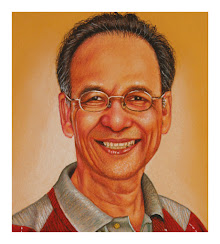
FROM DILIP MUKERJEA

"Genius is in-born, may it never be still-born."

"Oysters, irritated by grains of sand, give birth to pearls. Brains, irritated by curiosity, give birth to ideas."

"Brainpower is the bridge to the future; it is what transports you from wishful thinking to willful doing."

"Unless you keep learning & growing, the status quo has no status."
Showing posts with label Priority Management. Show all posts

Monday, April 28, 2014

HOW TO GET CONTROL OF YOUR TIME & YOUR LIFE

According to Jon Horton, author of "The 22 Unbreakable Laws of Selling":

"The key to staying organized is to have a calendar and write down everything you need to do,...

Begin each day with the most unpleasant tasks, and cross off tasks as you complete them,...

No activity is too insignificant to merit being written down,..."


He is absolutely right.

I have had the wonderful opportunity to learn and practise it ever since reading Alan Lakein's "How to Get Control of Your Time and Your Life" back in the seventies.


Sunday, November 15, 2009

THE LAW OF FORCED EFFICIENCY

"There is never enough time to do everything, but there is always time to do the most important thing."
This is the Law of Forced Efficiency, according to Brian Tracy, international speaker, author & consultant.

He elaborates that:

- The more things you have to do in a limited period of time, the more you'll be forced to work on your most important tasks;

- There will never be enough time to do everything that you have to do;

- Only by stretching yourself can you discover how much you are truly capable of;

- You perform at your highest potential only when you are focusing on the most valuable use of your time;

He asserts that the key question one should always ask is this:

"What is the most valuable use of my time, right now?"

He concludes that this is the question that dominates all time management, as well as the key to becoming a highly productive person.

He suggests this simple exercise to pause and reflect on the above question: [as well as other worthwhile questions, e.g. what are my highest pay-off activities? what exactly am I paid to do? what can I do that, if done well, can make a real difference in my life?]

Take a few minutes each day and sit quietly where you cannot be disturbed.

During this time, let your mind relax and just think about your work and activities, without stress or pressure.

In almost every case, during this time of solitude, you will receive wonderful insights and ideas that will save you enormous amounts of time when you apply them back on the job. Often you will experience breakthroughs that will change the direction of your life and work.

Saturday, March 14, 2009

HOW MUCH TIME DO YOU ALLOCATE TO LEARNING, WORK & LEISURE, OR ARE YOU TOO BURNT OUT TO ANSWER?

The foregoing question is posed by Dilip Mukerjea as he writes:

More than half of our lives are a waste of time. That's the message of a study by Michael Fortino of Priority Management, a time management company.

During our lifetime, we spend:

- five years standing in line;

- twenty-five years sleeping;

- one year looking for misplaced objects;

- six years eating;

- eight months opening direct mail;

- four years doing household chores;

- two years trying to return telephone calls;

Out of say, an 80-year lifespan, almost 44 years are taken up by relatively trivial, boring tasks that occupy most of our free time. Another 20 years are consumed by work.

Out of the 30,000 or so days of our lives, how many are devoted to the pursuit of our own interests and satisfaction? A mere 6,000, or just under seventeen years. These studies give new credibility to the philosophy of making every minute count!

The arithmetic indicates that one-fifth of our lives have been available for leisure. However, this chunk does not present itself together; it reaches us in fragments, at different stages of our lives.

Studies in human longevity indicate that the average lifespan of an individual in the developed world will increase towards 100, and go beyond that progressively. This affects the time we spend on leisure, or other pursuits.

If you miss the moment, an invaluable vein of creative gold can be overlooked due to preoccupation with a desire for total security. This is an illusion that steers us away from creative opportunities that are within us as well as right in front of us. We should seize the moment with vigour; passion is the essence of creative endeavour.for the rest of our lives.

"Some people are making such thorough preparation for rainy days that they aren't enjoying today's sunshine."
~ William Faulkner (1889-1981), American author & publisher;

[Excerpted from 'Brain Symphony: Brain-blazing Practical Techniques in Creativity for Immediate Application', by Dilip Mukerjea. All the images in this post are the intellectual property of Dilip Mukerjea.]