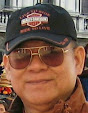
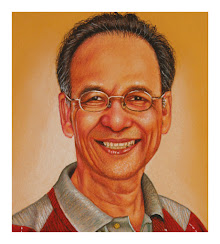
FROM DILIP MUKERJEA

"Genius is in-born, may it never be still-born."

"Oysters, irritated by grains of sand, give birth to pearls. Brains, irritated by curiosity, give birth to ideas."

"Brainpower is the bridge to the future; it is what transports you from wishful thinking to willful doing."

"Unless you keep learning & growing, the status quo has no status."
Showing posts with label Dilip Mukerjea. Show all posts

Thursday, September 8, 2022

I particularly like what I am reading: 


“When people start to think like a child, they begin to see things from a fresh perspective... They learn to step back and view problems, people and things from a completely different point of view.” 

~ Jack Uldrich, global futurist, business speaker and best-selling author; 

To me, the mind of a child is the first wonder of the world, just as my bosom buddy Dilip Mukerjea puts it so eloquently!

Saturday, June 18, 2016

THE RELEVANCE OF THE FINE ARTS IN THE EMERGING WORLD OF BUSINESS


A Vignette for the New Millennium
By Dilip Mukerjea

Are you relevant to the future or relegated to the past?
The world is changing economically, culturally, socially, politically, technologically, environmentally, geographically, ecologically, and competitively. The value of Fine Arts, beyond their imaginative, aesthetic, or intellectual content, comes from their ability to portray any aspect of human thought, spanning the domains of business, science, technology, engineering, mathematics, design, and much else.

Every individual must change in step with these world changes. So must corporations and the human capital within them. Unless you are prepared for all these scenarios, you are prepared for none of them. Ask yourself, are you busy preparing for a set of careers that will soon be obsolete?

The nexus of art and business can translate into profound transformative learning environments, linking science, spirituality, and social change, for every possibility, well-contemplated, opens up a new organ of perception within us. Art serves as the crucial catalyst for these transformations.

We need creativity and innovation to live in a world where multiple realities have become the norm. Yet, each set of multiple realities poses a challenge, because no two people occupy the same slice of consciousness about anything. We just do not occupy the same knowledge space, often seeking refuge in our private sanctuaries of specialisation. Yet ‘art’ emerges as the great synthesiser in all these contexts.

Skills in creativity equip us with the capacity to succeed in the future. If we fail, it is because of our failure of imagination in the present. More than ever, you’ve got to aim for what you can’t expect to get. The marketspace of commerce has become a single global bazaar. To be a viable player in this arena, we need to develop intellectual capital skills imbued with creativity, innovation, leadership, entrepreneurship, verbal and visual literacy, collaborative teamplay, and humanity towards one another.

The workforces of the Third Millennium will require a “conceptual edge” that requires more than specialised skills and basic information. Our age demands workers able to synthesise different types of information with imagination, inventiveness, and adaptive agility. 

They must be able to exhibit dexterity in
·       Design Thinking
·       Critical Thinking
·       Creative Thinking
·       Systems Thinking

Jobs that demand expert cognition and complex communication will remain in growing demand the world over. The key to successful participation in the new global labour market is a “deep vein of creativity that is constantly renewing itself.” Once again, the fine arts bring forth the power and promise contained within them through their capacity for infinite creativity.

The world is riven by a cocktail of challenges that are volatile, uncertain, complex, and ambiguous.  

Complex systems are characterised by three features:
·       they are non-linear (small inputs lead to large and unpredictable results);
·       they are open (influenced by things from outside of “itself”), and
·       they are chaos-capable (they can function in erratic, unpredictable ways at times).
In all of the above scenarios, the language of the fine arts expressed through drawing, painting, writing, sculpture, photography, music, dance, and theatre, have the force and the power to capture ideas and portray them with exquisite finesse. 

Why? Because they can tie together disparate streams of thought from diverse disciplines and synthesise them into a concise power-pack that reveals exactly the content and context under scrutiny. This is an invaluable skill in business as it eradicates perplexity: the cost of confusion is too high and the clarity rendered by art is immeasurable in real terms when applied to business thinking. 

This shift from perplexity to perspicuity leads to massive gains in business as it fosters creative collaboration, which acts as a catalyst for inventive output where original thinking rises above the chaos of the madding crowd. All of this has tremendous business value!

Thus, in all the domains of business, science, technology, engineering, mathematics, and design, we witness the need for a fine arts approach to enhance the scope and scale of each discipline. The value that emerges comes from the blend of elements where their mix of forms give rise to fresh functions that have utility in the global marketspace. This systhesis is the dance of ‘the art of science’ and ‘the science of art’.

Life is not logical; it is psychological. All art, expressed well, is imbued with epic brilliance when we are audience to the alchemy of ‘what there is’ giving birth to ‘what never was’; such is the genesis of genius. The seductive frisson that comes forth as an emergent quality has all the magic of science, technology, engineering, and maths, applied to business. All you have to do is to see the magic, and alert your consciousness to use it for the greatest good.

The kaleidoscopic approach to the arts applied to science results in a creative anarchy, which, if you are open to possibilities, reveals, through the interplay of elements,  the truth that art doesn’t play a part in the evolution of ideas; it plays the part! Why? Because it invites us to hark back to the primitive — to meet as human and human — to show the naked soul. This is where we must look if we wish to discover what moves the modern marketspace.

The equations involving art and business are manifold, but the core value within the mix is that beyond commerce, art is instrumental in enhancing the awareness of being alive! C’est la vie!

Wednesday, March 18, 2015

EMPOWERING WOMAN GRASSROOTS LEADERS IN NORTHERN INDIA

My good buddy, Dilip Mukerjea, is seen here sharing his innovative empowerment strategies with woman grassroots leaders somewhere in the remote villages of Northern India.


Sunday, January 25, 2015

MANIFESTO FOR A LEARNING REVOLUTION TO ADDRESS ALL SECTORS OF SOCIETY


This is the front cover and brief table of contents of Dilip Mukerjea's latest masterpiece, which will be published shortly. 

It contains a slew of future-readiness and future-savviness imperatives and it's targeted at policy makers, administrators and educators.

 He may have written the book with India in mind, but all the ideas are applicable elsewhere.

Friday, January 23, 2015

A QUICK LESSON ON MASTERING THE ENGLISH LANGUAGE: "Fewer" vs. "Less"


My good buddy, Dilip Mukerjea, an accomplished author, braindancing expert, and also English Language maestro, shares his expert thoughts:

"Gentlemen,

Referring to my point last evening about the distinction and the predominant INcorrect use of "less" in common parlance, please find my explanation of the point I was making:

Misuse of the terms fewer and less will set off alarms in the heads of many language enthusiasts.

According to usage rules, fewer is only to be used when discussing countable things, while less is used for singular mass nouns.

For example, you can have fewer ingredients, dollars, people, or puppies, but less salt, money, honesty, or love.

If you can count it, go for fewer. If you can’t, opt for less.

However, it’s not that simple.

Since the reign of Alfred the Great, a time when Old English was spoken, less has been used in the same way that fewer is currently used.

This long history of usage accounts for supermarkets posting the words “10 Items or Less” over the express lanes, when “10 Items or Fewer” is the grammatically correct option.

If we know the intended meaning of the supermarket signs, does using fewer or less really matter? 

To many who have internalised the fewer or less distinction, the answer is yes.

Using less where fewer is expected will sound jarring to their ears, so consider this as you count items or amounts in the future.

Pax Vobiscum!

:D:):p

Thursday, January 15, 2015

A NICE QUOTE FROM DILIP MUKERJEA

A nice quote from my good buddy Dilip Mukerjea, based in Mumbai, India:

"Humans often suffer from kainophobia, the fear of new things. 

Of course, this is a fear that most children do not experience. 
It is adults, be they policy makers, administrators, educators, who are beset by this fear.

They prefer to stay quivering in their cocoons, or should I say, fossilised in their mausoleums. 

We must move on from enclosing ourselves within bricks and mortar to liberating ourselves with brains and wits.

To this end, the time has come for humankind to become humane and kind. To ourselves, to our co-inhabitants of this planet. 

We have a primal need to address our spirituality. 

All of this comes from life, governed by the functions of the human brain... "

[Excerpted from his latest piece of writing, a 188-page 'MANIFESTO FOR A LEARNING REVOLUTION TO ADDRESS ALL SECTORS OF SOCIETY', targeted at policy makers, administrators and educators.]

Monday, October 20, 2014

THE INNOVATION ENGINE, by Prof Tina Seelig


I like what I am reading:

“As a scientist, when I do an experiment that doesn't work as I expected, what do I call it? Data.

It’s not a failure.
In fact, some of the most interesting scientific research comes from experiments that have unexpected results.

The key is to look at the things that don’t come out as expected as data that provides interesting clues to what is really happening.

If you are afraid of failure, you won’t try anything new.”

~ Prof Tina Seelig of Stanford University, neuro-scientist and author of 'inGenius: A Crash Course in Creativity';

Here's a nice graphic rendition of the Escher-like creativity model, 'The Innovation Engine', conceived by Prof Tina Seeling by Dilip Mukerjea.

Wednesday, March 19, 2014

A SPLASH MAP FROM DILIP MUKERJEA


A nice infographic - a work-in-progress rendition by my good buddy Dilip Mukerjea in Mumbai, India - about the power and importance of reading!

Wednesday, October 30, 2013

A SPLASH MAP FROM DILIP MUKERJEA

This is Dilip Mukerjea's masterful graphic rendition - in the form of a Splash Map - of Global Climatic Change.

Thursday, September 19, 2013

This is Part II, also the final part, in continuation of an earlier post, illustrating an excellent piece of intellectual cogitation from Dilip Mukerjea.

An excellent piece of intellectual cogitation from Dilip Mukerjea to share with readers. This is Part 1. Part II follows in the next post.

Friday, April 20, 2012

WORLD CREATIVITY WEEK, 15TH TO 20TH APRIL 2012


I didn't realise that 15th to 20th April is 'World Creativity Week', which has its humble beginnings from a sort of community event held eleven years ago in Canada, until I have read a blogpost by Lisa Canning today on the 'Innovating Through Artistry' weblog.

By the way, I have also learned that the Renaissance maestro Leonardo da vinci's birthday anniversary also falls on 15th April.

To commemorate the event, here's a short blast, though belated, from braindancing maestro Dilip's writings:

"Creativity is the ability to cast light upon darkness, to see with fresh eyes, to come up with 'silly' solutions to serious problems!

Creativity is having fun with life! 

Creativity is helping the world become a better place for all life on our fragile planet!'

From the foregoing observation, it is evident that creativity comes from within all of us, but it takes personal responsibility, personal initiative as well as personal discipline to get started and to get moving.

The "casting of light" and "seeing with fresh eyes"  perspectives, as mentioned by Dilip, imply that personal creativity, in tactical terms, anchors on two attributes:

- our ability to see the fine details or little things that others overlook in our field of vision;
- our ability to take the big picture or broad view of any scenario that falls withing our field of vision;

Nonetheless, I often cajole Dilip on the point about personal creativity, whereby some folks - Dilip himself is a classic example - are somewhat lucky, with the hot flame on their Aladdin lamps burning bright consistently all the time, despite the wind, whereas other folks have to work much harder to keep on rubbing their seemingly rusty Aladdin lamps, so as to get the flame flickering, so to speak.

Sunday, April 1, 2012

THE WORLD'S MOST POWERFUL PORTABLE COMPUTER AT YOUR SERVICE... IT'S ABSOLUTELY FREE, FOR LIFE!

We are truly blessed by Mother Nature.

Each and every one of us is given a superduper portable computer on the day we were born. It comes with a necktop cranial configuration, linked intricately via an information superhighway running through our entire physical body.

Even though it does not come with a factory instruction manual, it has been specifically designed for continual lifetime usage.

It is true that it may not have the mathematical crunching power of a computer from Cray Research, and neither can it match the fast evaluation capability of the one once known as IBM Deep Blue, which eventually out-maneuvered World Champion Grand Master Gary Kasparov in several chess games during the mid-nineties or so.

However, it's an established fact that no known computer system  in the world can surpass its intuitive sensing capability. As an example, it can quickly "connect the dots" or instantly "smell a rat", so to speak, which a computer of today will hardly be able to do it.

Scientists of today have yet to realistically fathom the breadth and depth, of its vast neuronal power, which is believed to run into millions and millions of gigabytes, considering the intensity and complexity of its neuroplasticity and neurogenesis, notwithstanding its often idiosyncratic aspects.

Within its elegant cranial configuration located tightly between your two ears, there are, at least as I view it, three state-of-the-art, multi-core CPUs, running under an active, as well as interactive, self-organising operating system, with multi-modal, multi-path, multi-sensory, parallel networking and pattern recognition capability.

Unlike any known computer system ever been built by man, its retinal-resolution binocular - and stereoscopic - camera, with each aperture opening far more complex than the entire space shuttle, and twin super high-fidelity sound recorders, each with acutely discerning capacity, are far more superior and unparalled in terms of their ability to scan and sense the environment, distant or near.

It has also a virtually unlimited memory capacity, with holographic capabilities. With such a memory, you can learn, think, strategise, reason, decide, plan, anticipate, judge, evaluate, create, design, execute, play and work with it to your fullest potential and to your heart's content.

All basic softwares are already factory-installed, so to speak, and ready to run, but you have total freedom to delete old programs and to download or upgrade to new programs.

Interestingly, it has an uncanny propensity to create its own programs, especially when you least expected them, some of which may be good, and some may be  malicious.

Sad to say, just like any computer system, it is always susceptible to virus, especially the deadly type known as thought virus.

Hence, you need to seek out and get skilled training, and also, you need to invest in learning more about how to keep yourself future-ready, particularly from experts like learning chef and braindancer Dilip Mukerjea.

Operationally, it never has to be taken out for cleaning or recharging or even maintenance. However, when riding a motorbike, it's strongly advisable that you put on a crash helmet. This is to make sure that your bony framework around it stays intact in the event of an unlikely accident.

It weighs about 1.5 kg, and that's about 1% to 2% of your body weight, but its energy consumption alone accounts for more than 20% of that of your physical body. Hence, it is imperative that you constantly keep your physical body in peak performance state all the time.

Nonetheless, you can rest assured that it can go wherever you go.

Best of all, it requires no special carrying case. Also, you do not have to incur additional handling and shipping costs, even when flying.

You do not have to consign it to the baggage section of any carriage.

You do not have to place it under the seat or in the overhead compartment, especially when flying.

More importantly, it cannot be lost in transit, and always arrives safely in one piece when you do.

It has its own perpetual built-in bio-electro-chemical power supply, and requires no additional batteries, extension cords, adaptors and connectors.

You can use it day and night, almost everywhere, on land, sea and in the air.

You can take it into any country without a special customs permit.

As long as you stay in peak performance state, and unless you subject it to abuse, it will remain functional throughout your life span.

The only unpleasant thing for a large majority of folks in the long run is that it has a low component reliability, due to aging and disease, but high system dependability, with a design life of up to 90 years or more, provided that you keep yourself physically active, intellectually alive and socially interactive.

Although it does not come with factory warranty, many renowned end-users, including Albert Einstein and Gary Kasparov, had confirmed that the more they had used it, the better, faster and more powerful they became! To echo Dilip Mukerjea, your brainpower is defined by usage, and not age.

Many thanks to Mother Nature!

Sunday, March 11, 2012

HOW TO SELL YOURSELF WITH A VISUAL CV

Further to what I have written about Visual CV, in an earlier blogpost,  here is another way to embellish one's professional profile with a pictorial-textual approach, which has been conceived by Dilip Mukerjea, as a real example for his own use.

Saturday, March 10, 2012

HOW TO SELL YOURSELF WITH A VISUAL CV


What readers are seeing here is a visual CV of Dilip Mukerjea, done by the braindancing maestro himself.

That's one good way to sell yourself on paper with all the good and pertinent stuff encapsulated on one single page, instead of several sheets as in the conventional CV.

You can "zoom in" to look at some of the detailed aspects, and you can also "zoom out" to have a gestalt perspective of what's there.

OPEN LETTER TO ALL EDUCATORS, from Dilip Mukerjea

Dear Stakeholder in Learning,

LEARNING MIRACLES TO IGNITE AND CATALYSE THE LEARNING REVOLUTION

I salute your presence here. As teachers, you are the sacred custodians of the next generation. I applaud you and look to your learning leadership to transport all students from stress to strength, and from strength to success. Strength-based learning trumps stress-filled swotting…any day, all the time.

We are living on a plundered planet, in the Pressure Tense, but in an era of powerful possibilities. The future demands a fresh résumé. The Children of the Third Millennium are owed a future…one that has been stolen from them. My passion is to champion children, whom I consider to be the first wonder of the world.

I think about, write about, and coach, skills from within the world’s most powerful learning systems. You teachers and stakeholders in learning, are the pivotal learning champions in a nation that I would love to see become The Learning Capital of the World.

I aspire to see inspired people inspiring other people; you have it in you already, or else you would not be where you are. Yesterday’s peacock is today’s feather duster. Yesterday’s world records have become today’s entry-level requirements. It is in your hands to decide to move the world from breakdown to breakthrough. How? By starting now, with what we have, to do all we can. Let me help you.

I can help you attain spectacular success. The past is no more, the future is not yet. We only have now! The present… in which to act, and to activate, a range of smart systems. Why? Because the choice is: get ahead, or get left behind.

Yesterday’s success has never mattered less; today’s success has never been more fragile; tomorrow has never been more uncertain. Let us advance, together, and create a Learning Planet.

The aim is to become future-ready. How? By incorporating a suite of unique Success Strategies via a learning menu that moves one from average to amazing. To move ahead, from hope to fulfillment.

If you wish to outperform your lackluster peers, you’re going to have to bring more than basic thinking to the basics. You’re going to have to bring radical thinking to the basics. With the courage to lead the kind of transformation that does justice to the worth and value within the quartet of vision, purpose, goals, and dreams.

Love is the only operating system and self-efficacy is the envisaged outcome for every student. My Learning Menu will get them started with massive momentum, and the incorporation of Brain Clubs can build on this impulse to ensure the drive towards this land becoming the world’s first Learning Nation. Where people like YOU will be the pioneers of this crucial movement.

With love and respect, I put to you: you can stay where you are and then retire, or you can propagate a learning revolution, and make history!

It is my vision, on your behalf, to see your schools and institutions be the best in the world. It is no longer good enough to be good enough, or even…to be very good. Very good has become very boring. We must be outstanding.

On a cosmic scale. This is where I can help you help yourselves come up with superquick, winning outcomes. The future is what we do now, today; we must act. We cannot recycle wasted time. Come forth… ignite and catalyse the learning revolution.

BRAINDANCING ON TELEVISION IN KATMANDU


Dilip Mukerjea was interviewed about three months ago on television by 'Global Perspectives' (produced by Today's Youth Asia) in the capital city of Katmandu, Nepal.

He has shared many insightful perspectives about the brain and learning, and more importantly, what it takes to be a learning genius.

Wednesday, March 7, 2012

POSTERWORKS: THE BRAIN SKILLS DUOLOGY & SUPERBRAIN SEMINAR


Dilip Mukerjea walks his talk when it comes to putting his own personal as well as professional creativity to work.

He conceives and designs all his own advertising and promotional posters.

In the foregoing poster, which he has designed specifically for use by his new publisher in India, in connection with the launch of his two books on the sub-continent, his close attention to details as well as his aesthetical appreciation of iconographics, text and layout is impeccable.

His artistic design skills are not confined to poster design. He will be most happy to offer them to clients in need of conceiving and designing of corporate logos, office stationery, product brochures, and all the related ancillaries, plus portrait and caricature.

It is pertinent to point out that no commercial clip arts are used, as everything you see in the design is originally conceptualised and hand-crafted first, and then technology-enhanced.

Interested parties can get in touch with him by writing to dilipmukerjea@gmail.com.

What follows is another latest example of his artistic virtuosity.

THE CREATIVE SEQUENCE: 'The Mother of All Wealth Building', as envisioned by Dilip Mukerjea


'The Creative Sequence', which represents Dilip Mukerjea's elaborate 8-stage creative thinking process has been featured earlier in this weblog, together with the 'Lifescape of the Creative Sequence', which is his graphic rendition of the process.

What braindancing masetro has done here, as shown in the foregoing, is a consolidated splashmap of the two features on one single page.

Also, following the ongoing evolution of his consulting work in recent years, the creative thinking process has now taken centrepiece in the whole concept of wealth building.

As Napoleon Hill,  author of the cult classics,  'Law of Success' and 'Think and Grow Rich', has so aptly put it:

"All achievements, all earned riches, have their beginnings in an idea."

and, in a nut shell, creative thinking is thus, in fact, the "Mother of All Wealth Building".

To recap what I had mentioned earlier in this weblog, money in your hands is essentially a function of the creative thinking process.

To put it bluntly, if you want to put money in your hands, change your thinking. As a matter of fact, I believed this is precisely the stance taken by cash flow guru Robert Kiyosaki.

As illustrated in the splashmap, the Creative Sequence, has 8 important stages in the thinking process, and the braindancing maestro has already outlined the salients aspects of each stage:

1. Intake;
2. Cogitate;
3. Generate;
4. Debate;
5. Incubate;
6. Create;
7. Activate;
8. Celebrate;

What I want to do in this post, as well as subsequent posts, is to build on and amplify some of the salient aspects, as follows:

1) INTAKE:

We are sentient beings, and live in a luxury world of sensory impressions - sights, sounds, smells, tastes, etc. - which form the basis of our productive thoughts.

Much of the discoveries and inventions of today have their origins in pedestrian observations. That's to say opportunities are in fact everywhere, but the crux of the matter is whether we see them as they are.

That's why I have always maintained that perceptual sensitivity to the world at large is a very important skill for all of us to acquire and develop in order to thrive in today's rapidly-changing world.

Interestingly, even the great Renaissance maestro Leonardo da vinci (1452-1519), had talked about it many many years ago, since his power of observation was legendary:

"... for the development of a complete mind... develop your senses, especially learn how to see... "

Internationally renowned creativity guru Dr Edward de bono said it best:

"Everyone is surrounded by opportunities. But they only exist once they have been seen. And they will only be seen if they are looked for."

"The reasons that many opportunities pass us by is a perceptual one - we do not recognise an opportunity for what it is. An opportunity exists only when we see it."

He has offered the following expert advice, but stopped short of detailed elaboration:

1) Decide to spend some time and effort in a deliberate and systematic search for opportunities;

[My recomendations: Read Dr Edward de bono's 'Opportunities': A Handbook of Business Opportunity Search', and strategy consultant Michel Robert’s ‘Innovation Formula’ for exact methods of initiating and implementing a deliberate opportunity search process.]

2) Use a scan approach which allow you to broaden the direction of search instead of being too eager to pursue one direction in depth;

[My recommendations: Read innovation strategist Wayne Burkan's 'Wide Angle Vision’, as well as consultants George Day and Paul Shoemaker’s ‘Peripheral Vision: Detecting the Weak Signals that will Make or Break Your Company’. Both books offer very good suggestions.]

3) When something comes into your view, make an effort to look at it in many different ways;

[My recommendations: Herbert Leff’s ‘Playful Perception: Choosing How to Experience Your World’ is a good book to explore this perspective, where as The Private Eye: A Guide to Developing the Interdisciplinary Mind by Kerry Ruef, is worthwhile, too.]

4) Spend some time on a deliberate search for benefits in a situation instead of always expecting the benefits to be self-evident;

[My recommendations: entrepreneur Art Turock's 'Invent Business Opportunities No One Else Can Imagine', shares many interesting as well as refreshing insights, especially from the standpoint of business development.]

Nonetheless, Dr Edward de bono has zero-ed in on what he has termed as "idea-sensitive areas", as follows:

- high cost areas: process bottlenecks; and others in terms of money, time, people involvement, unrelaibility, fault densiy, personal friction, boredom, risk and responsibility;

- specific problem areas that require solutions;

- further development areas, where improvement is an ongoing process;

- emotional target areas, based on emotional feeling or hunch;

- general, where one can start thinking about an area with the view of using the thinking as lead to an opportunity;

Dilip is absolutely right on the ball when he singles out the infinite stimuli coming from Mother Nature, from which we can analyse her attributes, especially from the standpoint of creative thinking to spark off ideas and insights

It is true that Mother Nature has always been modern technology's first teacher.

Man's continuing conquest of powered flight today with the latest Airbus 380 and Boeing 777 has its origins from the study of birds in natural flight. So, are today's nuclear submarines that can submerge below the Polar cap for extended periods. Thanks to deep-sea marine animals.

Likewise, the basic stuff that goes into silicon chips comes from sand. 

Without Alexander Graham Bell's early exposure to understanding how the human ear works, we probably will still be using smoke signals for communications.

Even architect F Buckminster Fuller, widely known as planet earth's friendly genius, owed his design and development of the geodesic domes, which have to date given shelter to millions across the globe, to the eye of the common house-fly.

The tunnelling machines, which were used to build the underground network for Singapore's Mass Rapid Transit System, owed its pioneering design and development to Sir  Marc Isambard Brunel (1769-1849), a French-born engineer who had settled in the United Kingdom.

Interestingly, Brunel had found the inspiration for his tunnelling shield from observing the tunnelling habits of the ship worm, "teredo navalis", a pest that ate the wooden hulls of ships.

[to be continued in the Next Post]

Monday, March 5, 2012

THE ESSENCE OF 'SECRETS OF THE MILLIONAIRE MIND' IS CAPTURED VISUO-SPATIALLY ON ONE SPLASHMAP BY DILIP MUKERJEA


Once again, Dilip Mukerjea, has captured the essence of the 'Secrets of the Millionaire Mind', by wealth-building coach T Harv Eker,  visuo-spatially on one single splashmap, as shown in the foregoing.

From my personal perspective, I have observed that the central premise of the author's work as embodied in the book, and as illustrated in the splashmap, as follows:

- If you want to change the visible, you will first have to change the invisible;

- Look to the roots, to enjoy the fruits;

- If you want to change the fruits, you will first change the roots;

- Money is a result; We live in a world of cause and effect; [not illustrated in the splashmap];

is actually a new spin to Napoleon Hill's original concept of wealth building:

"... all achievements, all earned riches, have their beginnings in an idea..."

As I interprete it, money in your hands is just a physical manifestation of an idea in your head.

That's to say, if you want to have more money in your hands, you must first change your thinking, or to put it precisely, you must replace the old idea with a new and better idea in your head, so that you can generate more effective results in your life with the new and better idea.

Also, Eker's causal example for thoughts leading to feelings, from feelings to actions, and from actions to results, is basically a function of the thinking process, which again must take precedence in order for results to manifest.

Likewise, his concept of four planes of existence: "spiritual", "mental", "emotional", "physical", with "physical" as the printout of the other three, and with "spiritual" being paramount, and being contributed by the other three, has to feed back - and feed forward - to the creative thinking process at the beginning, which is invariably governed by the values that are closest to our heart.

In other words, as the author has rightly acknowledged and advocated, we create our own performance results.  Therefore, we have to take personal responsibility and accountability. We cannot wimp, lay blame, and justify.

In a nut shell, we are the steering wheel of our own financial future.

To change our financial future, we have to change our thinking of the future. Ask yourself: Just how do we think?

In the end analysis, as concurred with Dilip, I am emphasising that personal creativity is critical to wealth building. To put it bluntly, it is the "mother of all wealth building".

According to Dilip, it is the intelligent and diligent efforts in creative thinking that one initiate - irrespectively of whether personally, professionally and organisationally - that ultimately converts "ideas" into "cash".

As a matter of fact, Dilip offers an elaborate  8-step creative thinking process, which he calls the Creative Sequence, which I will talk about in a separate blogpost.

I am not hinting that the T Harv Eker's work is frivolous or insignificant. He does offer new and interesting approaches in creating a millionaire mindset, even though some of which are in reality different spins, especially from the standpoint of syntactical variations, to Napoleon Hill's seventeen success habits.

Don't forget, the seventeen success habits were also the distillation of some 500 of the rich and famous, including Andrew Carnegie and John Rockefeller, in America during that era.