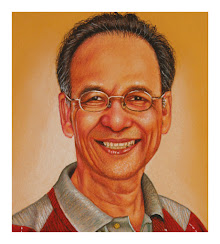
FROM DILIP MUKERJEA

"Genius is in-born, may it never be still-born."

"Oysters, irritated by grains of sand, give birth to pearls. Brains, irritated by curiosity, give birth to ideas."

"Brainpower is the bridge to the future; it is what transports you from wishful thinking to willful doing."

"Unless you keep learning & growing, the status quo has no status."
Showing posts with label Lessons from Mother Nature. Show all posts

Thursday, March 1, 2012

LESSONS FROM MOTHER NATURE: THE ANT PHILOSOPHY


The following valuable lessons from Mother Nature have been derived from the teachings of master coach Jim Rohn, many many years ago, when I had been invited to attend one of his live seminars in Singapore, in conjunction with the National Achievers' Congress.

All of us tend to have the natural propensity to look up to business tycoons  and industrial magnates for lessons on how to be successful and get rich. We are eager to learn the secrets of their business and financial success.

But we forget that sometimes the best lessons in life come from Mother Nature which happens to be around us longer than we have. Now, that’s a good lesson to remember!

Take ants for instance. Would you believe that those tiny creatures can teach us how to be successful in leading a better and richer life?

Master coach Jim Rohn had identified four key lessons from the group behavior of ants that can help us to do so. He called them, the 'Ant Philosophy'.

Philosophy #1: Ants never quit.

When I was a young boy growing up in a Malaysian kampong, I was often fascinated by ants. While playing with them, I had observed that, when they were on the trail for food, they didn't let any obstacle stand in their way, for example, putting a stick or a stone deliberately across their chosen path.

They would confront the obstacle, and walk around it, over it, through it or under it until they had attained their desired outcome.

Interestingly, they will always keep looking for a way out when blocked.

We should all learn to be like that. There will always be obstacles in our lives. The real challenge is to keep trying, keep pushing, and keep searching for alternative routes to get to our life goals.

British prime minister  during World War II, Winston Churchill, probably paraphrased the ant’s mindset best when he offered this priceless advice:

“Never give up. Never, never give up!”

Lesson Learned:

Never quit looking for a way to get where you are planning to go. The code here is “Be Persistent” and/or “Don’t ever give up”.

As a prolific inventor, Thomas Edison went through numerous unsuccessful attempts at inventing the light bulb. When a reporter asked, "How did it feel to fail so many times?"

Edison replied, "I didn’t fail, but found many ways to improve my invention."

The story of British inventor-entrepreneur Sir James Dyson and his dual cyclone-powered bagless vacuum clearner is a good business example. He had in fact spent over 15 years working in the cellar before finally launching the product in 1993, which became the country's best seller within two years.

Wow! What a valuable lesson in sheer persistence and unwavering perseverance!

"Our greatest glory is not, in never falling, but in rising every time we fall."

~ Confucius;

"Effort only fully releases its reward after a person refuses to quit."

~ Napoleon Hill, author of 'Think and Grow Rich', and a pioneer of the personal development genre;

Philosophy #2: Ants think winter all summer long.

Things are easy during the summer time. It’s always warm, but it is not going to last. Ants instinctively understand this, and so they gather their winter food in the middle of summer, when resources are readily available. They quickly gather and diligently store food for the difficult times when winter comes and food is scarce.

Lesson Learned:

The scout's motto, 'Be Prepared', is the code here.

Life won’t be a smooth ride all the time.  In fact, it's a roller coaster. When troubles come, don’t be caught by surprise. Plan for contingencies, and be prepared at all times.

The biblical story of Noah's Ark is a good example. My own single most powerful takeaway from the story is pretty straight-forward: Plan ahead. It wasn't raining when Noah built the Ark.

The Royal Dutch Shell Company's pioneering and successful application of  scenario projection in long-range business planning before the Middle East oil crisis of the mid-1970's was a great business example of strategic preparedness.

The oil embargo caught most oil companies by surprise, but Shell had already considered the impact of an increase in oil price as a possible future scenario, and thought of the actions they should take if it happened. By practicing this scenario projection, they managed to avoid the worst shocks.

Shell even emerged after the oil crisis as the strongest player in the field.

Philosophy #3: Ants think summer all winter.

When winter descends on a colony of ants, they go underground waiting eagerly for the sun to shine above, and when it does, they are immediately back out and about. They seem to have an in-built optimism, and know that the lean times won’t last forever.

As a team-building insect, you can almost imagine them encouraging one another as they anticipate the end of winter.

Lesson Learned:

When we find ourselves in the midst of adversity, we need to remind ourselves that this season of our life will pass away.

Just stay positive, and hang in there, because the storms in our lives are not there to stay. In reality, no matter the storm, there is always a rainbow waiting. Be of good cheer, and it will soon pass away.

When Steve Jobs got played out by John Scully, and eventually got kicked out of the Apple company he had co-founded, it was really devastating for him. But something slowly began to dawn on him - he still loved what he did.

The turn of events at Apple had not changed that one bit. He had been rejected, but he was still in love, and so he decided to start over.  He started a company called Next, another company named Pixar (and also fell in love with an amazing woman, who eventually became his wife).

Pixar went on to create the world's first computer-animated movie, 'Toy Story'. In a remarkable turn of events, Apple bought Next , and Steve Jobs returned to Apple, and the technology he had developed at Next became the strategic heart of Apple's renaissance. The rest was history.

Philosophy #4: Ants do all they possibly can.

How much food does ants gather in summer? All that they possibly can!

Now that’s a great work ethic to embrace. Do all you can!

One ant doesn’t worry about how much food another ant is gathering. It does not sit back and wonder why it should have to work so hard. Nor does it complain about the poor pay! Ants just do their bit, as nature has intended. They gather all the food they can out there.

Success and happiness are usually the result of performing at your best: doing all you possibly can.

If you look around you, you’ll find that successful people are those who just do all they possibly can.

Average people look forward to getting off. Successful people look forward to getting on with it. The doing and activity is the key here.

Lesson Learned:

Do all you can. How much should you do in your life? As much as you possibly can! We’re all governed by our thoughts, our evaluations, what we have decided, and how we feel.

Don’t ever stop, and become stagnant in life. As my good friend, Dilip Mukerjea often puts it, "the status quo has no status!"

Keep learning and growing, and strive to reach for the stars.

I remember vividly the Apollo 13 incident, following an oxygen tank explosion in space, during the early seventies very well, as I had also watched the movie.

Mission Control in Houston and the three-astronaut crew on board the ill-fated space craft did all they possibly could to deal with the numerous technical problems arising, and to salvage a safe return to earth. 

Eventually, with considerable ingenuity under extreme pressures, they managed to use the Lunar Module, instead of the Command Module, to complete a successful earth-bound splashdown in the South Pacific.

On a larger picture, I also remember the story about Singapore, when she got kicked out of Malaysia in 1965, and then the British forces pulled out suddenly in the seventies. 

The then Prime Minister Lee Kuan Yew and his cabinet ministerial stalwarts [Keng Swee, Rajaratnam, Sui Sen, among others] just did all they possibly could, against all dicey odds, to turn the Jurong swamplands into industrial estates, set up the Economic Development Board (EDB) for their road warriors to roam the globe to attact foreign investors to come to Singapore to set up factories, and finally, build the armed forces from scratch [fortunately, with Israel's help, as the neighbouring countries had turned down Singapore's request for assistance!] to defend her sovereignty. The rest was history.

For summing up in a nut shell, I recommend folks to follow the four philosophies of Jim Rohn as embodied in the ‘Ant Philosophy’ – and you’ll see the difference in your life.

- Don’t quit.

- Look ahead.

- Stay positive.

- And do all you can.

And there’s just one more lesson to learn from ants.

Did you know that an ant can carry objects up to 20 times their own weight?

Maybe we are like that too. We can carry burdens on our shoulders and manage workloads that are far, far heavier than we’d imagine. Next time something’s bothering you and weighing you down, and you feel you just can’t carry on, don’t fret.

Think of the little bug.

Thursday, August 19, 2010

MY FAVOURITE PICTURE FOR THE WEEK: MOTH'S EYE


The tiny bumps on this moth's eye, magnified by 1340x in this scanning electron micrograps, are smaller than wavelengths of incoming light.

A moth's eyes don't glimmer in the light helping these insects stay hidden from predators.

The same technique could be used to make anti-reflective screens for televisions and cell phones.

[Source: The Christian Science Monitor]

Thursday, August 12, 2010

JUST IMAGINE, WHAT BIRDS CAN TEACH US ABOUT MARSHALLING COLLECTIVE INTELLIGENCE WITHIN AN ORGANISATION?

Following an intellectual cue from Dilip Mukerjea, especially on account of his attendance at a fascinating talk by business strategist Don Tapscott this afternoon at the Singapore Institute of Management, I went into cyberspace to seek a video clip on the elegant swarm-level, self-organising behaviours of starlings in flight.

I found it, with the aid of my Copernic Agent Pro, as follows:


What a spectacular panoramic display of nature's beauty!

With a little bit of digging through cyberspace, I got to understand the phenomenon:

All evidence from the bird-flocking suggests:

- no central control;

- emergent phenomena;

- self-organising;

- only simple but powerful rules, as follows:

Rule #1: Collision Avoidance ~

Each starling basically avoids collision with its immediate neighbours!

Rule #2: Velocity Matching ~

Each starling stays close to & matches the velocity of its immediate neighbours!

Rule #3: Block Alignment ~

Each starling gauges where the immediate neighbours are flying & then aligns itself with the group's direction!

Gee Whiz! I am totally stunned by the foregoing findings.

Hey, to all the BOSSES out there!

Do you think you can marshall all the people - ergo, collective intelligence - in your entire organisation to move in the same way as the starlings in flight?

Wednesday, July 7, 2010

USING BIOLOGICAL INNOVATION TO SPUR THOUGHTS ON CORPORATE INNOVATION


I am taking the liberty of pulling out some "raw" but "rich" ideas from Dilip Mukerjea's work-in-progress, tentatively entitled 'Innovation Ecosystems Lifescape'.

"Limits are the platform from which innovation springs in nature.

As each stage of development reaches its limits, new creativity emerges. If this innovation is adequate to the challenge presented by the limits, a more capable species or a richer ecosystem results. If limits are removed — for example, if fire is repressed — even a complex forest may be destroyed, because other limits that had been held in check finally impose themselves in force.

The most valuable resources of the rainforests are not the trees or other physical resources but the relationships, the complex array of designs.

Ecosystems are not isolated entities with impenetrable borders. Every ecosystem is nested within, borders on, or overlaps with other systems.

(Bacteria are nested in organs, and organs in individuals. Families are nested in communities. Species are nested in ecosystems, ecosystems in the biosphere, the biosphere in the planet, and so on).

When ecosystems overlap without nesting within one another, they define an ecological verge on which they may engage in a kind of battle.

A verge is a rich mixture of ecosystems that happens where two distinct forms meet with each other and begin to intermix. Often, two species seek to inhabit the same niche, but they will not be successful.

According to the competitive exclusion principle developed by biologist Garrett Hardin, at least one of the organisms must adapt or die. Thus, while nested systems may in effect cooperate, overlapping ones often foster competition. The competition often leads to co-adaptations in which the systems become interdependent, one bordering on or even nesting within the other.

Verges are places of conflict, but also of positive change. They bring together diverse systems and set the stage either for their integration or for their destruction.

The world has been forced to shift focus, from the industrial economy founded on the use of machines to multiply human muscle, to a more information-based economy with the capacity to expand the human mind.

Three forces are compelling this convergence: environment, technology, and values:

In the rainforest, nature uses feedback to “close the loop.” In the face of limits, feedback triggers adaptations that lessen or make an end-run around physical constraints.

In business, we are much like a deaf and blind skydiver.

Business operates with only two senses: taste and touch. Our businesses have a sense of taste in that we know what is going on inside the business – what our immediate bottom line is. And our businesses have a sense of touch in that we know the effect of what is happening directly to us from the outside, we feel it right now, this quarter.

In the rainforest, the evolution of every creature is shaped by feedback, adaptation, and learning.

The processes of breakdown and buildup in living systems are called their metabolism.Within every living system, from a forest to a cell, raw materials are drawn in and broken down into simpler forms in a process biologists call catabolism.

Then, inside each cell, enzymes, cellular factories, or other agents take the pieces and rearrange them in more complex forms — a process called anabolism. In this process, certain values are lost, traded for new ones that yield a new whole. In other words, new resources are gained as others are lost.

If all forms of life were linked together in simple food chains, they would quickly run out of resources. Conversion rates are extremely low: Often 1 percent or less of the caloric content of one link is converted to calories by the next.

For example, plants convert into energy no more than 2 percent of the sunlight that reaches them. Sheep that eat grass or cows that eat corn keep about 1 percent of that. People that eat the sheep or the cows keep 1 percent of that.

This entire three-link food chain ends up “wasting” 99.99988 percent of the original energy of the sun. Are we wasting corporate innovation resources in the same way?

How does nature overcome such extreme wastefulness?

By drawing species together in complex food webs. Food webs offer major efficiency gains over simple food chains.

In a web, energy “wasted” in one process isn’t really lost. It just shoots of to the side, where nature tends to put it to its best local use, in whatever form it’s in. Thus webs contain vastly more connections than classic descriptions of food chains.

Most species eat or are eaten by ten to 1,000 other species.

Resources cascade through the web as they are transformed back into their simplest forms and are drawn back through the web again as they meet and combine with other resources to take on more complex forms, in an endless nonlinear flow. These resources do not usually cycle back into the same forms, since that would require the consumption of more energy to transport and reform them.

Instead, they are taken up in their present form, to fill a local need to which they are already suited. This could inspire Innovation Chains that come together to form Innovation Webs within organizations.

All pollution and all waste is lost profit.

The Achilles heel of the industrial economy is the linear system that is its principle profit driver.

Industrial companies in essence take raw materials and fuels from nature, cycle them through the economy as products, then throw them away as garbage. This is an “open loop” system, a linear food chain that exploits nature’s resources and leaves only waste at both ends.

Value doesn’t come from physical resources per se, but from their design. All fossil fuels and other raw materials are made from the same fundamental components. It is the design of these resources, not simply their physical content that gives them their value.

Similarly, businesses don’t create value by consuming materials but by combining them into forms that yield new qualities.

Eliminate everything that doesn’t deliver value, and you can maximise both economic and environmental performance.

Matter is like paint to the painter; it is neither the source of value nor the inspiration, but only the medium to express it. Ford’s vision, his breakthrough innovation, was to use machines to make machines.

Thus, Henry Ford’s breakthrough – his assembly line system – was so efficient that it drove down the cost of cars, leading to dramatic boost in his volume, the economic equivalent of replication.

Ford’s sales success led in essence to the company’s selection by the economy and forced his competitors to either adapt in response or leave the market.

One of the most significant costs of the assembly line was the human cost.

By removing brainwork from the factory floor and centralising it at the top of the machinelike structure of the business, Ford ultimately undermined the resilience of his design. His system lacked a quality essential to long-tern sustainability: the ability to foster dynamic, continuous change and improvement.

As a result, Ford was slow — very slow — to develop a manufacturing system with the capacity for learning and continuous improvement.

The most valuable forms of capital in the learning organizations are knowledge, gained through feedback and learning, and changes in design — that is, adaptation.

Create more than you consume … use limits as a springboard to abundance!"

Say Keng's personal comments:

The subversive idea at the centre of Dilip's writings here is that Mother Nature is the logical playground of new insights.

She has long been the originator - inventor - of much of the technology & engineering we use today. Just sit back & reflect when you play with your cellphone or notebook.

In other words, she has been modern technology's first teacher. Our master teacher, to be more precise!

A case in point: studying the dirt repellent surface of the lotus - an age old symbol of purity in Asia - rising spotless out of muddy water led to the invention of self-cleaning glass as well as concrete.

As a matter of fact, many of Mother Nature's simple rules, so to speak, can be used as a basis for strategy & execution.

I was in fact intrigued by Dilip's perspectives, not least because they chimed with a conviction that had been growing in my own mind as I pondered over my own intellectual explorations with biomimicry, sustainability, as well as "the innovative power of intersectional or verge ideas" from the brilliant work of R Buckminster Fuller, Wayne Burkan, Frans Johansson, John Hagel, John Seely Brown, Judi Neal & Joel Arthur Barker.

Anyway, I will share more about the latter in later blogposts. Please stay tuned!

Thursday, April 29, 2010

THE HUMMINGBIRD PHENOMENON

Hummingbirds are capable of moving up to 100 km per hour, epitomising perpetual motion. They seem to always be on the go. Even seem to always be on the go. Even when one one feeds, it frequently does so while winging it; it doesn't hoard food to eat later.

When flying, the bird's body works like a high precision race car motor pushed to the limit. The hummer's heart pulsates more than 600 times a minute; its wings beat about 75 beats per second. The bird is a model of nature's finest machinery.

For this feathered whirly bird to keep itself aloft, it must constantly eat because it rapidly burns what it consumes. The principal food for hummers is nectar, a high calorie, instant energy fuel. They flap this sugary liquid from the base of preferred flowers with their long, slender tongues.

In addition, the birds pluck small insects and spiders from flowers. Whereas nectar feeding is done to provide energy, protein comes from bugs.

Although hummingbirds take their name from noise created by their fast-moving wings, quarrelling canaries would also be appropriate. Male hummers stake out their feeding areas and chase, bluff or harpoon other males entering their domain.

Females, on the other hand, are permitted to trespass at will. Although you may frequently see fights at or near feeder in someone's backyard, rest assured the birds rarely hurt one another, even when they collide in midair and grapple in a feather-flying free fall to the ground.

Lesson to be Learned:

The world has changed from the slow, easy pace of yesterday, to the whirlwind that engulfs us today. Much like the frenetic hummingbird, we too need to be in real time, at all times. Blink and you might have missed something important.

But unlike the hummingbird, simply eating for the sake of nutrition is not enough. We also need to slow down and pace ourselves, for though what we eat matters much, what is eating us matters much more.

[Excerpted from 'Surfing the Intellect: Building Intellectual Capital in a Knowledge Economy', by Dilip Mukerjea.]

Friday, October 9, 2009

IDEAS BUILD ON IDEAS

What follows is a superb enhancement of two earlier graphic renditions pertaining to the concept of 'Ideas Build on Ideas' by Dilip Mukerjea in an earlier post.


[All images in this post are the intellectual property of Dilip Mukerjea.]

Friday, May 29, 2009

LEARNING FROM MOTHER NATURE


Children need to be constantly nourished by encouragement ... it is the oxygen of the soul.

Like the caterpillar that metamorphoses into a butterfly, children too will take wings and soar.

The nature of their flight depends upon early encouragement and by inspiring them in all their endeavours!

[Excerpted from the 'Kinderblossoms' edition of The InGenius Series of bookazines by Dilip Mukerjea. All the images in this post are the intellectual property of Dilip Mukerjea.]

Tuesday, March 17, 2009

LESSONS FROM MOTHER NATURE

While surfing the net today, & as usual, serendipity takes its course, I stray into 'The Medici Effect' weblog of researcher Frans Johansson to read his fascinating blog post about Swedish car maker Volvo's latest R & D initiative:

Volvo is developing an anti-collision system for their automobiles, drawing on lessons from the African grasshopper’s ability to avoid collision when it flies in swarms.

Interestingly, scientists have discovered that the African locust has an unique internal radar system composed of a giant movement detector behind the eyes.

The visual input is instantly transmitted to the insect’s wing nerve cells – seemingly bypassing the brain. The detector releases bursts of energy when the locust is on a collision course, which allows it to move out of the way quickly.

According to Jonas Ekmark, preventive safety leader at Volvo Safety Division, it is amazing that these grasshoppers can fly around in a chaotic swarm, looking for food, yet never once collide with each other.

He feels that the discovery about the locust’s radar system has the potential of yielding information that could be used to develop new technology to cut down on road traffic accidents.

Readers can go to this link to read the entire blog post.

[Readers, who haven't read the book, 'The Medici Effect', can also proceed to this link to download the 224-page ebook bearing the same title by Frans Johansson.]

Wow! Mother Nature is once again a great teacher!

[Note: The photo of the African locust in this blog post has come from Animal Planet News.]

Saturday, February 28, 2009

BIOMIMICRY: LEARNING FROM MOTHER NATURE

Ever since I had read Janine Benyus' luscious book, 'Biomimicry: Innovation Inspired by Nature', at the tail end of the nineties, I have been hooked by what we can learn from Mother Nature.

In addition to the foregoing book, here are two great resources on biomimicry:

- Biomimicry Institute;

- Biomimicry Guild: The Innovation Consultancy for Bio-inspired Design;

A brief write-up on author Janine Benyus & the latest developments in biomimicry can be found at this link.

Friday, February 20, 2009

BOOK REVIEW: 'BREAKPOINT & BEYOND: MASTERING THE FUTURE TODAY', by George Land

[Extracted from the 'Optimum Performance Technologies' weblog.]

In anticipating the future, three things generally fascinate & intrigue me, & they are: Change, Complexity & Competition.

Hence, I am always seeking better understanding - & appreciation - of these critical areas of concern.

In the search of books & resources, I have come across many excellent authors or masters. I have already featured a few in my earlier posts.

In this post, I would like to review one original, thought provoking book, written with warm, passion & clarity as well as mastery of content.

Actually, I had read 'Breakpoint & Beyond' during the mid-nineties, when it was first published. At that time, I had just embarked on a journey to play a better game in the second half of my life.

Oftentimes, I have returned to the book to read certain earmarked pages. In a nut shell, it weaved a compelling story about change by focusing a new & penetrating lens on the master teacher of change, Mother Nature herself.

The authors asserted that understanding the invisible forces of natural change would uncover the hidden patterns that could unlock our potential as individuals & organisations.

The authors also showed that natural growth was characterised by long periods of stability, punctuated by "breakpoints" - bursts of explosive change & showed how we could take advantage of the tremendous opportunities that would arise during these exciting periods.

Amidst the somewhat lofty rhetoric - the book was rather heavy to read - I would like to single out one principle from the book - the Principle of Future Pull.

According to the authors, every single cell in a tree, in a caterpillar, or in a human being would grow & develop not based on its history but by being pulled toward in its internal picture of the possible future. That future was inscribed in the DNA, the genes that reside in the nucleus of every cell. That way, every part of the system could pull together toward the common future.

In human terms, this would translate into living with a powerful vision of the future. A compelling vision could pull individuals & organisations to their desired future.

Let me share some of the authors' ideas of doing it.

Know your purpose & vision:

Purpose can be defined as how an individual & organisation makes the world a better place. A vision is a compelling image or picture of the purpose having been achieved.

The book gave this example:

Landing a man on the moon in a decade was the vision that President John Kennedy held out as an inspiring magnet pulling an entire nation to develop the technological capability for manned space flights.

Purpose & vision are as important for individuals as they are for organisations.

A compelling purpose energises life. Without a compelling purpose, we live life as a fairly haphazard experience, being easily swayed by the latest fad, temporary pressures, or the most recent advice on what others think we ought to be doing with our lives.

Commit to achieve your vision & purpose:

When an organisation lacks a compelling purpose, its people cannot helped but be uninspired.

The book gave an example of the late Anita Roddick & the Body Shop, whose concerns for the environment & the people still infuse the enterprise.

Abundance is Mother Nature's state:

Abundance comes to those who have the courage to follow their dreams. This brings not only material abundance but connection with the opportunities that are vital to the full expression of one's talents.

Today thousands of people are doing what they love to do in the most unlikely occupations & making an excellent living.

No one with a compelling purpose & a great vision knows exactly how it will be achieved. You have to be willing to follow an unknown path, allowing the road to take you where it will. Surprise, serendipity, uncertainty, & the unexpected are guaranteed on the way to the future.

Make the world a better place by living according to shared values:

Values are often thought of as soft stuff of an organisation, something that goes on a bronze plaque in the lobby. Somehow the values get separated from how the business really runs.

Inevitably, employees & customers know it. The purpose & values are the heart of the vision that will pull organisations into their future. These ingredients provide the essential elements of successful self-creation: the picture of that future whole. It is the internal guidance system, the DNA that allows everything to work together.

The purpose, vision & values furnish the internal reference point for making choices & connections in a complex & rapidly changing world. They endow the individual & organisation with direction to be pulled into the future.

With a little bit of hindsight, I am very glad I had made full use of many of the authors' ideas in my own life.

If you are concerned about your own personal change & renewal, you must read this book. It will help you to think about your life -& to stay vital all your life.

BECOMING A CREATIVE GENIUS, by Dilip Mukerjea

Creativity is your prerogative.

For an organisation to transform itself into one that can flow with the pace of change, it will need to transform its thinking. This equates directly with mining our potential now. It is usage, not age, that determines the creative output from our brains.

It will be better still if these brains communicate with each other, for whilst magic does happen in one mind lost in reverie, it becomes dynamic when several illuminated minds meet within a sparkling shower of intellectual enthusiasm.

George Land, in his masterwork 'Grow or Die: The Unifying Principle of Transformation', conveys the basic law of human nature: the most fundamental drive of human nature is growth.

A more down-to-earth version of this sentiment emerged from Ray Kroc, the founder of McDonald’s: “When you’re green you’re growing, when you’re ripe, you rot.”

In referring to the work of George Land, Joyce Wycoff focuses brilliantly on this theme, where three types of growth have been identified: ExpandingExtendingEvolving.

Expanding is about growing to our genetically determined size – physically and mentally. This could happen for example, to plants, animals and us humans.

Extending refers to an organism reproducing or merging and joining others of a similar type.

Once again, plant or animal life for instance, will grow to a finite size and then start producing “babies” that replicate them. This is the raison d’être for survival where all organisms evolve to a point where they are able to biologically reproduce themselves.

In another sense, we humans extend ourselves through our connections with others, be they family, friends, colleagues and even strangers – the need for contact is a fundamental drive in the average human being.

Evolving refers to the progressive change over time towards a more complex and better-adapted form. The time factor varies with the particular life form, but the evolution is certain.

Stimulation through interaction with other organisms and the environment, will instigate change at a faster pace.

Creativity involves all three stages of growth. It is up to us as unique individuals, to light the fires in our moments of darkness.

As James Higgins states,

“The message for the organisation is innovate or evaporate; for the individual, innovate or stagnate; for society, innovate or degenerate.”

In order to encourage creativity and innovation within an organisation, we need to recognise some factors of paramount importance; these deal with the human and humane elements within an organisation: Respect, Trust, Commitment and Recognition.

The biggest barrier to creativity is fear, which would be eliminated by absorbing the ethics of the four qualities just mentioned.

Fear leads to stress, which leads to distress.

Consultants, specialists, psychoanalysts, experts in various denominations of dysfunction, all proliferate in a society where fear has been allowed to prevail. Organisations fragment and crumble, educational institutions get enveloped in a fog of myopia, families communicate only virtually, and governments lead by misleading.

The recent spate of Fortune 500 corporate mega-scandals has led to the loss of millions of jobs, and done nothing to inspire hope: casualties of greed via creative accounting.

What a start to the New Millennium! It is the thinking-feeling individual that will transform society into one where humanity can prosper, by rediscovering a fresh consciousness of spiritual awareness.

We realise more of our divinity as we become more creative. The more creative we become, the more our spirits soar. When our creativity reaches a climax, when our lives radiate with creativity, we live in God (whatever our concept of Him or Her may be).

When we love what we do, creativity emerges as a fragrance from the blossom that lives within us. The value is intrinsic. Creative acts are love-affairs of the human spirit. No matter how small an experience may seem, it becomes great by the touch of love and delight.

[Excerpted from the 'Ideas on Ideas' edition of The Braindancer Series of bookazines by Dilip Mukerjea. All the images in this post are the intellectual property of Dilip Mukerjea.

From Say Keng:

In the light of Dilip's exposition, it is obvious that creativity obeys Mother Nature's command to grow or die, which is her single mandate. As a matter of fact, as George Land had articulated so beautifully, growth is the most basic & universal of drives, through which all biological, physical, chemical, psychological, & cultural processes are intrinsically equivalent.

Please read my personal review of George Land's more or less follow-up book, 'Breakpoint & Beyond: Mastering the Future Today'.]

Monday, February 9, 2009

IDEAS BUILD ON IDEAS

Last night, in the flash of a fancy thought, I asked - via email - Dilip Mukerjea to draw me a cartoon sketch about a beaver & a mousedeer talking to each other.

I justed wanted it to illustrate the essence of 'Ideas Build on Ideas'.

After a short while, back came a quick choice - via email - of two renditions based on what I had requested:

one in pencil, as illustrated in the first one; the other in pen & ink, as illustrated in the second one.

The cartoon sketches, done almost "on-the-fly", for this post of mine certainly demonstrated the spontaneity & versatility of a creative mind. Many thanks, Dilip!

Come to think of it, the dam building lesson as depicted in the cartoon sketches is in fact a fine example of biomimicry. Mother Nature is definitely a great teacher!


Friday, February 6, 2009

BIOMIMICRY: LESSONS FROM MOTHER NATURE

One of the greatest sources of creative inspiration comes from nature. Whilst it is true that the human brain is naturally inclined towards survival, the ultimate act of creative genius is our adaptation to the dictates of nature.

This phenomenon applies not just to humans; it is equally applicable to plants and animals, insects and bacteria. The adaptation has resulted in the most advantageous forms having been taken. When in a state of creative mental blockage, look to nature and receive due inspiration.

Here are some examples of how nature helped humanity with some inventions:

• By observing a shipworm tunneling through timber, Sir Marc Brunel solved the problem of underwater construction of tunnels.

• Leonardo da Vinci was prolific in observing nature. Studying natural life in minute detail, he then transformed his observations into a deluge of inventions, real and virtual.

• The human eye provided the inspiration for the modern automatic focus and exposure cameras.

• The military got the idea of camouflage from creatures in the wild who used this scheme as an act of concealment from predators.

• The rattlesnake’s fangs deserve the honour of having inspired the hypodermic needle.

• A fish’s swimbladder inspired the design of the submarine’s usage of underwater ballast.

• A jackrabbit’s ears equate directly with the workings of evaporative air conditioners.

• Ultrasonic waves are used in modern radar in a similar way to bats, though the technique of the latter is far superior.

• The squid’s use of propulsion through water led to the design of the jet airplane’s passage through air.

This list is extensive and keeps on growing. The more we harmonise with nature, the closer we are able to lead natural lives. Items such as the dialysis machine, the electronic computer, and the wings of an aircraft, are all beholden to the kidney, the human brain, and a bird’s wings respectively. They are mechanical replicas of natural phenomena.

The science of borrowing from nature and adapting it to our requirements is called bionics. The dictionary definition of this term is “a science concerned with the application of data about the functioning of biological systems to the solution of engineering problems.”

We ARE inherently bionically creative!

The Koshima Monkeys

Research conducted on a colony of macaque monkeys on the Japanese island of Koshima in the 1950s provides a fascinating insight.

For the experiment, some sweet potatoes were randomly strewn in the sand.

Sensing a delicacy on offer, the monkeys sampled the potatoes; the taste was great but the sand grated. However, one young monkey lit up with the notion of washing her potatoes in the seawater lapping on the beach. Ummm! Much better. She scampered off and taught this trick to her mother and several of her playmates.

It wasn’t long before other young monkeys in the troop followed suit. They too started washing their potatoes prior to eating them. The older monkeys resisted this fad for some time.

However, after several years, novelty and common sense overrode resistance. The day of total transformation arrived finally when the last resisting monkey gave in, scampering off to wash his potato! Now every monkey in the troop had acquired a taste for washed potatoes.

Lessons to be Learned

1. It can sometimes take years for total transformation to occur.

2. Transformation for its own sake is of no use ~ the benefits must be real and tangible.

3. For transformation to occur successfully, the desired behaviour must be consistently modelled by management.

4. For mass acceptance of the transformation process, top management must lead the way; their acceptance and adoption of relevant procedures is vital.

[Excerpted from the 2nd subscription issue of 'Catalysing Creativity' in The Braindancer Series of bookazines, by Dilip Mukerjea. All images in this post are the intellectual property of Dilip Mukerjea.]