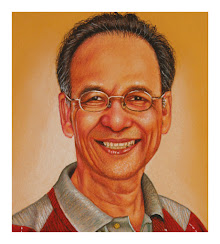
FROM DILIP MUKERJEA

"Genius is in-born, may it never be still-born."

"Oysters, irritated by grains of sand, give birth to pearls. Brains, irritated by curiosity, give birth to ideas."

"Brainpower is the bridge to the future; it is what transports you from wishful thinking to willful doing."

"Unless you keep learning & growing, the status quo has no status."
Showing posts with label Mindfulness. Show all posts

Sunday, September 25, 2022

POINTS TO PONDER: MINDFULNESS VS MINDLESSNESS

I first came across this term when I read the book, 'Mindfulness' by Dr J Ellen Langer of Harvard University during the early nineties. 

Her insightful ideas are still very relevant in today's fast-paced society.

In contrast to 'Mindfulness', mindlessness has been identified as a psychological block to personal change. When we act mindlessly, we behave like robots - we are in auto pilot mode - and personal change becomes difficult.

According to Dr Langer, mindlessness is rooted in mindsets - unquestioning attitudes formed when we first hear certain information.

"Don't pat the dog, he may bite," says Mother, or "Always finish what's in your plate." When we continue to accept such information at face value without thinking critically about it, we grow up afraid of dogs or overweight.

Dr Langer has argued that these inappropriate mindsets sit unobtrusively in our brains until a signal - perhaps a sight, smell or sound - calls them up again. This time the dog may be friendly or the banana split unwanted, yet often we don't reconsider the mindless attitude we accepted earlier.

Because they lock us into one interpretation of a bit of information, mindsets prevent the exercise of choice.

Without choice, change becomes difficult. As a resuit, we can't make the sensible, desirable change in our behaviour - pat the dog and/or reject the ice cream.

Before we can make important changes in our lives, we need to re-examine our old mindsets. That's hard, because in the entrenched routines of daily life, we rarely question what we do, or why, unless it's causing an emergency.

But if we learn to spot mindsets and test them, we gain insight into & control over our behaviours.

Suddenly, change becomes within our reach.

Dr Langer has stressed that changing - or even feeling empowered to stay the same - requires two things:

- learning to think about old situations in new ways;

- opening up and enlarging our frame of reference;

The fresh approach to life that this new style of thinking creates is what she called the mindful attitude or mindfulness.

Here are some of her expert tips:

1) seek out novelty i.e new ways of doing things;

2) be playful, as play is always mindful;

3) take some risks;

4) generate alternatives for as many outcomes as you can;

5) Intentionally ask yourself how the situation could look different from a different perspective;

6) most importantly, notice the power of uncertainty and respect it;

Dr Langer has concluded that, once we overcome the roadblock to mindfulness, our options open up.

We may even question the change we thought we wanted to make and with a new, open attitude, come to enjoy that old relationship, job or our plump selves. Or we may find another path, say turning into a happy walker than a frustrated jogger.

On the other hand, if we still want to make a basic change, it will be easier after we've liberated ourselves, one by one, from our tyrannical mindsets.

By recasting and refiguring our behaviour & others - by becoming mindful - we learn to step back, recategorise & review our assumptions.

Because we're now seeing from many perspectives, we find ourselves more in control of our lives & have more choices - the prerequisites for change.

[What Dr Ellen Langer calls 'mindfulness', Joel Arthur Barker calls it 'paradigm pliancy'. Interestingly, Michael Michalko calls for 'productive thinking', as opposed to 'reproductive thinking'. Recommeded readings, in addition to Dr Langer's book: 'Future Edge' & 'Thinkertoys'.]

Sunday, September 20, 2009

THE ART OF CREATIVITY: BE MINDFUL!

Here's an extract - it talks about developing mindfulness - of an interesting article on creativity by Daniel Coleman, originally published in Psychology Today:

"So often we go through our days on automatic pilot, but lacking the Zen inner awareness. To a certain degree, we like people and situations to be predictable; we enjoy the habitual and tend to avoid surprises.

But there is a downside to routine: We can easily become fixed in our ways of seeing. Our expectation of how things are supposed to be replaces our capacity to perceive. This can range from not seeing the new color or cut of your partner's hair to not seeing a new approach to your work.

Here are two ideas for refocusing your perceptions and deepening your creative capacity:

Each day, do one thing different from your normal routine. You might go to bed at a new time, or take a new route to work or school.

Or eat something you would never dream of eating.

If you are feeling more adventurous, strike up a conversation with a particularly difficult person—maybe someone you really can't stand—and treat this person in a completely new way. The more pesky the person and entrenched the routine, the more likely you are to shake up your habitual ways of seeing things.

The key is not to think about how to change things or to ask, "What is the best way to change them?" but rather to change things for no other reason than just for the sake of it.

What we see every day becomes ordinary to us. People, sights, sounds, and smells seem to disappear from our awareness. They lose their distinctiveness. One way of dealing with this is to invent a brand-new pattern, a fresh way of seeing the commonplace.

Begin with something as basic as water. The idea is to notice the number of times a day you come in contact with it and the extraordinary number of ways it appears in your life: from a hot shower or the delicate beads of mist on the leaves outside your window to the ice cubes clinking in your glass.

This technique of taking things out of their ordinary context and creating a new pattern for them is a way of making the familiar strange and opening them to a fresh and creative approach."

By the way, here's the link to the original article.

Thursday, March 12, 2009

da vincian PRINCIPLES: PERSONAL PERSPECTIVES II

[continue from the Last Post.] In his wonderful book, entitled 'Building Brainpower: Turning Grey Matter into Gold', Dilip Mukerjea has dedicated 28 pages of elaboration, plus 5 hand-crafted mind-maps on 'Our Amazing Senses', namely, & in order of their appearance in the book, 'Sense of Touch', 'Sense of Taste', 'Sense of Smell', 'Sense of Hearing', & lastly, 'Sense of Sight'. Among the da vincian Principles, as mentioned in my earlier post, our amazing senses constitute an important part of having a complete mind. Why is that so? Our amazing senses are the sensory pathways to what we see, what we hear, what we taste, what we touch, what we smell & in fact what we feel & do in the world out there. The sensory information that we receive through our amazing senses go into a 'combinatory play' - drawing my cues from Albert Einstein - from which we draw our first insights, which lead to our productive thoughts. Using our ingenuity, imagination & creativity, we then turn these thoughts gradually into our ideas. Today, we live in a visual society. Marketers & purveyors certainly know how to exploit our visual culture in order to get to our personal attention. Interestingly, vision happens to be our primary sense. In fact, from birth to death, or womb to tomb as my good friend Dilip Mukerjea likes to put it, we interpret the world through images. Our brains are stimulated more by visual cues than any other senses. As a matter of fact, neuro-scientists have confirmed that, more than three-quarters of our brain structures, especially the occipital cortex & its associated elements, work in tandem to process all the incoming visual information. Particularly for the male species, sexual attraction relies greatly on vision. More importantly, as much as 90% of the learning in our lifetime enters through our eyes. So, Leonardo da vinci was absolutely right when he advocated - remember, more than 500 years ago: "Develop your senses, especially learning how to see." In fact, this was his principal premise: “The eye, which is called the window of the soul, is the principal means by which the central sense can most completely & abundantly appreciate the infinite works of nature.” If you look through all the success literature that has been published over the years, the power of vision is always mentioned as an important attribute to successful living. A case in point: productivity guru Stephen Covey has summarised his brilliant synthesis & accurate analysis of the success literature stretching across more than 200 years of American history in his '7 Habits', especially with #2: Begin with the end in mind! Change & innovation strategist/futurist Joel Arthur Barker has touched on this subject in his wonderful training video production, 'The Power of Vision'. [He talked about the great work of & the influences from Fred Polak, Viktor Frankl, James Collins, Benjamin Singer & Martin Seligman, pertaining to the power of having a positive image of the future, irrespective of nations, societies, children, companies & individuals.] For me, enhancing perceptual sensitivity is always a prerequisite to creativity & innovation. Leonardo da vinci put it best: "If you wish to gain knowledge of the form of problems, begin with learning how to see it in many different ways." So, how does one develop this capability? First, adopt a mindful attitude towards the world we live in. Here are some other practical suggestions: - recognise patterns; - make new connections; - think possibilities or unusual combinations; - challenge assumptions; - break ingrained habits; - seek out novelty; - adopt new perspectives; - develop wide angle vision; - use peripheral vision; - be playful (i.e. be child-like, but don't be childish!); - play with metaphors & analogies; - generate lots of ideas as well as alternatives; - ask naive as well as intentional questions; - take some risks; - learn to notice & respect uncertainty; - embrace ambiguity & paradox; - look at what's not there (& also listen to what's not said); - focus on relationships; - regard for process; In concluding this post, I like to quote from the book, 'Mindfulness', by Dr Ellen Langer of Harvard University: "Learning to see the same old world from different perspectives is the first step toward mindfulness or a mindful attitude. Changing requires two things: learning to think about old situations in new ways, & opening up & enlarging our frames of reference." [To be continued in the Next Post. All the images in this post are the intellectual property of Dilip Mukerjea.]