Sunday, April 20, 2014
GENERAL NORMAN SCHWARZKOPF'S 14 RULES OF LEADERSHIP
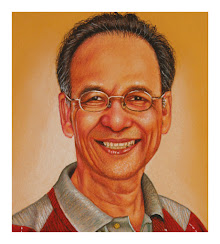
Here are General Norman Schwarzkopf (1934-2012)'s 14 rules of leadership given at a business conference in 2010, which I have kept in my personal library files, under "Strategic Leadership":
[He topped an illustrious military career by commanding the US-led international coalition that drove Saddam Hussein's forces out of Kuwait in 1991.]
1. Think of yourself as a leader. Leaders lead people, not systems, processes.
2. Character. Requires sense of duty, ethics, morality – it is not a measure of competence. In times of crisis, people pick character to follow. Have strength of character – a prerequisite to having the courage to do the right thing.
3. Leadership must be respected, even though not loved. Make it happen and take responsibility. You can delegate authority, and still take responsibility. It is more important to be respected than to be loved. Leaders do not seek to be pleasing first.
4. The true rewards of leadership come from leadership itself – not the next promotion or tangible reward. Do not seek rewards; leadership is its own reward.
5. No organization will get better until leadership admits that something is broken. The prevalent can do attitude must be willing to accept you can’t do before you know something has to change.
6. The climate must allow people to speak up.
7. Leaders establish goals for an organization. They must be understood and know their role in reaching the goal. FOCUS is the number #1 goal in the military. The greater the number of goals, the more confusion you get. Creating focus is the number #1 priority for a leader. Excellent leaders instill focus by creating shared goals that are clear and understood; everyone understands their roles in achieving the shared goals.
8. Leaders set high standards; they don’t accept low standards. They set expectations. People go to work to succeed, not to fail.
9. Leaders set high standards and clarify their expectations. They then expect that people will go to work on achieving these standards.
10. Recognize and reward success – it is infectious. Failure is contagious. Leaders recognize and reward success. They understand deeply that both successes as well as failure are contagious.
11. Accept a few mistakes. Provide the latitude to learn. Leaders accept a few mistakes but also, create the latitude and atmosphere to learn.
12. Don’t tell them how to do the job – simply allocate resources, set standards and the results will exceed your expectations. Leaders do not deal with how to get the job done; they surround themselves with talent and then allocate resources and remove roadblocks to enable the talent to excel. Love the troops. Leaders love their troops and let them know in many ways.
13. When placed in command, take charge. Even if the decision is bad, you have set change in motion. It is better than being stagnant. When placed in command, take charge.
14. Do what is right. It is a sign of character. Have strength of character – a prerequisite to having the courage to do the right thing. Do the right thing – have the moral courage to do the right thing.
THE POWER OF PERSONA
Is Dilip Mukerjea clowning as shown in this amusing snapshot? No, he is not. In fact, he is "demonstrating" to us a new way to see and think about a problem or a challenge or appraise a situation.
I like to call it, the Power of Persona.
Basically, it involves the imagined shift of one's mindset into behaving, or role playing, to be precise - thinking and doing - like another competent person or even another inanimate object in space.
Indeed, many creativity gurus have formulated it in many different ways.
I believe Roger von Oech is among the first to come up with four stereotype roles or personas, in the creative thinking process, namely:
- Explorer;
- Artist;
- Judge;
- Warrior:
when he wrote his now classic 'A Whack on the side of the Head: How You Can Be More Creative', in the early 80's.
You can visit www.creativethink.com to read more about them.
Around the same time in the early 80's, Michael Hewitt-Gleeson from Down Under, and working with Edward de Bono, through their joint School of Thinking initiative in New York, introduced the world to their version of stereotype roles in the creative thinking process, known as 'Six Thinking Caps':
- White;
- Black;
- Yellow;
- Red;
- Green;
- Blue;
It has been alleged that Edward de Bono, after breaking off with his protege, Michael Hewitt-Gleeson, plagiarised the material to write his 'Six Thinking Hats' in the mid-80's.
Since then, Michael Hewiit-Gleeson, has added the seventh cap, Grey Cap, to his original concept.
More information can be found here: www.schoolofthinking.org/
In 2005, Tom Kelley of IDEO, the internationally-renowned global design consulting firm, shared with the world their winning design methodology, a powerful set of learning, organising and building personas, through their book, 'Ten Faces of Innovation: IDEO's Strategies for Defeating the Devil's Advocate and Driving Creativity Throughout Your Organisation.".
Here they are:
- The Anthropologist;
- The Experimentor;
- The Cross Pollinator;
- The Hurdler;
- The Collaborator;
- The Director;
- The Experience Architect;
- The Set Designer;
- The Storyteller;
- The Caregiver;
More information about them can be found here: www.tenfacesofinnovation.com/
Actually, back in the sixties, William J J Gordon and George Prince, had developed a slightly different but unique creative problem solving process of their own, through the brilliant use of metaphors and analogies. They called it, "Synectics".
Within their proprietary methodology, they are designated as:
- Symbolic Analogy;
- Personal Analogy;
- Direct Analogy:
- Fantasy Analogy;
For example, you can imagine yourself being the object under examination and then attempt to uncover the feelings and problems faced by the object.
More information can be found here: //synecticsworld.com/.
In a nut shell, using role playing or the power of persona to explore ideas is an interesting and powerful tactic to see and think more and further.
Posted by Say Keng LEE,
KNOWLEDGE ADVENTURER AND TECHNOLOGY EXPLORER
at
4/20/2014 03:35:00 PM
No comments:
Labels:
Edward de bono,
George Prince,
Michael Hewitt-Gleeson,
Roger von oech,
Six Thinking Hats,
Synectics,
The Power of Persona,
Tom Kelley,
William J J Gordon
THE FUTURE IS IN SIGHT
The following captioned picture has appeared in my Facebook news feed this morning, followed by a status update:
"Opportunity don't come twice in life."
I have chosen to respond to the update as follows:
"In reality, it's not that opportunity don't come twice in life.
It's more about your ability to see what's going on around you. An opportunity can be right in your face and you still don't see it.
History has already proven this phenomenon.
When Chester Carlson brought his initial photocopier prototype to Kodak, the latter's chief scientist showed him to the door. Only a small company, which later became Xerox, saw the potential immediately.
When the Beatles went to Decca Records for an audition, one of their directors snubbed them with the arrogant remark that guys with mopped hairs and fancy guitars were out of date. Instead, EMI Records took one look at them and smiled all the way to the bank.
Likewise, two young nerds went to the PARC Labs, and they saw the first home-computer prototype on display. The two curious nerds took one quick glance, went home, and became the two famous Steves a.k.a. Steve Jobs and Steve Wozniak!
The Swiss, as world market leader in winding watches, actually invented the quartz watch back in the sixties.
No springs, no moving parts, the industry council sneered.
On display at a watch exhibition, Seiko and Texas Instruments took one quick look, and the rest was history.
To the Swiss' nightmare, they forgot to patent it. Almost overnight, the Swiss watch industry was horrendously disrupted during the ensuing decade.
The future is in sight!"
"Opportunity don't come twice in life."
I have chosen to respond to the update as follows:
"In reality, it's not that opportunity don't come twice in life.
It's more about your ability to see what's going on around you. An opportunity can be right in your face and you still don't see it.
History has already proven this phenomenon.
When Chester Carlson brought his initial photocopier prototype to Kodak, the latter's chief scientist showed him to the door. Only a small company, which later became Xerox, saw the potential immediately.
When the Beatles went to Decca Records for an audition, one of their directors snubbed them with the arrogant remark that guys with mopped hairs and fancy guitars were out of date. Instead, EMI Records took one look at them and smiled all the way to the bank.
Likewise, two young nerds went to the PARC Labs, and they saw the first home-computer prototype on display. The two curious nerds took one quick glance, went home, and became the two famous Steves a.k.a. Steve Jobs and Steve Wozniak!
The Swiss, as world market leader in winding watches, actually invented the quartz watch back in the sixties.
No springs, no moving parts, the industry council sneered.
On display at a watch exhibition, Seiko and Texas Instruments took one quick look, and the rest was history.
To the Swiss' nightmare, they forgot to patent it. Almost overnight, the Swiss watch industry was horrendously disrupted during the ensuing decade.
The future is in sight!"
Saturday, April 19, 2014
MOTHER NATURE IS INDEED SCIENCE & TECHNOLOGY'S FIRST TEACHER
What has the kingfisher's beak to do with the Shinkansen, the Japanese bullet train?
A lot.
The kingfisher’s beak turns out to be supremely efficient at crossing the air-water interface with the minimum amount of turbulence, thus making the bird more successful at catching fish by surprise.
A lot.
The kingfisher’s beak turns out to be supremely efficient at crossing the air-water interface with the minimum amount of turbulence, thus making the bird more successful at catching fish by surprise.
It has been the source of inspiration for the design of the Shinkansen, the Japanese bullet train.
Obviously the train does not dive into water, but it has many tunnels to pass through.
Tunnels tend to create an air-air interface between the inside and the outside, which, when crossed, generates turbulence and noise.
The efficiency of the design has enables engineers to create a train that is the most silent of its kind.
Mother Nature is indeed science and technology's first teacher!
Obviously the train does not dive into water, but it has many tunnels to pass through.
Tunnels tend to create an air-air interface between the inside and the outside, which, when crossed, generates turbulence and noise.
The efficiency of the design has enables engineers to create a train that is the most silent of its kind.
Mother Nature is indeed science and technology's first teacher!
WHAT KIND OF MIND DO YOU NEED?
An astute observation, from one of my most
favourite strategist-authors, Dudley Lynch, President of Brain
Technologies Corporation, a consulting and training outfit on
accelerated self-growth, and author of 'LEAP!: How to Think Like a
Dolphin & Do the Next Right, Smart Thing Come Hell or High Water',
among others:
"The future just flip-flopped on you. Again.
But change isn't the greatest danger.
Inertia is."
BRAINDANCER IN ACTION: PASSIONTATIONS
All presentations by Dilip Mukerjea, irrespective of whether they are conducted in formal or informal settings, as in this case, are PASSIONTATIONS!
As a member of the audience, you can always feel his passion, enthusiasm, energy, chutzpah and spontaneity!
He is a natural braindancer!
By the way, 'Braindancing' is one of his most popular seminars, not only for entrepreneurs, managers, and professionals, but also for students and teachers, and also parents.
Friday, April 18, 2014
POWERFUL IDEAS ("idées puissantes") FROM INSOO KIM BERG AND STEVE DE SHAZER
A nice collection of idées puissantes ("powerful ideas") from psychotherapist team, Insoo Kim Berg and her husband Steve de Shazer [both died unexpectedly a few years apart in the 2000s]:
• If it isn’t broken, don’t fix it.
• If it works, go with the flow.
• If it isn’t working, do something different.
• The solution to an issue—any issue—is almost never that closely related to the problem.
• This explains why the way people think and talk about problems is almost guaranteed to be different than the way they think and talk about solutions.
• The first place to look for solutions is to exceptions: ask yourself what has been working that you really hadn’t noticed all that much.
• The next best place to look for solutions is to what makes sense, now that you’ve thought a little more about it.
• What usually matters most are small, right, smart, good (that is, moral) next steps that may put you on the path to big changes.
• People need to be reminded (and none of us ever wants to forget) that the future is both created and negotiable.
• Not all change is a problem, and problems do not happen all the time. But change is inevitable.[Excerpted from LEAP!Psych weblog of Dudley Lynch, President of Brain Technologies Corporation and author of 'LEAP!: How to Think Like a Dolphin & Do the Next Right, Smart Thing Come Hell or High Water', among others. He is one of my most favourite strategist authors.]
Subscribe to:
Posts (Atom)